Theopolis Logo

Writing

Explore our collection of theological essays, biblical studies, and reflections on faith and culture.

See all
rembrandt-main
Art

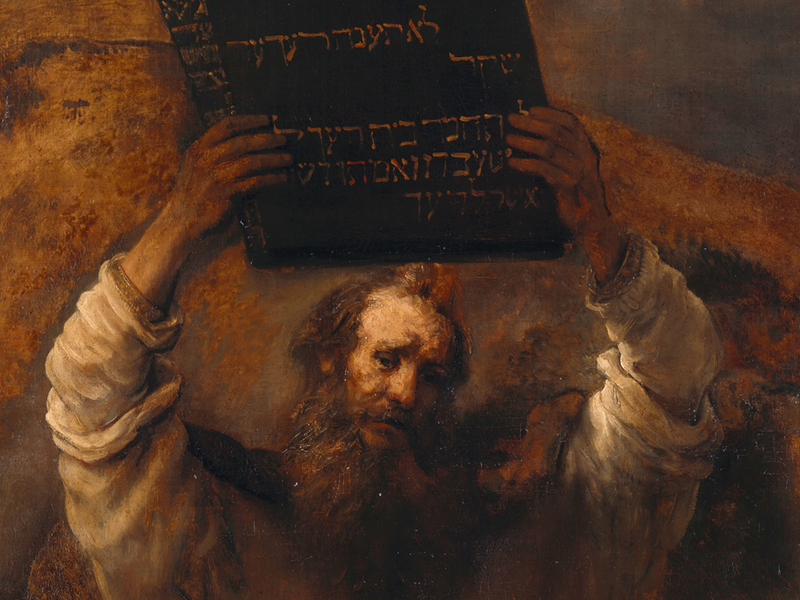
The Second Word V: On Images and Art, Part 3

The Failure of the Church Yet a third factor played an important role in this historical development, in addition to the imperial adoption of icons and the rise of the icons of the holy man. Brown writes: "The great Christian basilicas of the previous centuries tended to stand empty, except…

by James B. JordanSeptember 4, 1998

screenshot-2023-09-11-at-11-34-45-am
Biblical Horizons

Patriarchal Dominion

The three large patriarchal narratives of Genesis concern the three aspects of the cosmos: matter, space, and time. Over these three is man given dominion. Lucifer was originally appointed to train man in this dominion, but he chose to lead man into rebellion instead. Thus, the Angel of Yahweh replaced…

by James B. JordanAugust 4, 1998
trnava-university-beeyeib-am8-unsplash
Biblical Horizons

The Case Against Western Civilization, Part 6

Part 6: Living in a Dying World (continued) The "Trivium" (continued) The five stages of education are simply the five stages of the covenant as God administers it in human life and history, and in the liturgy of covenant renewal: First, God announces Himself. "I am Yahweh Your God." He…

by James B. JordanAugust 4, 1998
screen-shot-2022-05-12-at-12-07-23-pm
Biblical Studies

Re-creation in the Ascension Offering

The following essay is tentative and exploratory, offered for your consideration. It seems to me that the ritual of the Ascension Offering (incorrectly translated as Burnt Offering) of Leviticus 1 is a symbolic recapitulation of Genesis 1, which thereby portrays the sacrificial ritual as way of moving from a fallen…

by James B. JordanJuly 4, 1998
Biblical Horizons

The Framework Hypothesis: A Gnostic Heresy

Just as the vast majority of evangelical Christians in America today are Arminian and Baptist, so the vast majority do not believe in a creation around 4000 BC. I don’t expect any of these three situations to change anytime soon. Powerful presuppositions are at work in all three instances, along…

by James B. JordanJuly 4, 1998
picture-mosaic-cathedral-jesus-christ-cefalu-italy-copy
Art

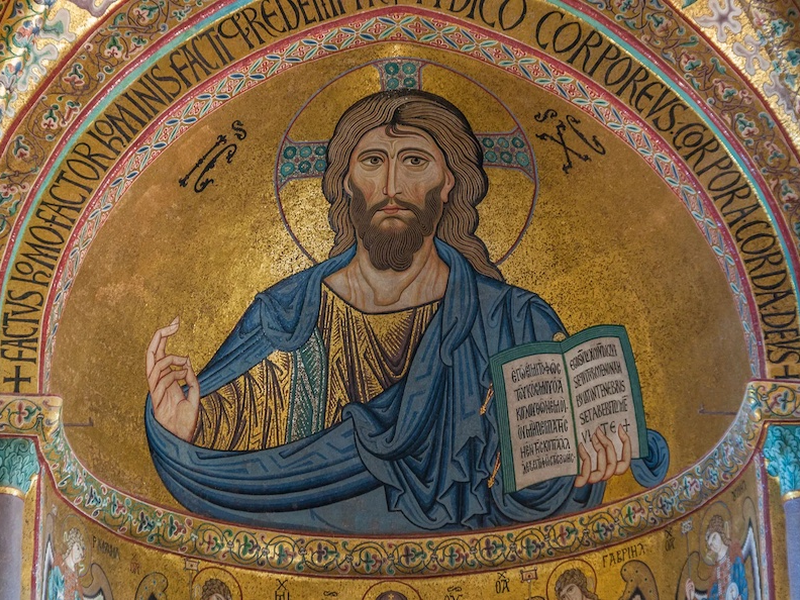
The Second Word V: On Images and Art, Part 2

The Iconoclastic Controversy Continuing Pagan Influence How did images creep in? To begin with, there was in the post-Constantinian Church a concerted effort on the part of the semi-pagans to interpret Christianity in essentially pantheistic terms. The heretics put God and man on a continuum of "being," so that God…

by James B. JordanJuly 4, 1998

Showing page 248 of 309

See all
See all
History

Purity and objectivity

Proctor again, summarizing a 1938 article on “Science and the Social Order” from Robert Merton: “the ideal of ‘pure science’ serves a dual function in modern society. On the one hand, the exaltation of pure science represents ‘a defense against the invasion of norms that limit directions of potential advance…

October 28, 2008
History

Revival of purity

Proctor yet again, describing the division of political economy into separate disciplines of sociology and economics in the nineteenth century: “Social theory in the eyes of the young sociologists might strive to become scientific, but to do so it must abandon its craft or practical-political origins and restrict itself to…

October 28, 2008
Philosophy

Artifice and nature

Proctor again, speaking of Renaissance science: “In the science of the moderns, there arises a curious reversal of the order of art and nature. Art becomes the standard against which nature is judged. Francis Bacon’s ‘nature in distress’ - nature distraught by experiment - is as genuine as nature left…

October 28, 2008
Philosophy

Pure knowledge

The drive for purity in knowledge is an ancient one. Robert Proctor ( Value-Free Science? ) sees this impulse in Plato and Aristotle. For the former, knowledge is pure “in the degree to which it makes no appeal to practical arts. Thus Plato criticized Eudoxus, Archytas, and Menaechmus for trying…

October 28, 2008

Anarthrous God

CK Barrett argues in his John commentary that the anarthrous theos of John 1:1 (emphasized by Arians everywhere and at all times) shows that “the Word is God, but is not the only being of whom this is true; if ho theos had been written it would have been implied…

October 28, 2008
Uncategorized

Word came, saying

After Genesis 15, the next time the “word of God came . . . saying” is in Samuel. The word of God comes to Samuel, saying that Saul is rejected (1 Samuel 15:10), and again comes to Nathan to deliver the promise to David (2 Samuel 7:4). The connection of…

October 27, 2008

Showing page 1456 of 2212

Browse by Category

In Medias Res

Your weekly digest for all things Theopolis.

Donate

Theopolis is nearly 100% donor-supported. Consider joining us on our mission.