Theopolis Logo

Writing

Explore our collection of theological essays, biblical studies, and reflections on faith and culture.

See all
tanner-mardis-xuxghzhibn4-unsplash-1-2
Deuteronomy

The Second Word II: Seeing & Hearing; Exposition

Hearing, Seeing, and History God is Word, not picture. He speaks, but He is not visible in Himself. Thus, God initiates history through language. He speaks the world into existence, and speaks to us to bring us out of formlessness and emptiness into the fullness of being His Bride. Similarly,…

by James B. JordanAugust 10, 1994
tim-wildsmith-jyculofqjak-unsplash-1
Biblical Studies

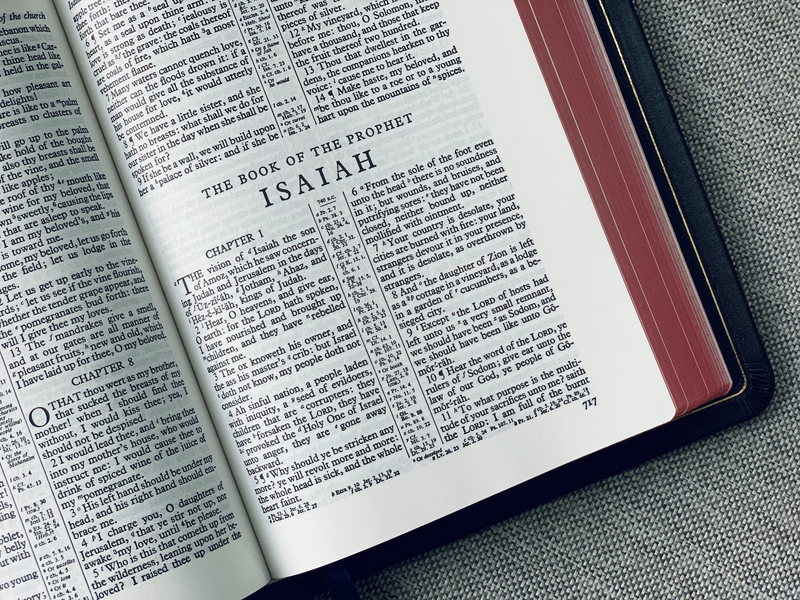
Passover and Exodus in Isaiah

The consensus of modern critical scholarship is that the book assigned to Isaiah was in fact composed by several different hands. "Deutero-Isaiah" supposedly begins with Isaiah 40:1. There are many good reasons for rejecting this conclusion. Among these, the narrative pattern of chapters 36-39 is a neglected piece of evidence.…

by Peter LeithartJuly 23, 1994
davide-ragusa-slgtmf8ejye-unsplash
Biblical Horizons

Human Life in Four Directions

Eugen Rosenstock-Huessy has pointed out throughout his many fascinating and occasionally quixotic writings and lectures that human life exists in four directions. These four directions are inward, outward, backward, and forward. In this article I want to explore these as they relate to the work of the Church. Each of…

by James B. JordanJuly 10, 1994
jan-kahanek-g3o5ztrk2e4-unsplash
Biblical Chronology

The Chronology of the Pentateuch (Part 5)

14. Joseph and Judah Genesis 38 tells us about Judah’s sons and grandsons, and if we try to get these events into the time before the descent of the Hebrews into Goshen, it is very difficult to do so. But this passage is almost certainly dischronologized. Thematically Genesis 38 is…

by James B. JordanJuly 10, 1994
trnava-university-sd8ujsf4xm4-unsplash
Art

A Short Survey of Good Fantasy and Science Fiction for Christian Schools and Home Schools

From time to time I am asked what is good SF and fantasy that teenagers in Christian and home schools might enjoy. The following brief discussion is my answer that question. I’ve tried to point out authors and stories that are not widely known, and therefore have set aside G.…

by James B. JordanJuly 10, 1994
whichbooksbelongintheot
Hermeneutics

Daniel 12:2

"And many of those who sleep in the dust of the ground will awaken, some to life everlasting and others to disgrace, to contempt everlasting." This verse is often cited as proof that there was a belief in the resurrection of the body in the Old Testament times. In fact,…

by James B. JordanJune 10, 1994

Showing page 277 of 309

See all
See all

Word of the Lord

“The Word was God,” says John. Where’d he get that? Genesis 15:1 is the first place where Scripture uses the phrase “word of Yahweh” ( dabar-YHWH ), and already here the use of the phrase hints that the dabar is a person. The word of Yahweh “came” to Abram (15:1,…

October 27, 2008
Uncategorized

Olivi’s timetable

Peter Olivi set out a scheme of prophecy chronology from Adam to Abraham to the destruction of Jerusalem. The accuracy of this is not the point, but rather the claim that the end of the temple was a decisive redemptive-historical event. “Ab Adam usque ad primam primissionem factam Abrahe, Genesis…

October 25, 2008
Uncategorized

Athanasius on nothing

A number of readers have suggested that I was wrongly critical of Athanasius’s claim that without God’s sustenance creation tends toward nothing; I said that this implied that creation has some tendency “independent” of God. The readers point out that Athanasius’s claim is exactly that creation has no independence and…

October 24, 2008
Philosophy

Mystical Encyclopedia

Diderot’s D’Alembert’s Dream develops a mythological monistic materialist ontology in which multiplicity develops from an original “polyp” but where nothing ever becomes really distinct from the whole or from anything else. There is no freedom, no real otherness, no real possibility of love. D’Alembert describes this ontology while masturbating in…

October 24, 2008

Movement toward nothing

Athanasius repeatedly says that created things, having come from nothing, have an inherent tedency to move toward nothing again. They have to be sustained by God to remain in existence. No problem with the conclusion that God keeps things in existence. But the notion that things tend toward nothing seems…

October 23, 2008
History

Medieval Preterism

Peter Olivi is one of a number of medieval exegetes who placed enormous significance on the fall of Jerusalem. In part, this was driven by anti-Jewish polemics; they argued that prophecies foretold that the Messiah would come and the temple sacrifice would be ended - since the temple sacrifice has…

October 23, 2008

Showing page 1457 of 2212

Browse by Category

In Medias Res

Your weekly digest for all things Theopolis.

Donate

Theopolis is nearly 100% donor-supported. Consider joining us on our mission.