Theopolis Logo

Writing

Explore our collection of theological essays, biblical studies, and reflections on faith and culture.

See all
andriy-nestruiev-gdbrwwh6doc-unsplash
Biblical Studies

Funerals and Flutes

Matthew 8-9 records three clusters of miracles, interspersed with snatches of Jesus’ teaching about various aspects of discipleship. Just as the Sermon on the Mount displays the authority of Jesus’ Word in teaching, these chapters display the authority of Jesus’ Word over sickness, uncleanness, the creation, demons, and death. In…

by Peter LeithartApril 17, 1992

michal-parzuchowski-w9uljjwg2fa-unsplash
Baptism

Daddy, Why Was I Excommunicated?

Since the early 1980s, several of the conservative Reformed Churches have debated and wrestled with the issue of paedocommunion (infant communion). The PCA and the OPC assigned study committees to examine the question, both of which produced useful reports both in support of and against the position. Though the debate…

by Peter LeithartApril 13, 1992
skyler-gerald-akljfvj5ym4-unsplash
Biblical Chronology

Chronologies and Kings, Part 9: Jehu, Hazael, and Assyria

(This issue of Biblical Chronology concludes a discussion of the Biblical and Assyrian chronologies, begun in previous posts. Click on the category link of "Biblical Chronology" above to see previous issues. Did Shalmaneser Know Jehu? Allis writes: "The Black Obelisk of Shalmaneser contains, in addition to brief accounts of the…

by James B. JordanMarch 23, 1992
denise-jans-dpemksg59la-unsplash
American Culture

Arts and Play, Part 4

Movies Movies as an art form have a powerful impact because they take place in a dark room, on a large screen, with no distractions, and because they entail many of the arts: music, acting, choreography, design and color, etc. A movie can be an overwhelming experience for a young…

by James B. JordanMarch 23, 1992
sincerely-media-bhaswrjttzw-unsplash-2
Leviticus

The Ecology of the Tribute Offering

The Hebrew word translated as "grain offering" or "cereal offering" is minchah . Like the translation of `olah as "burnt offering," the translation of minchah as "grain offering" is somewhat deceiving, since minchah does not refer to grain or cereal. In liturgical contexts outside of Leviticus, in fact, the word…

by Peter LeithartMarch 13, 1992
sincerely-media-bhaswrjttzw-unsplash-2
Ascension

Skinned and Cut

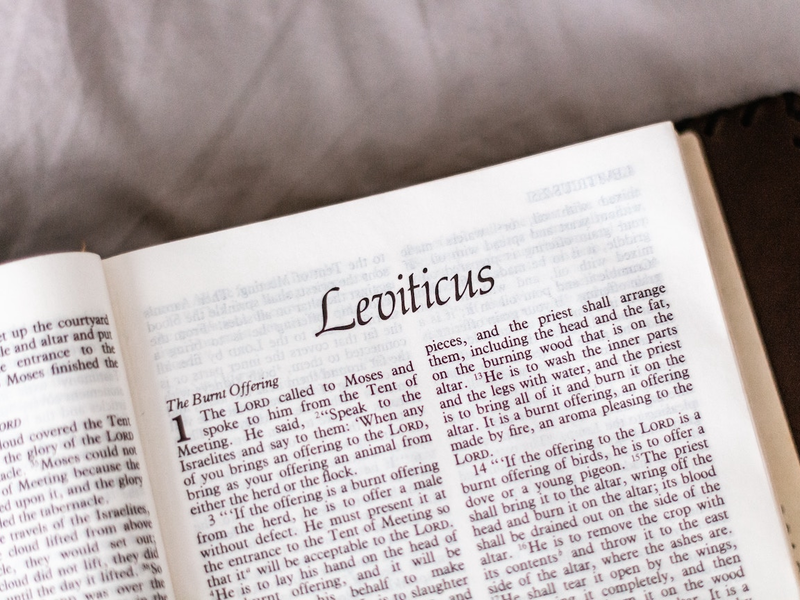
"He shall then skin the burnt offering and cut it into its pieces" (Leviticus 1:6). The normal word ( `olah ) that is translated as "burnt offering" and "whole burnt offering" has nothing to do with either burning or wholeness. It is the noun form of a verb meaning "to…

by Peter LeithartMarch 13, 1992

Showing page 291 of 309

See all
See all
Philosophy

Transcendent Aristotle

Anatolios makes the striking observation that Aristotle’s “Unmoved Mover” is even more transcendent than Plato’s form of the good. For Plato, being is self-communicative, and his most exalted realities (the form of the good, the forms) are participatable. Not Aristotle’s UM, which just thinks thinking in total self-absorption, while everything…

October 23, 2008
History

Islam and Christology

Henry Chadwick notes that the “alienation of Egypt and much of Syria from the Chalcedonian government was a serious political matter, and gravely weakened those key provinces before the Moslem invasions.”

October 20, 2008
History

Ecumenical councils

Were the ecumenical councils infallible? Many in the early church clearly didn’t consider them so. The most vigorous, and vicious, arguments over Arius took place between Nicea and First Constantinople, and the Monophysite controversy continued for a century and more after Chalcedon had condemned Eutyches (as well as Nestorius). Nestorianism…

October 20, 2008
History

Julian the Zionist

Henry Chadwick notes that Julian the Apostate tried to gain Jewish support by proposing to rebuild the temple in Jerusalem: “although Julian had little but contempt for Judaism, he was well aware that a proposal to restore sacrificies in a rebuilt temple at Jerusalem would touch the Christians at a…

October 19, 2008
History

Bible or Lombard?

Much of the theology instruction in the high middle ages took the form of commentary on established texts, most importantly the Four Books of the Sentences by Peter the Lombard. Lombard’s triumph, though, was contested. As Deeana Klepper points out in her book on Nicolas of Lyra, one of the…

October 19, 2008
Philosophy

Pietist philosopher

Jean Blum characterized Hamann’s thought as follows: “Hamann’s thought is what those who do not normally think would think if they did think.” That gets it pretty well, as does Berlin’s comment that Hamann “was a major force in transforming the ideas which hitherto had lived in small, self-isolated religious…

October 19, 2008

Showing page 1458 of 2212

Browse by Category

In Medias Res

Your weekly digest for all things Theopolis.

Donate

Theopolis is nearly 100% donor-supported. Consider joining us on our mission.