Theopolis Logo

Writing

Explore our collection of theological essays, biblical studies, and reflections on faith and culture.

See all
lili-popper-lu15z1m_kfm-unsplash
John

Jesus is the Way to the Tree of Life

When Jesus says in the farewell discourse that his disciples know the way to where He is going, Thomas replies: “We do not know where you are going. How can we know the way?” Jesus answers Thomas, but He gives Thomas more than he asked : “I am the way,…

by Josh JensenMay 24, 2023

jordan-wozniak-xp_agmeea6s-unsplash-2
Luke

Beware of the Infection of Hypocrisy

Through the pandemic we learned a lot about infections, how to catch them, what’s contagious, how to protect yourself from getting the infection. I learned a lot of new terms, like “social distancing,” “ppe” (personal protective equipment), N95 masks, and so on. We’ve seen that people are willing to go…

by John CarpenterMay 16, 2023
noah
Biblical Theology

Noah: Man of the Soil

In Genesis 9:20, Noah is called “a man of the soil”. This phrase is a bit of a shock in the Hebrew; though it’s made up of two very common words - 'ish is “man” and 'adamah is “soil” or “ground” - these two words are never used together before…

by Donald LinnemeyerMay 9, 2023
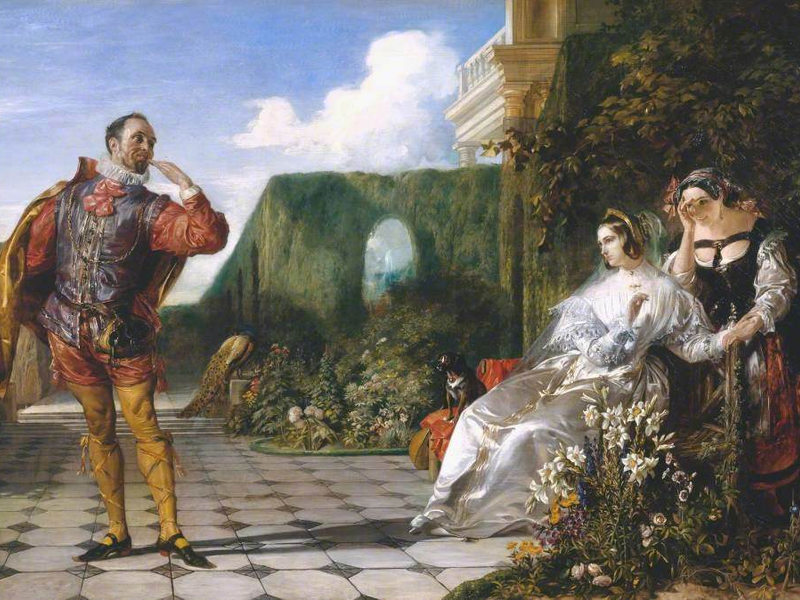
maclise-daniel-1806-1870-scene-from-twelfth-night-malvolio-and-the-countess
Literature

Twelfth Night

Harold Bloom’s discussion of Twelfth Night in his Shakespeare: The Invention of the Human is, as would be expected, insightful. It displays his deep love of poetry, and includes some truly eloquent descriptions of Orsino: “that sublimely outrageous lover of love” and “amiable erotic lunacy.” Bloom is worth reading just…

by Ralph Allan SmithMay 4, 2023
screen-shot-2023-05-02-at-1-14-25-pm
James

A Quadrigatic Reading on Marian Intercession

There have been times when Evangelicals, in an attempt to be clear about the errors of Rome and Constantinople concerning Mary, have been so denigrating of the mother of our Lord that they sounded more like cut and pasted lines from the Babylonian Talmud than they did disciples of Mary’s…

by Garrett SoucyMay 2, 2023
mike-l-8qr1ixi-rmu-unsplash-2
Theology

Awe and the Sensus Divinitatus

Awe is the phenomena experienced when one looks up and lights upon the height, majesty, and mystery of the California Redwoods. It appears the trees pierce heaven itself. Among these giant organisms are the Sequoia–while they are shorter in form, they reserve a width that spans an automobile. These trees…

by Charles JacobiApril 25, 2023

Showing page 31 of 309

See all
See all

Expression and content

Umberto Eco ( Limits of Interpretation ) criticizes Barthes’s notion that connotation occurs when “a sign function (Expression plus Content) becomes in turn the expression of a further content.” He argues that “in order to have a connotation, that is, a second meaning of a sign, the whole underlying first…

August 14, 2008

Fat Heart

Isaiah 6:10 says that Isaiah’s ministry will make the hearts of Israel “fat” and their ears “heavy” ( kabad ). The phrasing is unique to Isaiah 6, but the combination of heavy and fat conjures up Eli, who also was going blind. Isaiah 6 is a new Samuel, and like…

August 13, 2008
History

From Creator-creature to Subject-object

MH Abrams notes that at the heart of Romanticism was a transfer of Christian concepts into a new, subjectivist, context: “Much of what distinguishes writers I call ‘Romantic’ derives from the fact that they undertook, whatever their religious creed or lack of creed, to save traditional concepts, schemes, and values…

August 13, 2008

God-like Hirsch

Frank Lentricchia argues that there is “no unmediated historical knowledge,” and adds: “That is reserved for God, or for theorists like Hirsch who believe that objective knowledge can be acquired in a massive act of dispossessing ourselves of the only route to knowledge that we have: the historicized self. What…

August 13, 2008

Sacraments and texts

Roger Lundin notes that modern interpretation often seeks an unmediated encounter with the text, and then adds: “Both Keith Thomas and Charles Taylor trace it, in part, to the Reformation’s anti-sacramental impulses, which fed into the desacralizing of nature that seventeenth-century science and commerce eagerly promoted. The process accelerated through…

August 13, 2008

Another hermeneutical parable

For centuries, piano virtuosos had thrilled audiences with audacious performances of Liszt’s seventh Etude (in G minor, “Eroica”). Liszt scholars had written analyses of the music, and critics had compared various performances to one another and to what they believed was Liszt’s original intention for the music. An industrious Liszt…

August 13, 2008

Showing page 1482 of 2212

Browse by Category

In Medias Res

Your weekly digest for all things Theopolis.

Donate

Theopolis is nearly 100% donor-supported. Consider joining us on our mission.