
Theopolis Logo

Writing

Explore our collection of theological essays, biblical studies, and reflections on faith and culture.

See all
kalen-emsley-bkci_8qcdvq-unsplash-1
Biblical Horizons

The Sequence of Events in the Creation Week

To begin with the source of this narrative: Since no human being was present to observe these events, we must assume that this narrative was revealed directly by God to a human author. There are three ways this might have happened. First, we might read, "God said to Abraham (or…

by James B. JordanOctober 23, 1997
eq9mnztemoq7lwjacsh3ss
Biblical Horizons

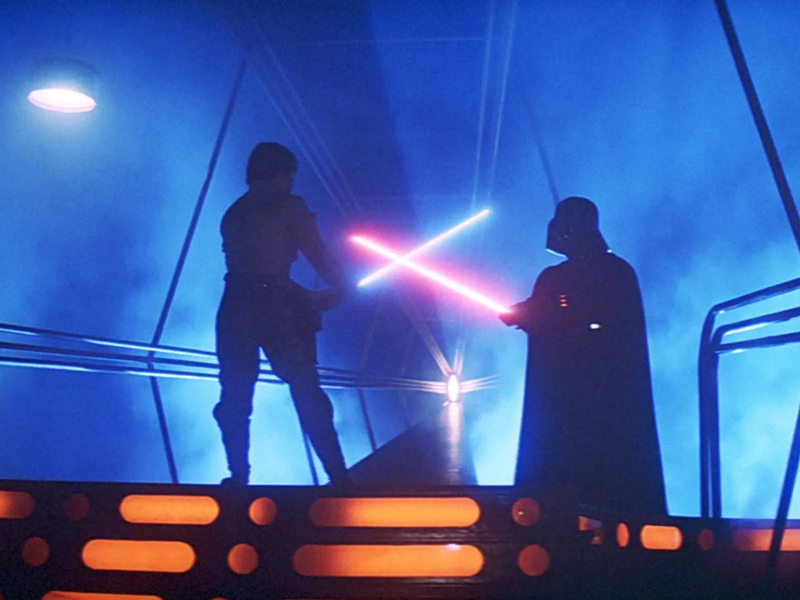
The Empire Strikes Back

The Empire Strikes Back is a movie most of us have seen more than once. It is generally regarded as the best of the three Star Wars films, which is probably due to the fact that unlike the other two, The Empire Strikes Back made use of the services of…

by James B. JordanOctober 4, 1997
lili-popper-lu15z1m_kfm-unsplash
Biblical Chronology

The Sequence of Events in the Creation Week, Part 1

Now that we have examined three unacceptable approaches to the events recorded in Genesis 1, it is only fair for me to set out what does seem to be recorded there. To begin with the source of this narrative: Since no human being was present to observe these events, we…

by James B. JordanOctober 4, 1997
raphael-schaller-gkincd2eniy-unsplash-6
Biblical Horizons

Cracking Up the “Bible Code”

Two books on the "Bible Code" have appeared this year. The first, a current bestseller, is Michael Drosnin’s The Bible Code (Drosnin, 1997). The other is Cracking the Bible Code (William Morrow, 1997), by Jeffrey Satinover, known to Christians for his outstanding 1996 book Homosexuality and the Politics of Truth…

by James B. JordanOctober 4, 1997
hannah-busing-0v6dmtujaik-unsplash
American Culture

The Case Against Western Civilization, Part 1

Part 1: Introduction The collapse of the Western tradition in the United States, seen in the hostility to Christianity in government and education, and the elimination of "traditional" or "canon" learning from our institutions of middle and higher learning, provides a crisis and an opportunity for serious believers at the…

by James B. JordanOctober 4, 1997
amjd-rdwan-erymmvvsy1y-unsplash-1
Theologia

Why Will You Die?

A Brief Defense of John Murray’s “the Free Offer of the Gospel,” & A Question About the Extent of the Atonement John Murray (1898-1975) is probably the last of the great American theologians; he belonged in the same set as that which contains such eminent Presbyterians as Charles Hodge and…

by Mark HorneOctober 3, 1997

Showing page 253 of 309

See all
See all
Theology

Barthes’s transcendental argument

That’s Barthes not Barth. As in Roland. Prickett suggests that Barthes’ proclamation of the death of the author, his manumission of interpretation from the obsession with the limited, final, “secret” meaning, and his hope for a liberated “anti-theological” and “revolutionary” reading that refuses “to fix meaning” in fact opens the…

August 5, 2008

Conservatism of Poststructuralism

Poststructuralism likes to think itself radical, but Stephen Prickett (Words and the Word) points out that it excludes the possibility of novelty. Barthes says that a text is “a tissue of quotations drawn from the unnumerable centres of culture.” And Kristeva’s notion of intertextuality, on Prickett’s reading, encloses a text…

August 5, 2008
Literature

Novelistic language

A few highlights from James Wood’s chapter on language in How Fiction Works . Early on, he mentions the “old modernist hope” that prose can be “as well written as poetry.” This will require readers and novelists to develop what Nietzsche called a “third ear”: “We have to read musically,…

August 4, 2008
Literature

Bad Books

Lewis remarks on the high difficulty of adverse criticism, noting that the difficulty lies partly in the fact that the defects of bad literature are found in good literature: “The novel before you is bad - a transparent compensatory fantasy projected by a poor, plain woman, erotically starving. Yes, but…

August 4, 2008

Terms of abuse

Lewis describes the process by which words that once expressed and aroused emotions by appealing to the imagination have been emptied of image-content and become purely emotional. “Damn you” used to be a real curse, because people believed in damnation. Now that fewer do, it’s a more or less purely…

August 4, 2008

Limits of language

In Lewis’s defense, he is trying to explain some of the limits of language, which are worth noting (this in the last chapter of Studies in Words ). One limitation has to do with language’s inability “to inform us about complex physical shapes and movements. Hence descriptions of such things…

August 4, 2008

Showing page 1485 of 2212

Browse by Category

In Medias Res

Your weekly digest for all things Theopolis.

Donate

Theopolis is nearly 100% donor-supported. Consider joining us on our mission.