Theopolis Logo

Writing

Explore our collection of theological essays, biblical studies, and reflections on faith and culture.

See all
screen-shot-2023-05-02-at-1-14-25-pm
Poetry

Seed-bearing Fruit

Ten-thousand ‘yeses’ and a single ‘no.’ From bough it dangles, beauty to the eyes, For belly, food, a fruit to make one wise. Too soon, they eat; they know; the leaves they sew, But, oh! the Love who asks, “Where did you go?” Confessions flow from under leaf’s disguise; A…

by Marc HaysAugust 16, 2023
screenshot-2023-08-15-at-8-22-28-am
Augustine

Eternal Life Chiasm in John's Gospel

In his masterful work, De Doctrina Christiana , Augustine of Hippo writes: I would have learned men to know that the authors of our Scriptures use all those forms of expression which grammarians call by the Greek name tropes, and use them more freely and in greater variety than people…

by Doug PonderAugust 15, 2023
screenshot-2023-08-08-at-11-13-28-am
Ruth

Lot, Ruth, and the Work of New Creation

“In accordance with the creation pattern, God sovereignly took hold of Adam and put him to sleep. Then God divided Adam by removing flesh and bone from his side, and restructured humanity into male and female. When Adam awoke, God distributed the woman to him. Adam gazed upon her and…

by Josh JensenAugust 8, 2023
rev-1-barbie-tp-0002-high-res-jpeg-647e152f50df6-2
Culture

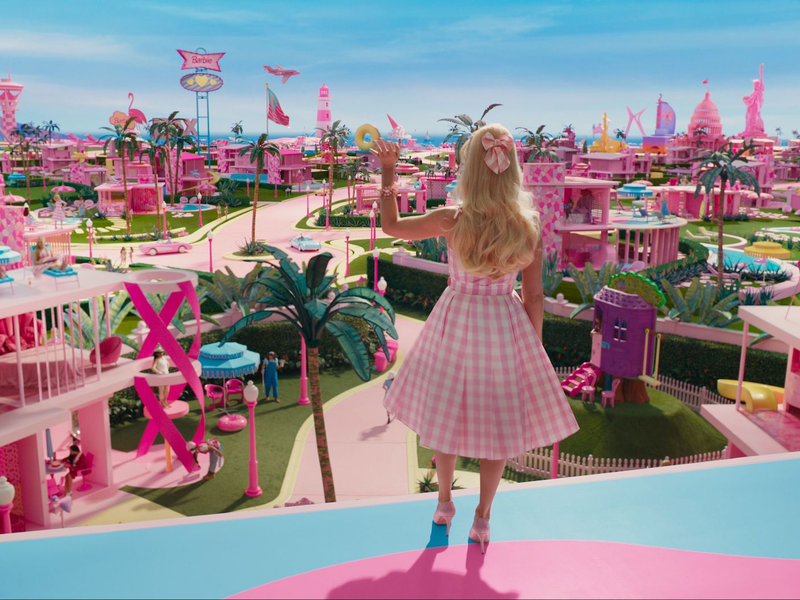
The Barbie Movie

Greta Gerwig’s new film, Barbie, has been criticized, probably rightly, for having too many ideas and layers to properly bring in any for a landing. Gerwig herself thought the script was so “ wild and anarchic ” that she was surprised WB agreed to make it. Many see it as…

by Robin HarrisAugust 1, 2023
mariam-soliman-ht5xmeulydg-unsplash-2
Matthew

Why Does John the Baptizer Look Like a Camel?

“Now John wore a garment of camel’s hair and a leather belt around his waist, and his food was locusts and wild honey” (Matt. 3:4). Why is John the Baptizer clothed with camel’s hair? Why does he want to look like a camel? Or at least: what does he expect…

by Jeff MeyersJuly 26, 2023
darwin
Literature

Stinking, Rotten Ministers of the Gospel

In the second greatest story ever told, The Brothers Karamazov , Fyodor Dostoyevsky tells the story of a family plagued by the lasting legacy of sin’s destructive power and the all-surpassing truth that God is Light and in Him is no darkness. The young protagonist, Alyosha, is a monk committed…

by Garrett SoucyJuly 18, 2023

Showing page 29 of 309

See all
See all

Etymology

Peter Cotterell and Max Turner summarize James Barr’s case against etymology, dismissing TF Torrance’s claims about the links between ekklesia and kaleo , qahal and qol : “Even if qahal derives from qol , ‘voice’, (which is no more than merely possible ) it remains highly questionable whether anyone would…

July 18, 2008

Emotive Speech

Ogden and Richards, whose triangle of signification (word, concept, reference) has had a significant impact in evangelical hermeneutics, begin their book on the “meaning of meaning” by acknowledging that words have other functions than referential, “which may be grouped together as emotive. These can best be examined when the framework…

July 18, 2008

Unending lawsuit

In his book, Liturgies and Trials , Richard Fenn writes, “The individual is perpetually facing judgment by abstract and impersonal criteria that are only partially revealed while always calling into question the individual’s own sense of worthiness . . . the theme of the ‘last judgment’ loses its theological framework,…

July 16, 2008

Justification and modern man

In Arthur Miller’s After the Fall , a character says, “When you’re young, you prove how brave you are, or smart; when what a good lover; then a good father; finally how wise or powerful or what-the-hell-ever. But underlying it all, I see now, there was a presumption. That I…

July 16, 2008

Higher criticism

I like J. Louis Martyn. His commentary on Galatians is a masterpiece, and the other essays I’ve read are all very stimulating. I begin with a disclaimer because what has been called Martyn’s “seminal proposal” concerning the gospel of John is remarkable mainly for the absence of evidence and argument.…

July 16, 2008
History

Civilization of Word

In the introduction to his Elements of Semiology (1964), Roland Barthes argues that for all the icons and images that surround us, we remain a civilization of the word: “Semiology has so far concerned itself with codes of no more than slight interest, such as the Highway Code; the moment…

July 15, 2008

Showing page 1492 of 2212

Browse by Category

In Medias Res

Your weekly digest for all things Theopolis.

Donate

Theopolis is nearly 100% donor-supported. Consider joining us on our mission.