Theopolis Logo

Writing

Explore our collection of theological essays, biblical studies, and reflections on faith and culture.

See all
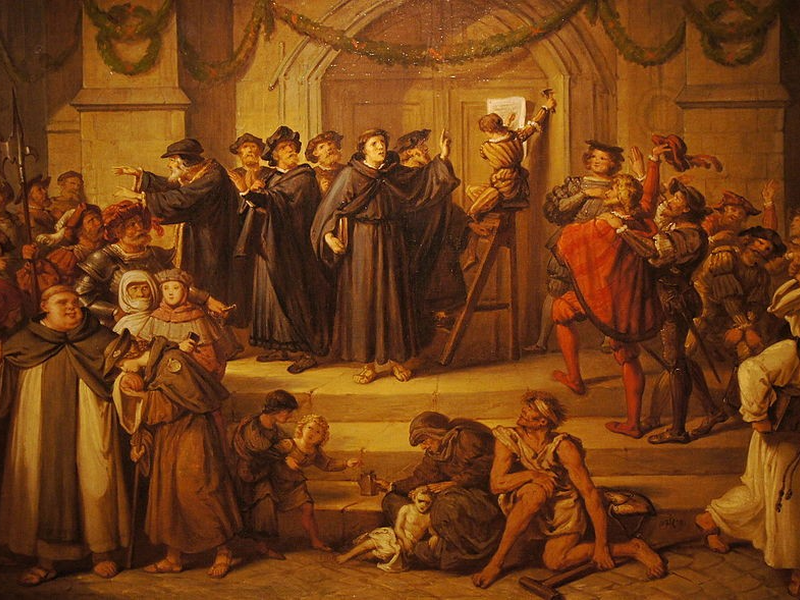
der_anschlag_von_luthers_95_thesen-1024x589
Church Calendar

Five Misconceptions of Reformation Day

For many people the date October 31 is significant not only for being the Eve of All Saints (All Hallows Eve, Halloween) but as the day in 1517 when Martin Luther nailed his 95 theses to the door of the Castle Church in Wittenburg. These theses were a list of…

by Timothy LeCroyOctober 31, 2017
sacre-bleu-r__kixb0i5m-unsplash
Church Calendar

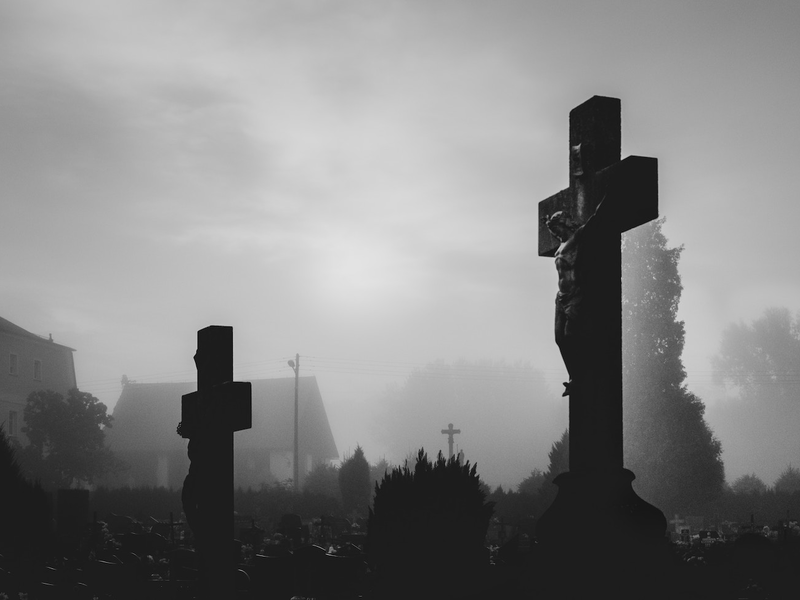
Concerning Halloween

It has become routine in October for some Christian schools to send out letters warning parents about the evils of Halloween, and it has become equally routine for me to be asked questions about this matter. "Halloween" is simply a contraction for All Hallows’ Eve. The word "hallow" means "saint,"…

by James B. JordanOctober 26, 2017
revelation-john-with-rod
Revelation

Preaching, An Art of Division

The following is an excerpt from Peter Leithart's forthcoming two-volume commentary on Revelation (T&T Clark). Y ou must prophesy again concerning many peoples and nations and tongues and kings,” a voice tells John (Rev. 10:11). Then someone gives him a “reed like a rod” and instructs him to measure (11:1).…

by Peter LeithartOctober 24, 2017
josiah-death

Back To Egypt

Josiah is an ideal Davidic king in many ways. He not only “did right,” but he “walked in the ways of his father David” and “did not turn aside to the right or to the left” (2 Chronicles 34:2). At the age of 16, he began to seek Yahweh, and…

by Peter LeithartOctober 19, 2017
augustine
Augustine

Augustine and the Music of Time

One of the best discussions of Augustine’s views on time comes from Jeremy Begbie’s Theology, Music, and Time (ch. 3). Following Paul Ricoeur, Begbie claims that Augustine’s distentio “is conceived as the three-fold present, and the threefold present as distentio . The distentio consists in the non-coincidence of the mind’s…

by Peter LeithartOctober 17, 2017
img_1043
How to Worship

The Psalter Should be Woven into the Fabric of Worship

This has always been the position of the Christian Church, and from an historical perspective the present situation in evangelicalism is appalling. The early liturgies of the Church, which are still used in Episcopal and Lutheran worship, are laced with psalm phrases. The early hymns, such as the Te Deum…

by James B. JordanOctober 12, 2017

Showing page 104 of 309

See all
See all
Art

Impressionism and Urban Renewal

In 1859, Baron George-Eugene Haussmann, Prefect of the Seine, began overhauling Paris. The ultimate result was a masterpiece of urban rationality - straight streets, buildings of the same height, squares, a mappable city. On the way to clarity, though, the city was “rendered illegible,” according to art historian T. J.…

June 27, 2008
Philosophy

Horizontal platonism

Knight says that modernity has not left the upper/lower, intelligible/sensible dualism of Platonism behind, but only tipped it on its side. The modern “subject” is a variation on the world of ideas, while the inert “object” corresponds to the lesser reality of the sensible world.

June 27, 2008

Law and gospel

A strict distinction between law and gospel is offered as a prophylactic against works-righteousness. If it is admitted that law is gospel in any sense, all is lost. But this view assumes the very same view of law that it contests. A proponent of works righteousness sees the law as…

June 27, 2008
History

What Is Enlightenment?

In his essay “What is Enlightenment?” Kant described humanity’s coming-of-age. Enlightenment makes man’s deliverance from the tutelage of external authorities and the achievement of mature autonomy. Earlier, Descartes had constructed an entire philosophy on the foundation of “clear and distinct ideas.” The Enlightenment billed itself as the end of blindness…

June 26, 2008

Forgive our debts

Since at least Kant, Western theology has been hesitant to talk about salvation in terms of payment, debt, restitution. This helps create and reinforce the separation of public and private, of inner and outer: “We have divided the theological confession of sin. We have invented two parallel worlds, one in…

June 26, 2008
History

Bully Secularism

Knight defines “secularity” as “the term for the determination of an elite to be autonomous and to make the polis the servant and expression of their autonomy. Some are then free of external intellectual authority, but they themselves comprise an undeclared intellectual authority over others. The state would then not…

June 26, 2008

Showing page 1498 of 2212

Browse by Category

In Medias Res

Your weekly digest for all things Theopolis.

Donate

Theopolis is nearly 100% donor-supported. Consider joining us on our mission.