Theopolis Logo

Writing

Explore our collection of theological essays, biblical studies, and reflections on faith and culture.

See all
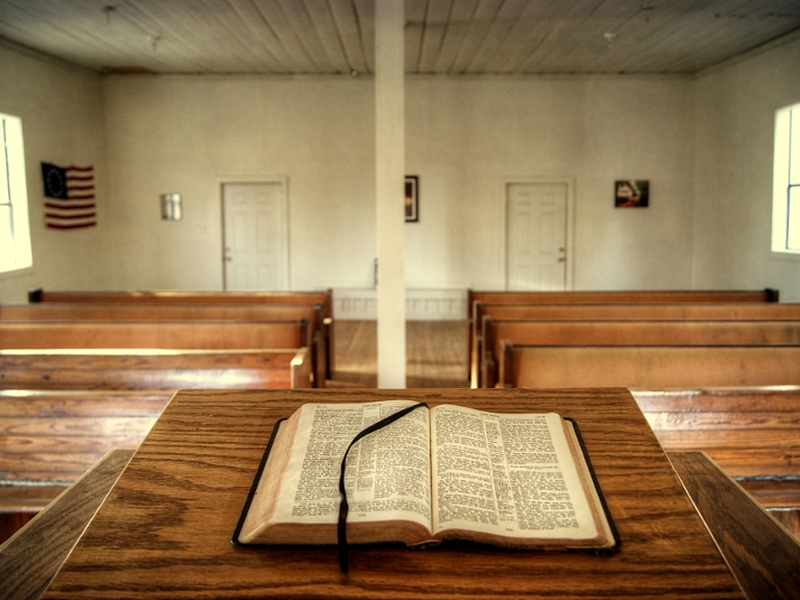
1ramoth-baptist-church-of-christ-7-bible
Pastoral Ministry

Rural Church Growth

I've pastored a very rural church for well over a decade. Our town has about 1,000 people and will never grow until Jesus returns. 38 people attend our worship on Sundays. Here's a quick list of what we’ve done to grow our church, and what I’ve done to survive pastorally.…

by TheopolisAugust 10, 2017

tim-marshall-k2u71wv2ei4-unsplash
Art

Letter to a Young Artist

Thanks for sharing so honestly about your current crisis of creativity. I totally understand and relate to that; it’s happened many times in my musical life thus far, and I’ve begun to accept it as a normal rhythm of the creative process. I actually went through a serious dry spell…

by Joel ClarksonAugust 8, 2017
catapult-poynter-crop-ti
Biblical Theology

Stones and Fruit: Divination and Procreation – (Part 3)

The Broken Stones of Israel At Sinai, the tablets of the Law of Moses were broken and restored. The Old Testament is a history of “new covenants,” including that promised in Jeremiah and fulfilled in Zechariah. Ultimately, the vertical Oath and the horizontal Sanctions met in the death of Jesus…

by Mike BullAugust 3, 2017
resurrection-2
Isaiah

God's Market, the Church

Woe to the sinful nation. Woe to those who enlarge their estates and build their portfolios. Woe to the drunks. Woe to those who call evil good and good evil. Woe to the proud who are wise in their own eyes. Woe to Congressmen who pass unjust laws and to…

by Peter LeithartAugust 1, 2017
paul
Romans

In the Flesh: Then and Now

The interpretation of Romans 7:7-25 is notoriously difficult. Good scholars disagree on many aspects of the passage, but the central interpretative difficulty concerns the identity of the “I.” Is Paul referring to himself? Is Paul referring to himself pre- or post-conversion? Does the “I” refer to Adam? Is the “I”…

by Bill SmithJuly 27, 2017
e99a1883
How to Worship

The Minister's Uniform

You board the Metra train at Arlington Heights station one afternoon, heading to downtown Chicago for some sight-seeing. As the train departs from the station, a man in jeans, a striped t-shirt, and a Kansas City Royals baseball cap enters your train car, and begins asking to see each passenger’s…

by Jon HerrJuly 25, 2017

Showing page 108 of 309

See all
See all
Art

Impressionism and Urban Renewal

In 1859, Baron George-Eugene Haussmann, Prefect of the Seine, began overhauling Paris. The ultimate result was a masterpiece of urban rationality - straight streets, buildings of the same height, squares, a mappable city. On the way to clarity, though, the city was “rendered illegible,” according to art historian T. J.…

June 27, 2008
Philosophy

Horizontal platonism

Knight says that modernity has not left the upper/lower, intelligible/sensible dualism of Platonism behind, but only tipped it on its side. The modern “subject” is a variation on the world of ideas, while the inert “object” corresponds to the lesser reality of the sensible world.

June 27, 2008

Law and gospel

A strict distinction between law and gospel is offered as a prophylactic against works-righteousness. If it is admitted that law is gospel in any sense, all is lost. But this view assumes the very same view of law that it contests. A proponent of works righteousness sees the law as…

June 27, 2008
History

What Is Enlightenment?

In his essay “What is Enlightenment?” Kant described humanity’s coming-of-age. Enlightenment makes man’s deliverance from the tutelage of external authorities and the achievement of mature autonomy. Earlier, Descartes had constructed an entire philosophy on the foundation of “clear and distinct ideas.” The Enlightenment billed itself as the end of blindness…

June 26, 2008

Forgive our debts

Since at least Kant, Western theology has been hesitant to talk about salvation in terms of payment, debt, restitution. This helps create and reinforce the separation of public and private, of inner and outer: “We have divided the theological confession of sin. We have invented two parallel worlds, one in…

June 26, 2008
History

Bully Secularism

Knight defines “secularity” as “the term for the determination of an elite to be autonomous and to make the polis the servant and expression of their autonomy. Some are then free of external intellectual authority, but they themselves comprise an undeclared intellectual authority over others. The state would then not…

June 26, 2008

Showing page 1498 of 2212

Browse by Category

In Medias Res

Your weekly digest for all things Theopolis.

Donate

Theopolis is nearly 100% donor-supported. Consider joining us on our mission.