Theopolis Logo

Writing

Explore our collection of theological essays, biblical studies, and reflections on faith and culture.

See all
medievalilluminatedmanuscript
Biblical Studies

The Art of Why

“We have a God who hides things because He loves to be sought out, chewed out and found out.” As Christians, we are rightly taught that we must not question God’s Word. The problem is that the Scriptures record many things which appear to have been given to us for…

by Mike BullMay 12, 2015

last-supper
Revelation

Eucharistic Harvest

The book of Revelation is a liturgy. John begins “in the Spirit” on the “Lord’s day” (1:10). Jesus appears, and Jesus tells him to record messages to seven churches, words of encouragement and rebuke, like the call to worship and confession at the beginning of a Christian liturgy. In chapter…

by Peter LeithartMay 7, 2015
sunrise-2
Creation

Maker of Heaven and Earth, (Part 5)

In my previous posts, I looked at the theme of creation as it is found in a sequence of psalms devoted to Yahweh’s Kingship (Psalms 93-100). Among other matters, these psalms declare that when the Kingdom of Israel’s God comes, it is the Kingdom of the world’s own Creator .…

by Stephen LongMay 7, 2015
13071-probablyvalentindeboulogne-saintpaulwritinghi-1
Deuteronomy

Paul the Levir

The church in Corinth was a pastoral nightmare. Factionalism, sexual immorality, incipient syncretism, using the church as a stage for self-promotion, and denial of the final resurrection were just some of the problems. In Paul’s first letter to the Corinthian church, he confronts each of these problems directly and in…

by Bill SmithMay 5, 2015
creation-eve
Covenant

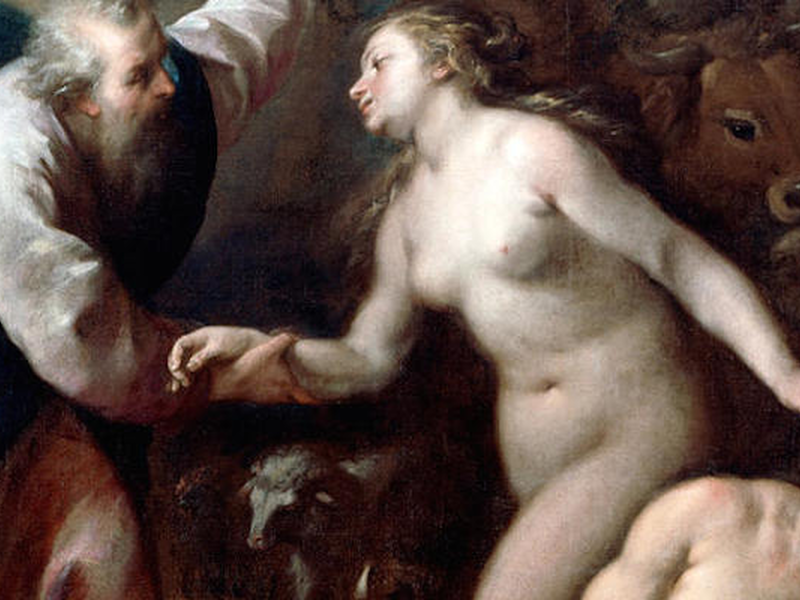
Covenant Structure in Genesis 2

The first chapters of the Word of God have a poetic rhythm. This is used to discredit their accuracy as historical narrative, but the truth is that these same rhythms continue far beyond the book of Genesis. In fact, the later texts shed light on the frustratingly succinct account of…

by Mike BullApril 30, 2015
light-bulb
Creation

Must A Light Bulb Be "Oriented Toward Illumination"?

Mr. Martian: What’s that there? Mr. Edison: (Edison holds up a standard, 60 watt lightbulb). It’s a lightbulb. Mr. Martian: A “lightbulb” you say? What exactly is a “lightbulb”? Mr. Edison: A lightbulb is an object used to illuminate a dark area, say a room. It’s made primarily of filament…

by Gerald HiestandApril 28, 2015

Showing page 154 of 309

See all
See all
Art

Impressionism and Urban Renewal

In 1859, Baron George-Eugene Haussmann, Prefect of the Seine, began overhauling Paris. The ultimate result was a masterpiece of urban rationality - straight streets, buildings of the same height, squares, a mappable city. On the way to clarity, though, the city was “rendered illegible,” according to art historian T. J.…

June 27, 2008
Philosophy

Horizontal platonism

Knight says that modernity has not left the upper/lower, intelligible/sensible dualism of Platonism behind, but only tipped it on its side. The modern “subject” is a variation on the world of ideas, while the inert “object” corresponds to the lesser reality of the sensible world.

June 27, 2008

Law and gospel

A strict distinction between law and gospel is offered as a prophylactic against works-righteousness. If it is admitted that law is gospel in any sense, all is lost. But this view assumes the very same view of law that it contests. A proponent of works righteousness sees the law as…

June 27, 2008
History

What Is Enlightenment?

In his essay “What is Enlightenment?” Kant described humanity’s coming-of-age. Enlightenment makes man’s deliverance from the tutelage of external authorities and the achievement of mature autonomy. Earlier, Descartes had constructed an entire philosophy on the foundation of “clear and distinct ideas.” The Enlightenment billed itself as the end of blindness…

June 26, 2008

Forgive our debts

Since at least Kant, Western theology has been hesitant to talk about salvation in terms of payment, debt, restitution. This helps create and reinforce the separation of public and private, of inner and outer: “We have divided the theological confession of sin. We have invented two parallel worlds, one in…

June 26, 2008
History

Bully Secularism

Knight defines “secularity” as “the term for the determination of an elite to be autonomous and to make the polis the servant and expression of their autonomy. Some are then free of external intellectual authority, but they themselves comprise an undeclared intellectual authority over others. The state would then not…

June 26, 2008

Showing page 1498 of 2212

Browse by Category

In Medias Res

Your weekly digest for all things Theopolis.

Donate

Theopolis is nearly 100% donor-supported. Consider joining us on our mission.