Theopolis Logo

Writing

Explore our collection of theological essays, biblical studies, and reflections on faith and culture.

See all
tanner-mardis-xuxghzhibn4-unsplash-1-2
Angels

Michael’s Dispute with the Devil

But Michael the archangel, when he disputed with the devil and argued about the body of Moses, did not dare pronounce against him a railing judgment, but said, "The Lord rebuke you" (Jude 9). Jude 9 raises several difficulties (though not insuperable difficulties) for conservative commentators. The event that Jude…

by Peter LeithartFebruary 22, 1989

hebrew-manuscript-6
Angels

Who Were the Angels of Jude 6?

The prophecy of Jude concerns apostasy. An illustration of apostasy and its consequences is found in verse 6, which the New American Standard Bible translates this way: "And angels who did not keep their own domain, but abandoned their proper abode, He has kept in eternal bonds under darkness for…

by James B. JordanJanuary 12, 1989
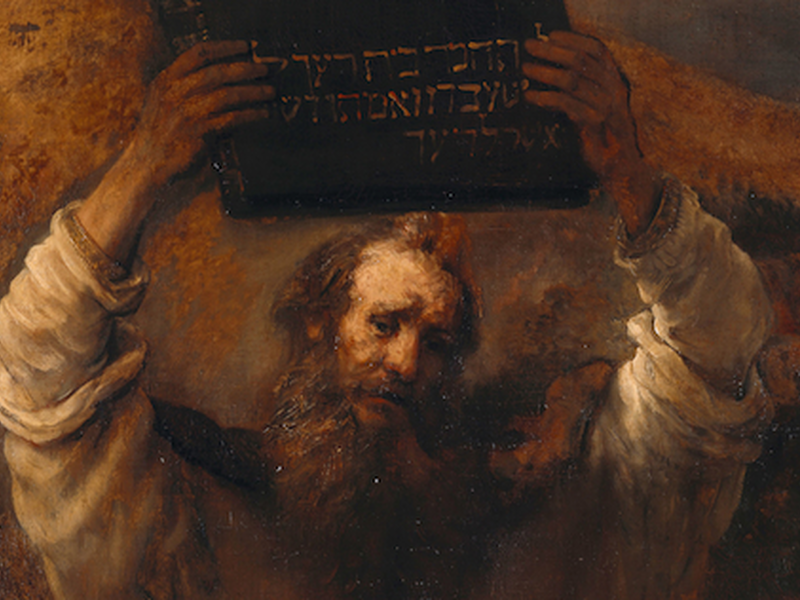
moses-10-words-2
Biblical Studies

The Mosaic Law and Social Issues

One of the most pressing problems facing Christians today is how the faith relates to the crises of our civilization. On all sides, Christian spokesmen are trying to offer solutions and perspectives on social issues, in order to try and reform our degenerating society. Abortion, pornography, homosexuality, immigration, war, criminal…

by James B. JordanJanuary 12, 1989
screenshot-2025-04-10-at-8-48-27-am
Uncategorized

ZIKLAG BIVOUAC

In the last several months, a number of people have written or phoned to ask me why I and the other men of Geneva Ministries are remaining in a tiny Presbyterian denomination, rather than joining a large, historic, liturgical body. The question arises, it seems, because in my writings and…

by James B. JordanOctober 23, 1985
resurrection
Advent

The Menace of Chinese Food

One of the unrecognized and most deadly evils of modern life’s facets is Chinese food. Most people are wholly unaware of the critical nature of the Chinese food question, and blithely continue to participate in this wicked and dangerous activity: eating Chinese food. Of course, to speak against such a…

by James B. JordanDecember 12, 1984
See all
See all
Art

Impressionism and Urban Renewal

In 1859, Baron George-Eugene Haussmann, Prefect of the Seine, began overhauling Paris. The ultimate result was a masterpiece of urban rationality - straight streets, buildings of the same height, squares, a mappable city. On the way to clarity, though, the city was “rendered illegible,” according to art historian T. J.…

June 27, 2008
Philosophy

Horizontal platonism

Knight says that modernity has not left the upper/lower, intelligible/sensible dualism of Platonism behind, but only tipped it on its side. The modern “subject” is a variation on the world of ideas, while the inert “object” corresponds to the lesser reality of the sensible world.

June 27, 2008

Law and gospel

A strict distinction between law and gospel is offered as a prophylactic against works-righteousness. If it is admitted that law is gospel in any sense, all is lost. But this view assumes the very same view of law that it contests. A proponent of works righteousness sees the law as…

June 27, 2008
History

What Is Enlightenment?

In his essay “What is Enlightenment?” Kant described humanity’s coming-of-age. Enlightenment makes man’s deliverance from the tutelage of external authorities and the achievement of mature autonomy. Earlier, Descartes had constructed an entire philosophy on the foundation of “clear and distinct ideas.” The Enlightenment billed itself as the end of blindness…

June 26, 2008

Forgive our debts

Since at least Kant, Western theology has been hesitant to talk about salvation in terms of payment, debt, restitution. This helps create and reinforce the separation of public and private, of inner and outer: “We have divided the theological confession of sin. We have invented two parallel worlds, one in…

June 26, 2008
History

Bully Secularism

Knight defines “secularity” as “the term for the determination of an elite to be autonomous and to make the polis the servant and expression of their autonomy. Some are then free of external intellectual authority, but they themselves comprise an undeclared intellectual authority over others. The state would then not…

June 26, 2008

Showing page 1498 of 2212

Browse by Category

In Medias Res

Your weekly digest for all things Theopolis.

Donate

Theopolis is nearly 100% donor-supported. Consider joining us on our mission.