Theopolis Logo

Writing

Explore our collection of theological essays, biblical studies, and reflections on faith and culture.

See all
max-kukurudziak-qbc3zmxw0g8-unsplash
History

Report from Ukraine

We lost Crimea. That is very clear. Putin proved he was not lying when he said he would place women and children ahead of his soldiers to storm Ukrainian military bases. Russian soldiers did exactly that with women (some who volunteered and some who were forced). Russia now occupies all…

by San SanychMarch 28, 2014

screenshot-2023-09-21-at-3-59-23-pm
Church Calendar

God Gone Silent

Sound is an indicator of life and energy. “Sound signals the present use of power, since sound must be in active production to exist at all.” Things don’t have to be alive to make themselves visible, and “a primitive hunter can see, feel, smell, and taste an elephant when the…

by Peter LeithartMarch 26, 2014
web-lead-image_final_dostoevsky
Books

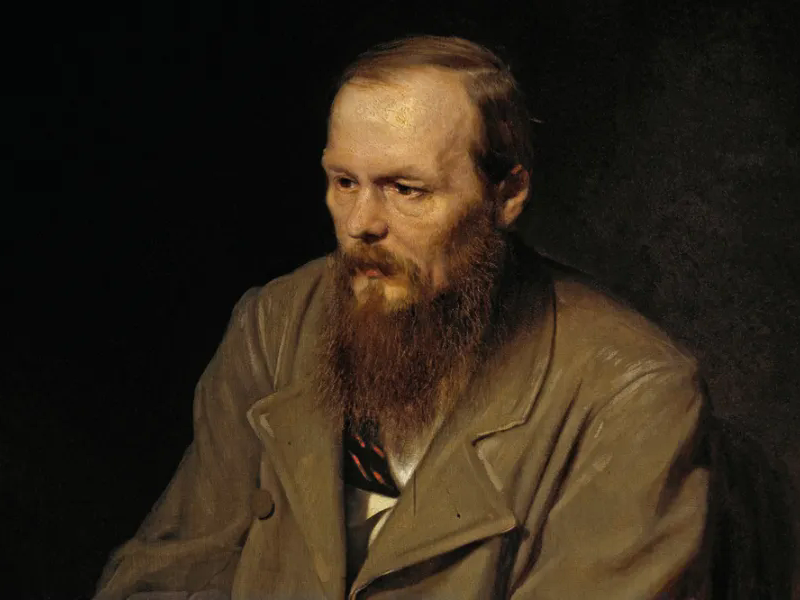
Dostoevsky the Liberal

In the most famous section of his best-known novel, Dostoevsky’s Ivan Karamazov brings forward his case against God. He opens with a horrific litany of outrages against children. Turkish soldiers make a baby laugh and then shoot a pistol into his face. A little girl is beaten, thrashed, kicked by…

by Peter LeithartMarch 24, 2014
kelly-sikkema-ggs0_g6wi-i-unsplash
Epistemology

Subsidiary-Focal Integration and Liturgy

​At the heart of Esther Lightcap Meek's splendid ​Little Manual for Knowing is a concept she picked up from Michael Polanyi, "subsidiary-focal integration." The concept begins from the insight that all our knowing, all our experience, is double. We focus on something, but we are capable of "indwelling" that focal…

by Peter LeithartMarch 19, 2014
engin-akyurt-uz9qpvbol0e-unsplash
Revelation

White Stone

Jesus promises the overcomers of Pergamum "hidden manna" and a "white stone." The hidden manna is often linked with the manna stashed away in the ark of the covenant. The white stone has proved more elusive. Exodus tells us that manna was white (Exodus 16:31) and like bdellium (Numbers 11:7),…

by Peter LeithartMarch 17, 2014
226961fgsdl
Leviticus

A Theology of Festivity

Leviticus 23 begins with a reference to “Yahweh’s appointed times” ( mo’ade-YHWH ). Mo’ed is the common term for the feasts of Israel. A few dimensions to this term. First, it means “appointed time” or “designated time.” It is a time set by Yahweh. Yahweh has claimed certain times as…

by Peter LeithartMarch 12, 2014

Showing page 177 of 309

See all
See all
Theology

Angels and progress again

From Australia, reader Mike Bull responds to my earlier post: I recently heard a pastor from southern India speak, and it sounds like ‘enchantment’ is still as powerful as it ever was (although, despite his hair-raising stories, it seems the best Satan can do to the saints in India at…

June 17, 2008
History

Idle warriors

An eighteenth-century French missionary, Joseph-Francois Lafitau, wrote of the Iroquois: “The men who are so idle in their villages, regard their indolence as a sign of glory in order to make everyone understand that they are actually only born for the great things and particularly for war. For there they…

June 17, 2008
Theology

Angels and progress

Thoughts from what Jim Jordan calls the “deep weird”:In Revelation, the angelic elders give up their crowns at the outset, and at the end of the book the saints are enthroned for a thousand years. Revelation depicts a transition from angelic to human government. Angels, Scripture tells us, are somehow…

June 17, 2008
History

Masks and clocks

Elias wryly comments that in urban societies the manufacture and use of clocks is similar to the use of masks in tribal cultures: “one knows they are made by people but they are experienced as if they represented an extra-human existence. Masks appear as embodiments of spirits. Clocks appear as…

June 17, 2008
Philosophy

Trained Ego

Elias challenges the Cartesian method of doubt, arguing that Descartes scrums around to get beneath all he’s picked up and finds, at bottom, things he’s picked up: “he is supposed to penetrate in his meditation, all on his own, to a layer of his own intellect believed, in accordance with…

June 17, 2008
History

January 1

Norbert Elias ( An Essay on Time ) writes that “for a long time . . . there were, even within one and the same state, traditional local diversities with regard to the beginning of a year, and thus to its end. As far as one can see, it was…

June 17, 2008

Showing page 1504 of 2212

Browse by Category

In Medias Res

Your weekly digest for all things Theopolis.

Donate

Theopolis is nearly 100% donor-supported. Consider joining us on our mission.