Theopolis Logo

Writing

Explore our collection of theological essays, biblical studies, and reflections on faith and culture.

See all
freysteinn-g-jonsson-2baa-syyptk-unsplash
American Religion

Protestantism's Lost Soul

D. G. Hart’s The Lost Soul of American Protestantism vividly clarifies the differences between evangelical and Confessional Protestantism. In part the book is a manifesto for historians of American religion. Hart argues that historians of American Protestantism have operated with a simplistic binary contrast of evangelical/conservative v. liberal/progressive. At best,…

by Peter LeithartAugust 18, 2015
dostoyevsky
Books

The Idiot and the Limits of Compassion

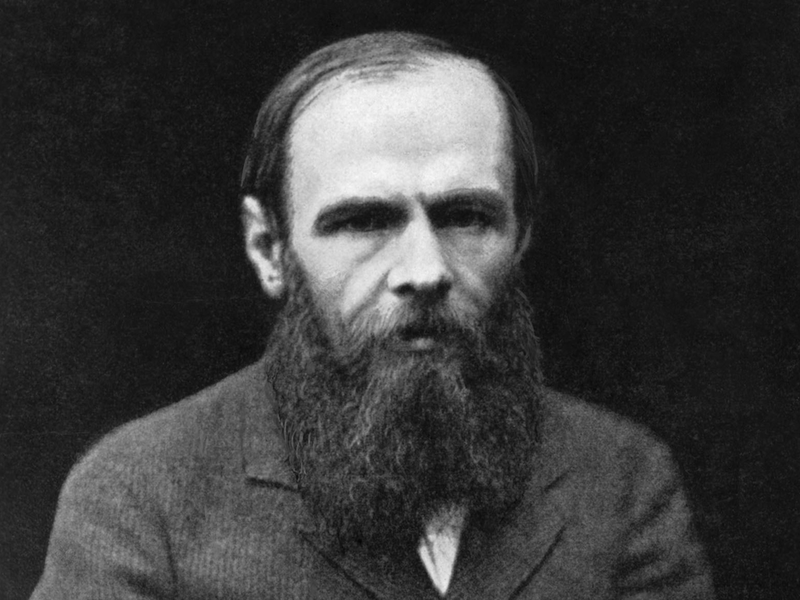
Dostoyevsky’s novel, The Idiot , like his other major works, is a complex evaluation of the human condition—a juxtaposition of the innate goodness and innate evil that resides within every human heart. There is much one can say about The Idiot . I am no specialist of Russian literature, or…

by Gerald HiestandAugust 13, 2015
same-sex-celebrations-2
Homosexuality

If There is “Natural Law” How Can People Believe in Same-Sex Marriage?

At risk of violating some secret handshake agreement on some important nuance to “natural law,” I will sum up what I understand in my own words. As far as I can tell natural law is supposed to be an area of knowledge that all people should be able to agree…

by Mark HorneAugust 11, 2015
falling-star
Biblical Studies

Cosmic Language, 2

The first installment of this article may be found here . The Image of Man This brings us to a substitutionary atonement which we do understand, the fulfilment of the cruciform Tabernacle in the cross of Christ. Although Jesus’ execution was Physical and Social, it was primarily Personal . Beginning…

by Mike BullAugust 6, 2015
branagh-macbeth
Genesis

Every Noise Appalls

The first two essays in this series drew attention to the structure of the first part of Macbeth and to the way Shakespeare incorporates the Garden of Eden into his story. Macbeth , we saw, is a temptation story in which, compared to the Biblical story, the temptation itself is…

by Ralph Allan SmithAugust 4, 2015
new-jerusalem
Revelation

The Warrior and the City: A Wedding Homily

Revelation 19:6-9 Then I heard something like the voice of a great multitude and like the sound of many waters and like the sound of mighty peals of thunder, saying, “Hallelujah! For theLord our God, the Almighty, reigns. Let us rejoice and be glad and give the glory to Him,…

by Peter LeithartAugust 3, 2015

Showing page 146 of 309

See all
See all
Science

Sentient plants

R. Fischer says, “The relativity of our reference point can be demonstrated by taking a moving picture of a plant at one frame a minute and then speeding it up to thirty frames a second. The plant will appear to behave like an animal, clearly perceiving stimuli and reacting to…

June 17, 2008
History

Freud and the Steam Engine

Barbara Adam points out that the leading metaphors for nature in the seventeenth and eighteenth century were mechanical. Creation was a clock. By the nineteenth century, though, steam technology had taken over the European imagination, and metaphors of “letting off steam” and “safety valve” were applied to social and psychological…

June 17, 2008

Participatory Exegesis

My review of Matthew Levering’s latest book is up at First Things : http://www.firstthings.com.

June 17, 2008
Science

Replaceable parts

Behind much of today’s biotechnology is the (Newtonian?) notion that living organisms are machine-like. And living organisms can look like machines in some respects. But they aren’t. Barbara Adam points out that the cells of our bodies are incessantly self-renewing - our limbs aren’t like gears that stay the same…

June 16, 2008
Science

Dance of life

Summarizing findings in physics and biology that should inform social science, Barbara Adam writes, “All organisms, from single cells to human beings and even ecosystems, display rhythmic behaviour. Rhythmicity is a universal phenomenon. Scientists conceptualise atoms as probability waves, molecules as vibrating structures, and organisms as symphonies. Living beings, they…

June 16, 2008
Science

Real time

KG Denbigh wrote in 1981 that physics treats time as a simple continuum: “It knows of no means of picking out a unique moment, the now or the present. The t-coordinate is an undifferentiated continuum, and, if this coordinate is ‘taken for real’ as has been the tendency among many…

June 16, 2008

Showing page 1505 of 2212

Browse by Category

In Medias Res

Your weekly digest for all things Theopolis.

Donate

Theopolis is nearly 100% donor-supported. Consider joining us on our mission.