Theopolis Logo

Writing

Explore our collection of theological essays, biblical studies, and reflections on faith and culture.

See all
tom-bradley-eoiscqxpmkm-unsplash
Liturgy

The Temple Singers

Who were the company of singers who sang in the Temple built by Solomon? I think many people might answer “the Levitical singers.” That is not correct, because the Levites were not allowed inside the Temple; only the priests were. The Levitical choir and orchestra performed for Yahweh outside the…

by James B. JordanJuly 2, 2015

same-sex-celebrations-2
Homosexuality

After Obergefell - A Pastoral Letter

Dear Congregation, Social media is awash with rants for and against the ruling from the Supreme Court (SCOTUS) yesterday regarding homosexual marriage ( Obergefell v. Hodges ). My contribution on Facebook was simply to quote relevant sections of the dissents written by the four judges in the minority. Even though…

by Jeff MeyersJuly 1, 2015
egyptian-slaves
Biblical Law

Law and Imagination

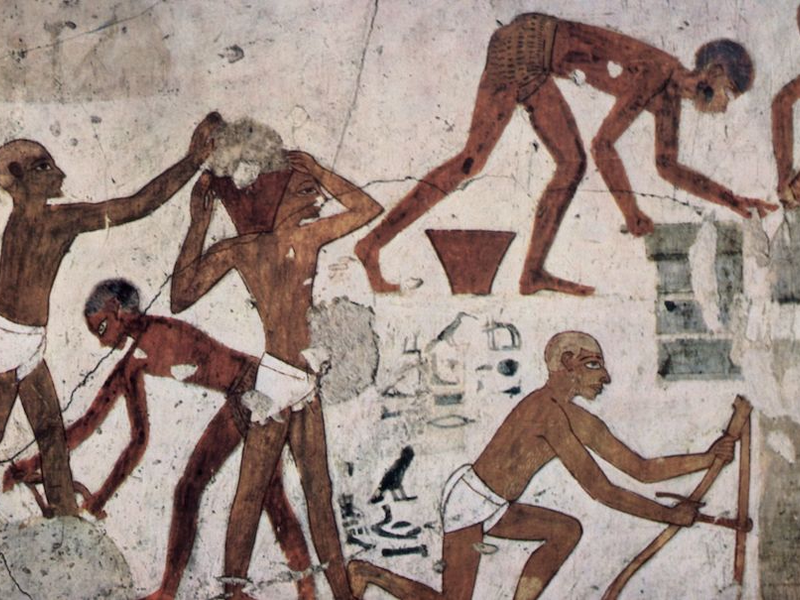
After the Civil War, the hobbled nation and fractured races looked about for leadership; animosity was high and envy was crouching at the door. Booker Taliaferro Washington, up from slavery, surveyed the rising tension and injustice, foreseeing civil unrest and chafing inequalities, eschewed, remarkably, a legislative remedy and advised a…

by Remy WilkinsJune 30, 2015
same-sex-celebration
Homosexuality

They Played the Flute for Me - But I Couldn't Dance

The ruling on Obergefell v. Hodges “came down” on Friday morning, June 26, 2015, like a bolt from Zeus. Many who refuse to bow to the dictates of our Olympians will write trenchant legal, theological, and cultural/political analyses of the court’s ruling. What I’m comfortable contributing to the historical record,…

by Jonathan BarlowJune 29, 2015
stonewall
American Culture

After Obergefell

Orthodox Christianity has lost all cultural potency in the U.S. No one defending traditional marriage before the court dared raise the fundamental question: Who creates marriage, God or the state? Theology has no public standing, no persuasive force in the culture at large. Obergefell is another nail in the coffin…

by Peter LeithartJune 27, 2015
photikus-production-mvh_6_yq7uo-unsplash
Poetry

Dust of Snow

One will rarely come upon a classical allusion in a Robert Frost poem. His poetic scheme was to follow the speaking patterns of common folk, to use their words and images to achieve his point. Despite this simplicity, there is a depth and richness to his poetry that can be…

by Remy WilkinsJune 25, 2015

Showing page 150 of 309

See all
See all

Essential/Accidental Meaning

Gracia’s own suggestion is that we can make sense of the determinateness and indeterminateness of meaning by distinguishing between “essential” and “accidental” meanings: “although texts may have a well-delimited core of meaning (an essential meaning), they may have other meanings that are the result of contingent conditions, such as changes…

June 6, 2008

No Smoking

In the entry on meaning in the Dictionary for Theological Interpretation of the Bible (Baker), Jorge Gracia responds to the view that textual meaning has no limits with this: It is true that “texts are understood by different persons, or even by the same person at different times, to mean…

June 6, 2008

Tallis

Joel Garver writes, in response to several posts from Raymond Tallis’s Not Saussure : “Most post-structuralist authors I’ve read aren’t dealing with things such as cups or trees or rocks, but rather things such as rationality, madness, criminality, virtue, etc. Foucault, for instance, seems to take bodies as ontologically basic,…

June 5, 2008
Literature

Bible and poetry

Fisch yet again: After reviewing the influence of the Old Testament, especially the Psalms, on prose writing in the seventeenth century, he adds: “it is worth bearing in mind that this is not only a matter of the seventeenth century. It is found earlier in the antiphonal plain-song of the…

June 5, 2008
Literature

Hebraic prose

Fisch again: Hebraic prose is different from the grand style of the sixteenth century, and different too from the pared-down plain style shared by many Puritans and all Baconians. It is a rhetoric, not an anti-rhetoric, but it is a rhetoric purified by Puritanism, Senecanism, and scientism. It is biblical…

June 5, 2008
Literature

Jerusalem and Albion

In his 1964 book, Jerusalem and Albion: The Hebraic Factor in Seventeenth-Century Literature , Harold Fisch argues that Blake provides a more insightful and broader account of the seventeenth century’s “dissociation of sensibility” than Eliot, who coined the phrase. For Blake, the great crisis of England was the dissociation of…

June 5, 2008

Showing page 1507 of 2212

Browse by Category

In Medias Res

Your weekly digest for all things Theopolis.

Donate

Theopolis is nearly 100% donor-supported. Consider joining us on our mission.