Theopolis Logo

Writing

Explore our collection of theological essays, biblical studies, and reflections on faith and culture.

See all
hebrew-manuscript-2
Atonement

Footstool of His Feet

The translation and theology of the Hebrew term kapporet have long been puzzling to scholars. On the translation of the term, I have nothing new to offer. I wish instead to concentrate on the theological symbolism of the kapporet . The kapporet was the solid gold slab that laid "above"…

by Peter LeithartMarch 9, 2017

screen-shot-2016-03-31-at-9-32-11-am
Art

The Hermeneutics of Haiku

“Three lines are enough” -Rabindranath Tagore My second favorite((I frequently use the “my second favorite” as a figure of speech meaning: “here’s a good one” and to also prompt the question, “What’s your first favorite?”)) haiku was written by some internet wag: Haikus are easy But sometimes they don’t make…

by Remy WilkinsMarch 7, 2017
neon-bible
Biblical Studies

The Scriptures Made Strange

The history of the Reformation couldn’t adequately be recounted without discussing the remarkable role played by the relatively recent innovations and developments in book production and printing. The printing press facilitated the rapid production and dissemination of multiple copies of pamphlets and books, which enabled the Reformers to circulate their…

by Alastair RobertsMarch 2, 2017
cross-grunwald
Church Calendar

School of Suffering

As evangelicals, we’re convinced that Christ’s work is finished, complete, and utterly sufficient. For many evangelicals, this is the gospel: Nothing can take away from Christ’s work, and surely nothing can be added to it by my works or my penance, by self-denial or sacraments or sacrifice. Nothing is lacking…

by Peter LeithartFebruary 28, 2017
img_0166
Eucharist

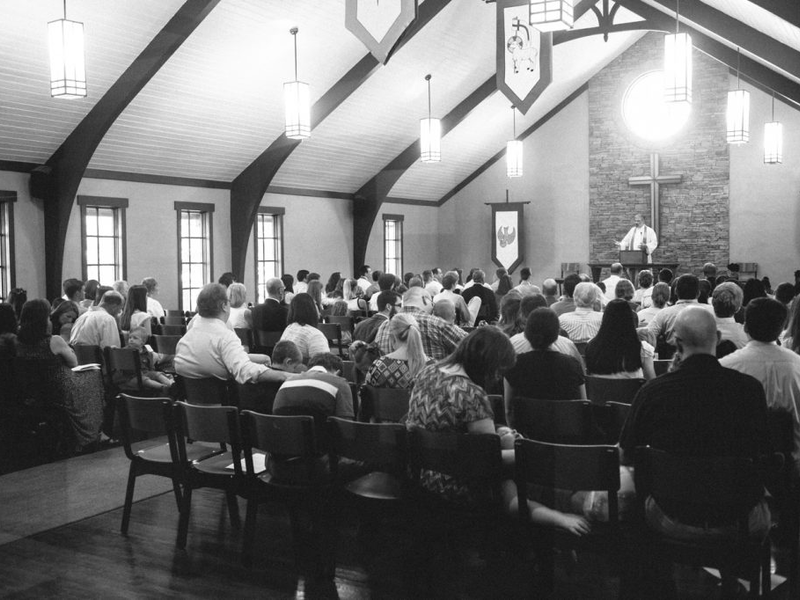
Worship and Ceremony: Part 1

Evangelicalism needs a return to formal and Biblical worship. Worship is a public act, performed on the surface of God's true altar, the world, before His throne. Man's chief end is to glorify and enjoy God, and worship is done for God's pleasure. It is man's highest privilege to dance…

by James B. JordanFebruary 23, 2017
paul
Romans

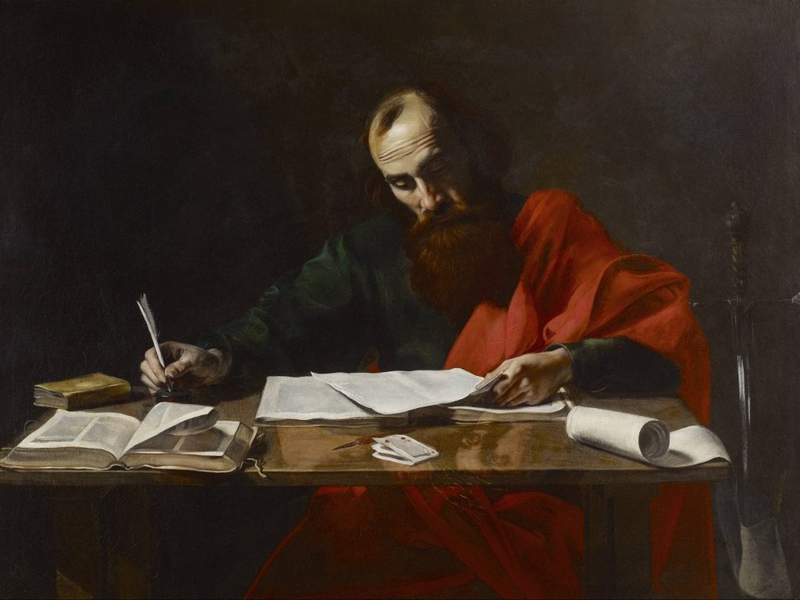
Grace Reigns In Death

The evidence of sin and its death ruling in the world is clear. Paul describes the situation vividly in the opening section of his letter to the Romans. No matter who you are, Jew or Gentile, you have the same problem: you are “under sin” (Romans 3:9). Being under sin…

by Bill SmithFebruary 21, 2017

Showing page 116 of 309

See all
See all
Science

Devil’s Delusion

Of all the people I’ve seen on film recently, the one I’d most want to be is David Berlinski, whom Ben Stein interviewed extensively in his Paris apartment that reeked with sophistication and culture. Berklinski, by his own definition a “secular Jew” with no memory of Hebrew, has just published…

May 21, 2008

Obama’s subtexts

In an intriguing piece in TNR , writer Cinque Henderson - who identifies himself as one of the few remaining Clinton supporters among African-Americans - explains Obama’s use of “hoodwinked” and “bamboozled” (not the first words to spring to Obama’s lips, one would think) in the South Carolina primary: “It…

May 21, 2008
Philosophy

Flat souls

Kristeva says that contemporary culture separates affects from language, which leads to a loss of soul. Souls are empty. To help, our culture offers drugs and entertainment. Drugs flatten experience to a drone; entertainment dazzles momentarily with two-dimensional images. So do our solutions increase the problem. Flat remedies for flat…

May 20, 2008

Body/Language

Kristeva’s distinction of semiotic and symbolic is intended to overcome the dualism of traditional linguistic theories, the dualism of body and language, or matter and language. For Kristeva, the “semiotic” is the way drives are organized or “discharged” in language, and thus includes everything that is meaningful in language but…

May 20, 2008

Langue without speakers

Julia Kristeva notes that Saussure’s linguistic theory permits “linguistics to claim a logical, mathematical formalization on the one hand, but on the other, it definitely prevents reducing a language or text to one law or one meaning.” This latter point is true because by splitting the sign into signified and…

May 20, 2008

Limits of Dialectic

Desmond thinks that dialectic makes some gains: It affirms the “complex sense of unity,” appreciates mediation, critiques dualism, defends the “interplay and community of immanence and transcendence.” But dialectic cannot be the final moment of metaphysics. Why? “The problem is that if we privilege self-mediation and erect this into the…

May 20, 2008

Showing page 1516 of 2212

Browse by Category

In Medias Res

Your weekly digest for all things Theopolis.

Donate

Theopolis is nearly 100% donor-supported. Consider joining us on our mission.