Theopolis Logo

Writing

Explore our collection of theological essays, biblical studies, and reflections on faith and culture.

See all
img_1456
Epistemology

Seeking Integration in a Fragmented World: Covenant Epistemology: The Integrative Regard of the Other

Fragmentation characterizes our era. Bits, bytes, chips, data points. Ourselves as reducible to the meaningless. We can feel dehumanized and lost. We seek wholeness, integration. We rightly believe that integration brings meaningfulness, somehow doing better credit to ourselves as humans and to the world. More than that, integration somehow aligns…

by Esther Lightcap MeekJune 5, 2018

hebrew-manuscript-2
Proverbs

The Dramatic Structure of Proverbs

The book of Proverbs appears as a largely random collection of aphorisms drawn from experience saturated in law. Despite its random arrangement, however, the book does have an over-arching structure that reinforces its main themes. One way to gather clues regarding the structure of a biblical book (or any book)…

by Peter LeithartMay 31, 2018
infant-baptism
Baptism

Infant Baptism in the History of the Church

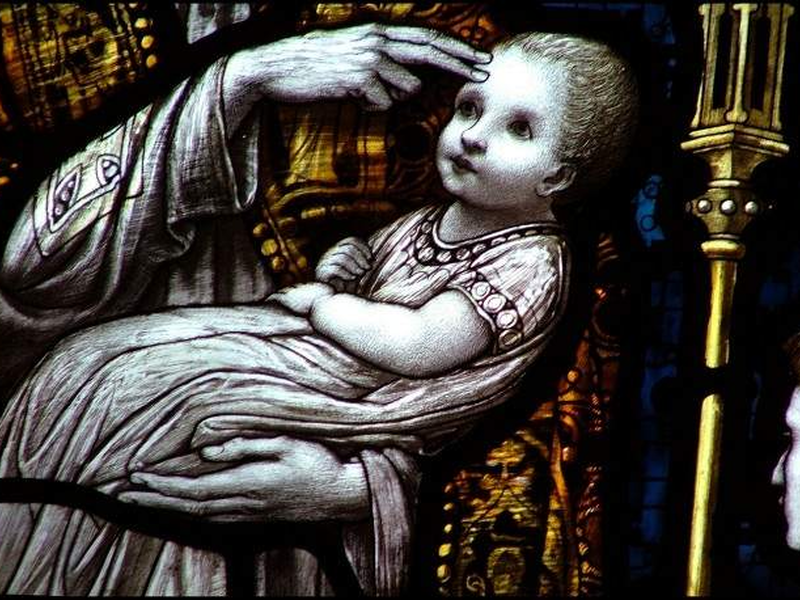
Ancient practice in the Church sets an important precedent for present day practice. This certainly doesn’t mean that Christians are bound to only do things as they have always been done, but the principles of catholicity and unity move us not to break from historic church practice on a particular…

by Timothy LeCroyMay 29, 2018
tower-of-babel
Biblical Studies

Babel Academy, Part 2

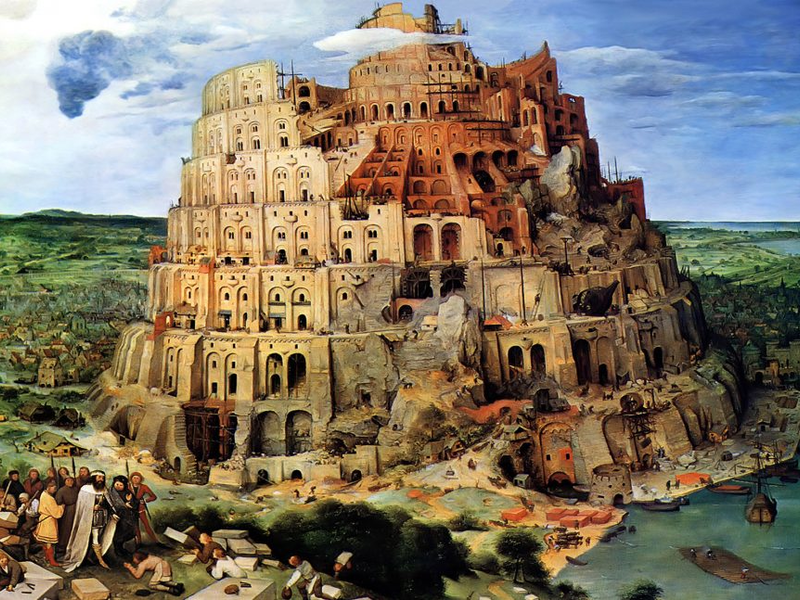
For Part 1, click HERE . Genesis 1 describes the creation of the physical order. Genesis 2 recapitulates the pattern of Genesis 1 as it describes the creation of the social order. Genesis 3 describes the intended founding of an ethical order. It was here that sin entered into the…

by Mike BullMay 24, 2018
babelhead
Biblical Studies

Babel Academy, Part 1

The Business of Keeping the Saints in the Dark Let there be light! The first recorded “spoken” words of God. Curiously, even this creative decree was a deed whose fruit required an appraisal. God judged the light and separated it from the darkness. As the cardinal act within a newborn…

by Mike BullMay 22, 2018
markus-winkler-aid-xyrtlec-unsplash
Course Announcement

A Week with Esther Meek - An Introduction to Covenant Epistemology

We are very pleased to announce that Esther Lightcap Meek will be the instructor for our 2018 Trinity Course in August. The course is titled "Loving to Know: Introducing Covenant Epistemology" and will be held August 13-17 at Beeson Divinity School. Esther Meek, Ph.D., is Professor of Philosophy at Geneva…

by TheopolisMay 21, 2018

Showing page 93 of 309

See all
See all
Science

Devil’s Delusion

Of all the people I’ve seen on film recently, the one I’d most want to be is David Berlinski, whom Ben Stein interviewed extensively in his Paris apartment that reeked with sophistication and culture. Berklinski, by his own definition a “secular Jew” with no memory of Hebrew, has just published…

May 21, 2008

Obama’s subtexts

In an intriguing piece in TNR , writer Cinque Henderson - who identifies himself as one of the few remaining Clinton supporters among African-Americans - explains Obama’s use of “hoodwinked” and “bamboozled” (not the first words to spring to Obama’s lips, one would think) in the South Carolina primary: “It…

May 21, 2008
Philosophy

Flat souls

Kristeva says that contemporary culture separates affects from language, which leads to a loss of soul. Souls are empty. To help, our culture offers drugs and entertainment. Drugs flatten experience to a drone; entertainment dazzles momentarily with two-dimensional images. So do our solutions increase the problem. Flat remedies for flat…

May 20, 2008

Body/Language

Kristeva’s distinction of semiotic and symbolic is intended to overcome the dualism of traditional linguistic theories, the dualism of body and language, or matter and language. For Kristeva, the “semiotic” is the way drives are organized or “discharged” in language, and thus includes everything that is meaningful in language but…

May 20, 2008

Langue without speakers

Julia Kristeva notes that Saussure’s linguistic theory permits “linguistics to claim a logical, mathematical formalization on the one hand, but on the other, it definitely prevents reducing a language or text to one law or one meaning.” This latter point is true because by splitting the sign into signified and…

May 20, 2008

Limits of Dialectic

Desmond thinks that dialectic makes some gains: It affirms the “complex sense of unity,” appreciates mediation, critiques dualism, defends the “interplay and community of immanence and transcendence.” But dialectic cannot be the final moment of metaphysics. Why? “The problem is that if we privilege self-mediation and erect this into the…

May 20, 2008

Showing page 1516 of 2212

Browse by Category

In Medias Res

Your weekly digest for all things Theopolis.

Donate

Theopolis is nearly 100% donor-supported. Consider joining us on our mission.