Theopolis Logo

Writing

Explore our collection of theological essays, biblical studies, and reflections on faith and culture.

See all
hughes-auditorium-ryan-worthen-1024x576
American Culture

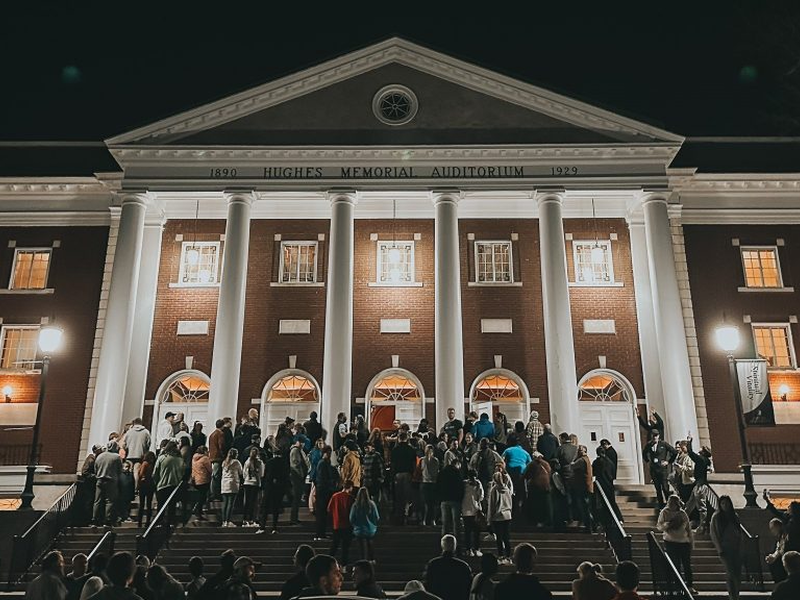
The Affections of Asbury

Over the past few days, quite the event has developed at Asbury University down in Wilmore, Kentucky. University students have appeared at the Hughes Auditorium to worship and sing praises to God, which has continued for over 90 hours at the time of this writing. There is recent reporting that…

by Charles JacobiFebruary 16, 2023
screen-shot-2023-02-14-at-1-15-58-pm
Apostle Paul

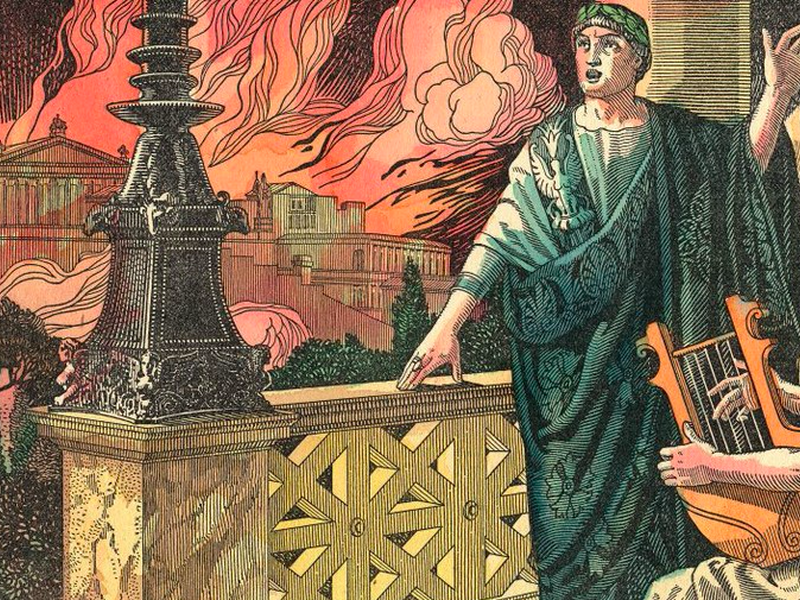
Paul and Nero

It is well-enough known that Nero was emperor from AD 54 when he was just 16 until his death as a young man of 30 in AD 68, just 14 years later. Paul ministered during most of those 14 years (we are not sure which year he died), accomplishing 3…

by Ralph Allan SmithFebruary 14, 2023
alexander-andrews-c91ls-jk7cw-unsplash
Apostle Paul

For Me to Live is Christ!

When the apostle Paul says, “For me to live is Christ!” (Philippians 1:21), we do not find it difficult to understand. Paul had been a faithful servant of Christ from the time that Christ confronted him on the road to Damascus (AD 30) and through Ananias told Paul that he…

by Ralph Allan SmithFebruary 9, 2023
vino-li-j4jjsfjkhpi-unsplash
Song of Songs

Bridal Song

I think there’s a layer to the Song of Songs which has been largely unexamined. The Song is about Christ and his church, Yahweh and Israel, the nature of the marriage covenant, and the marriage of the couple in the Song. But while the Song is “of Solomon” (or to…

by Daniel StanleyFebruary 8, 2023
screen-shot-2023-02-02-at-10-10-22-am
Biblical Studies

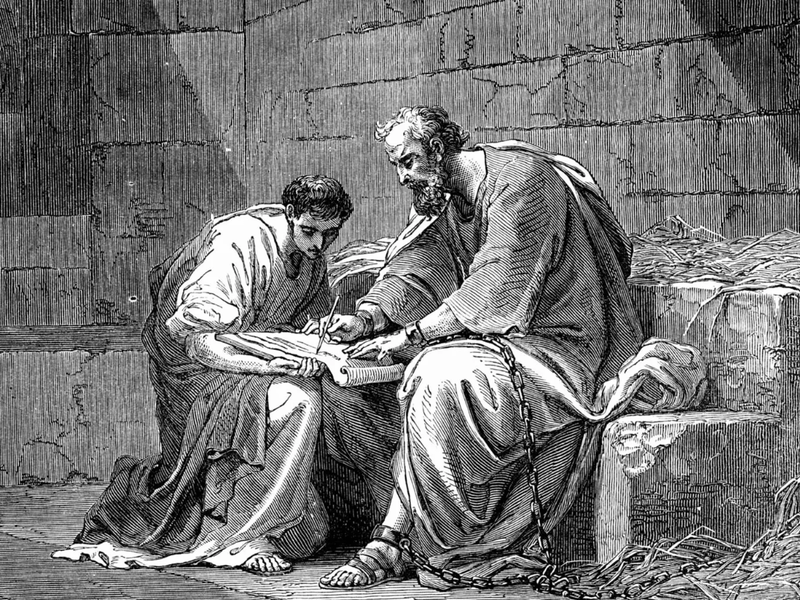
Paul and the Praetorian Guard

In Philippians 1:12-13, Paul informs his beloved brothers in Philippi that his Roman imprisonment — which one would naturally think hindered his ministry and the preaching of the Gospel — actually resulted in the surprising and wonderful progress of the Gospel. Of course, from our perspective 2000 years later and…

by Ralph Allan SmithFebruary 2, 2023
frank-mckenna-cseckew4tm0-unsplash
Biblical Theology

Abraham’s Seed: Heavens, Earth, and Sea Made New

In a recent post , I explored the threefold order of creation—heavens, earth, and sea—and suggested that in Genesis 1 God stamps heaven’s order, his own threefold nature, on the creation, giving earth a trinitarian shape. So what happens to the three-level architecture of creation after Genesis 1? We don’t…

by Josh JensenFebruary 1, 2023

Showing page 34 of 309

See all
See all
History

Where was Augustine?

The Reformed Orthodox were entirely correct to discern a fundamental threat and challenge in the spread of Cartesianism, especially as regards the relation of philosophy and theology. But it’s hard to read about their responses without sadness. “Whatever reason brings out of its stinking heaps must be subordinate to the…

April 23, 2008
History

Descartes, Pro and Contra

On the one hand: Method is a discipleship - a “following after.” And the Cartesian methodus is in conflict with the “following after” demanded of a Christian disciple. Here, Descartes offers a different way, a different truth and life. The Christian “method” of knowledge and wisdom is discipleship, not doubt…

April 23, 2008
History

Cartesian critique

Bizer again, on Melchior Leydekker’s summary of the Cartesian critique of Reformed orthodoxy: “The Cartesians reproach the orthodox to the effect that their theology is not scriptural, that they have re-introduced Catholic scholasticism into the Church; that they hinder every advance in knowledge and their work does not have scientific…

April 23, 2008

Lutherans at bay

At several points, Bizer notes that the Reformed orthodox critics of Cartesian philosophy and its application to theology formulated their arguments to buttress their opposition to Lutheran ideas of the real presence. Peter van Mastricht “resists the proposition that God could do something contradictory; one of the reasons for this…

April 23, 2008
History

Orthodoxy’s failure

Reformed Orthodoxy failed to stop the spread of Cartesian philosophy, despite vigorous efforts. Why? Bizer suggests that the orthodox critique often adopted much of what it criticized. In Martin Schoock’s notorious response to Descartes, “there is no word . . . about the fact that the Cartesian proof of God…

April 23, 2008
History

Cocceian-Cartesians

Johannes Cocceius, a father of biblical theology, would seem to have little in common with Cartesian rationalism. But most of the Cocceians in the latter part of the 17th century were Cartesians. Ernest Bizer (in an article entitled “Reformed Orthodoxy and Cartesianism”) suggests that there was an affinity between the…

April 23, 2008

Showing page 1528 of 2212

Browse by Category

In Medias Res

Your weekly digest for all things Theopolis.

Donate

Theopolis is nearly 100% donor-supported. Consider joining us on our mission.