Theopolis Logo

Writing

Explore our collection of theological essays, biblical studies, and reflections on faith and culture.

See all
der_anschlag_von_luthers_95_thesen-1024x589
Church Calendar

Five Misconceptions of Reformation Day

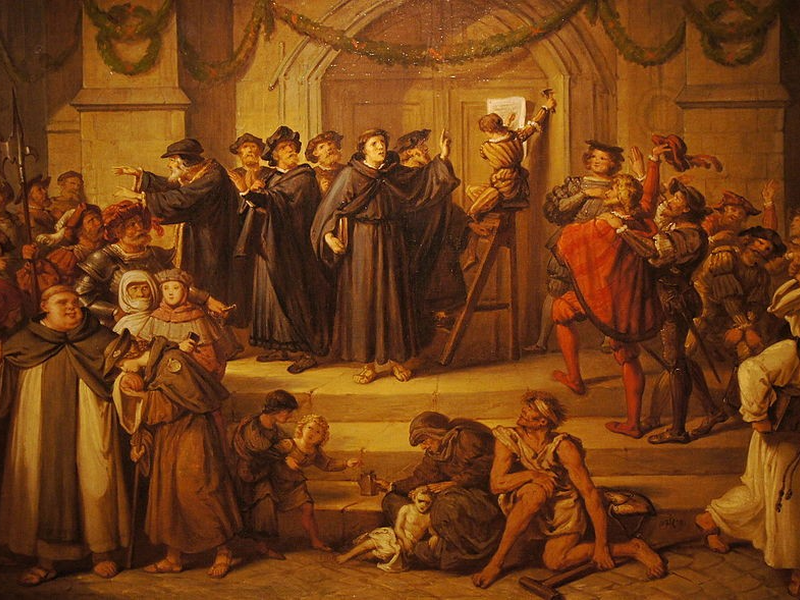
For many people the date October 31 is significant not only for being the Eve of All Saints (All Hallows Eve, Halloween) but as the day in 1517 when Martin Luther nailed his 95 theses to the door of the Castle Church in Wittenburg. These theses were a list of…

by Timothy LeCroyOctober 31, 2017

sacre-bleu-r__kixb0i5m-unsplash
Church Calendar

Concerning Halloween

It has become routine in October for some Christian schools to send out letters warning parents about the evils of Halloween, and it has become equally routine for me to be asked questions about this matter. "Halloween" is simply a contraction for All Hallows’ Eve. The word "hallow" means "saint,"…

by James B. JordanOctober 26, 2017
revelation-john-with-rod
Revelation

Preaching, An Art of Division

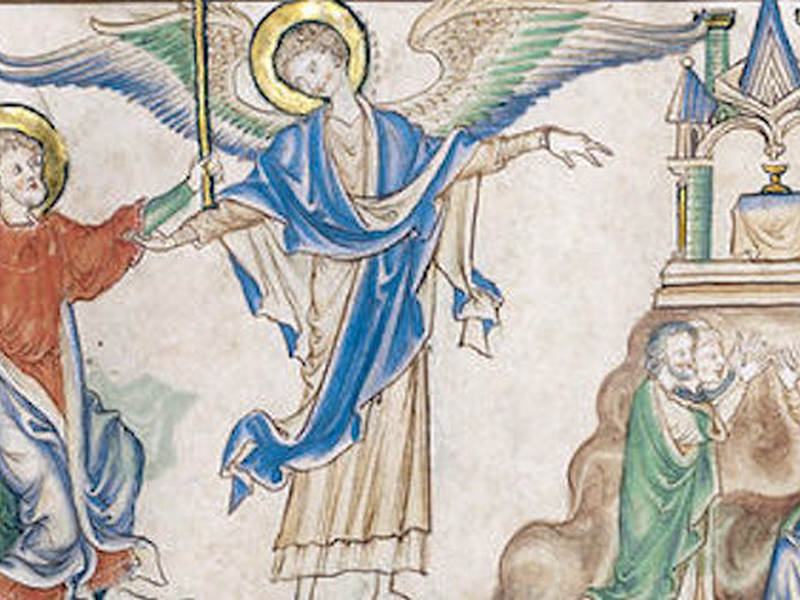
The following is an excerpt from Peter Leithart's forthcoming two-volume commentary on Revelation (T&T Clark). Y ou must prophesy again concerning many peoples and nations and tongues and kings,” a voice tells John (Rev. 10:11). Then someone gives him a “reed like a rod” and instructs him to measure (11:1).…

by Peter LeithartOctober 24, 2017
josiah-death

Back To Egypt

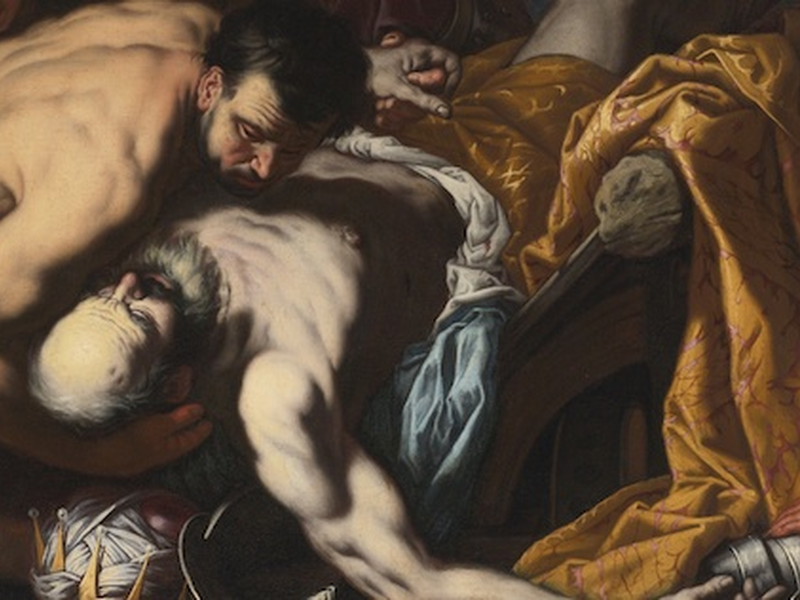
Josiah is an ideal Davidic king in many ways. He not only “did right,” but he “walked in the ways of his father David” and “did not turn aside to the right or to the left” (2 Chronicles 34:2). At the age of 16, he began to seek Yahweh, and…

by Peter LeithartOctober 19, 2017
augustine
Augustine

Augustine and the Music of Time

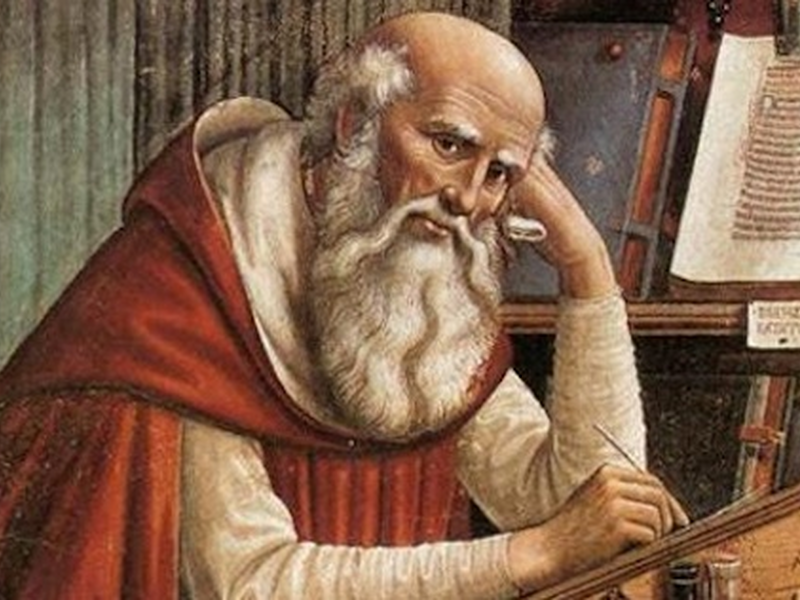
One of the best discussions of Augustine’s views on time comes from Jeremy Begbie’s Theology, Music, and Time (ch. 3). Following Paul Ricoeur, Begbie claims that Augustine’s distentio “is conceived as the three-fold present, and the threefold present as distentio . The distentio consists in the non-coincidence of the mind’s…

by Peter LeithartOctober 17, 2017
img_1043
How to Worship

The Psalter Should be Woven into the Fabric of Worship

This has always been the position of the Christian Church, and from an historical perspective the present situation in evangelicalism is appalling. The early liturgies of the Church, which are still used in Episcopal and Lutheran worship, are laced with psalm phrases. The early hymns, such as the Te Deum…

by James B. JordanOctober 12, 2017

Showing page 104 of 309

See all
See all

Incarnation and Eschatology

Barth insists, rightly, that the incarnation doesn’t express any “need” or lack on God’s part, but is rather His free gracious response to the “radical neediness of the world.” Taking on that neediness also means taking up our cause. He comes to maintain and carry through humanity’s cause to victory.…

April 4, 2008

Self-righteousness

Protestants often claim that our sinfulness is manifest in our efforts to earn God’s favor by our works. That is true, but it doesn’t quite get at the most grievous root of sin. Barth is more penetrating in saying that our sinfulness is manifest in our efforts to usurp God’s…

April 4, 2008
Economics

Markets and people

Charles Morris (in The Trillion Dollar Meltdown ) says that one of the dangerous trends emerging in the 80s and 90s, and lurking behind the current financial crisis, is the “increased dominance of investment decisions by mathematical constructs.” He admits that “Large securities portfolios usually do behave more or less…

April 3, 2008

Translation woes

Jesus spits on the ground, makes clay of the spittle, and “applies” the clay to the eyes of a blind man (John 9; NASB). The verb behind “apply” is epichrio . Its only other usage in the NT is five verses later, where the NASB translates the very same form…

April 3, 2008

John the linguist

John is aware of linguistic diversity, translating unusual Hebrew terms into Greek (e.g., “Messiah” into “Christ,” 1:42). This is perhaps for the convenience of Greek readers, but there is likely also a theological reason: John proclaims the incarnate Word, and describes the work and words of that Word with words…

April 3, 2008

Hebrew Latin Greek

John tells us that the inscription “Jesus the Nazarene, the King of the Jews” was placed above his head on the cross in Hebrew, Latin, and Greek (19:19-20). But this is just the culmination of a text that, though written in Greek, contains a number of cross-linguistic terms. Twice in…

April 3, 2008

Showing page 1540 of 2212

Browse by Category

In Medias Res

Your weekly digest for all things Theopolis.

Donate

Theopolis is nearly 100% donor-supported. Consider joining us on our mission.