Theopolis Logo

Writing

Explore our collection of theological essays, biblical studies, and reflections on faith and culture.

See all
last-supper
Eucharist

The Epiclesis in Reformed Eucharistic Prayer, (Part 1)

What happens at the Table of the Lord? If Christ is really present, then how is this so? The witness of the Church throughout history has been that Christ is present in the Eucharist through the operation of the Holy Spirit, and in the practice of the Church, prayers at…

by Christopher KouOctober 11, 2016

sixteen-miles-out-al48tflf4e8-unsplash
Spiritual Warfare

Enemies and Victims

In the power of the Spirit, the gospel forms a society in which there is neither Jew nor Greek, slave nor free, a society that is characterized by unity, long-suffering, patience; love. The gospel forms a culture whose participants do not steal but labor and give, who are not angry…

by Peter LeithartOctober 6, 2016
sixteen-miles-out-d40gdcd_-he-unsplash
Mark

Sovereignty and Self-Gift

At the 1997 Biblical Horizons Summer Conference, the Rev. Jeffrey Meyers presented a series of remarkable lectures on the gospel of Mark. Among his many insightful comments, he suggested that the second gospel continues where the first gospel ends; Matthew ends with Jesus saying "Go" (Matthew 28:19), and Mark’s shows…

by Peter LeithartOctober 4, 2016
e99a2338
Art

Birmingham Life and Culture Series: Joseph Bottum

On October 25 at Avondale Brewery , Theopolis will be co-sponsoring the 2nd Annual Birmingham Life and Culture Series. This year's event will feature author Joseph Bottum. Joseph is known for his writings on literary criticism, religion, and his short stories. Essayist and reviewer Mary Eberstadt has said that "his…

by Brian MoatsSeptember 29, 2016
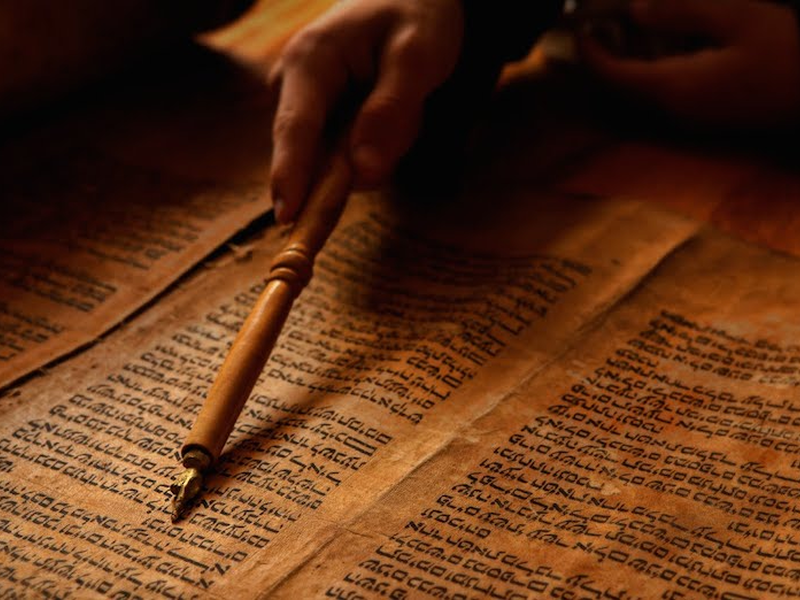
hebrew-manuscript
Biblical Studies

Are Not All These Galileans?

One of the curiosities of the New Testament revelation is its focus on Galilee. The region of Galilee was given to Asher, Zebulun, Naphtali, and Issachar, and the events of Judges 4-8 occurred there, so it had some importance in Israelite history. But when the tribe of Ephraim led the…

by James B. JordanSeptember 29, 2016
screen-shot-2016-03-31-at-9-32-11-am
Hermeneutics

Hero's Theme

In a recent post , Ian Paul discusses the practice of allegorical interpretation, reflecting in particular upon a conversation he had with someone concerning the reading of the story of Rahab. Paul’s interlocutor argued strongly for an allegorical reading of the Rahab story, writing: “Joshua is a type of Christ…

by Alastair RobertsSeptember 27, 2016

Showing page 124 of 309

See all
See all

Ruth the Moabitess

A friend and former student, Aaron Cummings, writes: “If Ruth is ‘adopted’ as a daughter to Boaz, then her story becomes the reversal of the original story of Moab (Gen. 19). Lot’s younger daughter successfully seduced her father while he slept, and she conceived Moab. Ruth, Elimelech’s younger daughter in…

February 21, 2008

Potent righteousness

A class discussion of Proverbs brought out some interesting points. Proverbs 11:18 says that whoever sows righteousness will receive a sure reward. The verb “sow” is zr’ , the verbal form of “seed.” Righteousness is a seed sown, and the metaphor implies that righteousness is potent. What a seed produces…

February 21, 2008

With the maids

James Jordan points out that Boaz “adopts” Ruth into his household when he first meets her. The use of the Hebrew na’ar hints at this. Boaz speaks to his na’ar when he first arrives on the scene (2:5), and invites Ruth to drink water along with his na’arim (2:9). In…

February 21, 2008

Daughter Ruth

Boaz calls Ruth “my daughter” (2:8), as does Naomi. This indicates the age difference between them, but also points in a typological direction. After all, Boaz marries his “daughter,” just as Yahweh is both Father and Husband to “Daughter Zion.”

February 21, 2008
Literature

Microcosm

Garber notes that Jaques’s “seven ages” speech numerically links the ages of man with “the number of the planets, and the virtues and vices, and the liberal arts.” Specifically the planets: “the schoolboy is mercurial; the lover, venereal; the soldier, martial; the justice, jovial; the old man, saturnine.”

February 21, 2008
Literature

Nymph’s reply

Pastoral was a huge fad in Elizabethan England. Marlowe’s brief song of the shepherd exemplifies the conventions of the genre: Come live with me and be my love, And we will all the pleasures prove That valleys, groves, hills, and fields, Woods or steepy mountain yields. And we will sit…

February 21, 2008

Showing page 1564 of 2212

Browse by Category

In Medias Res

Your weekly digest for all things Theopolis.

Donate

Theopolis is nearly 100% donor-supported. Consider joining us on our mission.