Theopolis Logo

Writing

Explore our collection of theological essays, biblical studies, and reflections on faith and culture.

See all
little-girl
Children

Honor God With Your Body

I am making a new rule in our house! We are actually kind of skimpy on the house rules. I try very hard to keep things simple: love God, love others, be joyful. It’s not complicated to avoid discipline here. But I have found myself repeating this new rule over…

by Lindsey TollefsonApril 9, 2015

giotto-noli-me-3
John

The Gardener and the Beloved, (Part 3)

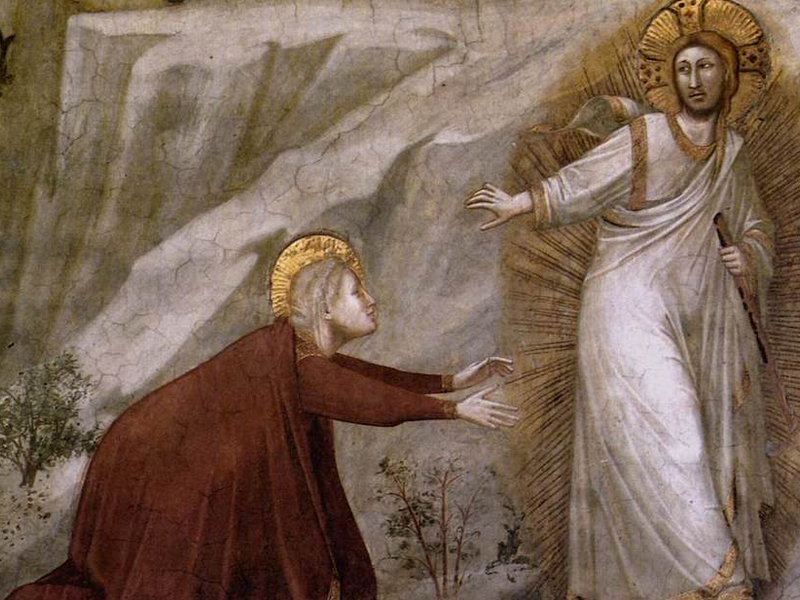
Click HERE for Part 2 The voice of Jesus transforms and changes Mary when she hears him speak her name. This is her last “turning.” So also the woman in the Song of Songs longs to hear the voice of her beloved. Let me see your face, let me hear…

by Jeff MeyersApril 6, 2015
giotto-noli-me-2
John

The Gardener and the Beloved, (Part 2)

Click HERE for Part 1. The details of this story call the attentive reader back to the drama of Solomon’s Song of Songs. And the Song of Song’s alludes to, ties us into the story of Adam and Eve in the Garden and the promise of a coming Messiah that…

by Jeff MeyersApril 4, 2015
easter-term-2015-2
Theopolis News

Easter Term, 2015

“The course was a paradigm shift for me,” said Jonathan Sedlak, a Milwaukee electrical contractor who attended Theopolis’s course on Revelation. “I am left with a book that is far more practical than it has ever seemed before.” Jonathan Anderson of Louisville, Kentucky found the course “refreshing.” “I finished with…

by TheopolisApril 2, 2015
psalm-singing
Genesis

Worship as Response: Liturgical Logic, (Part 1)

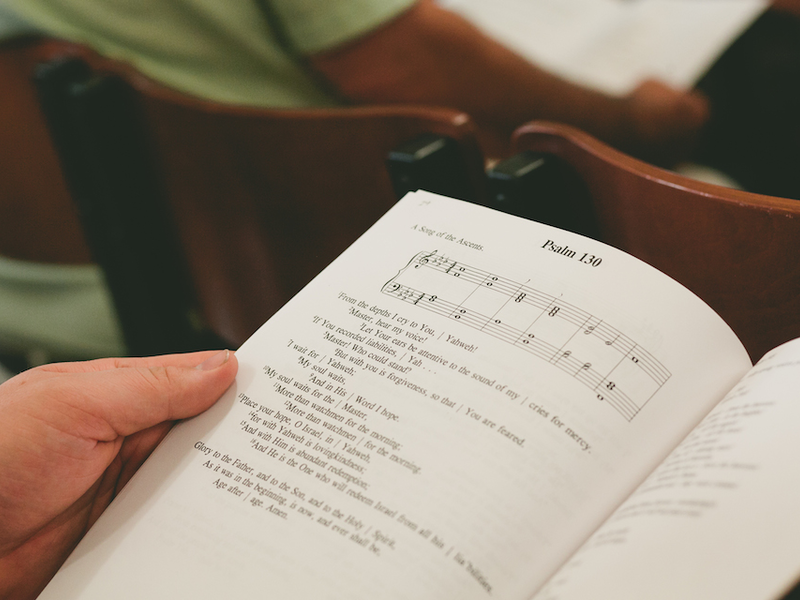
“It is only by participation in a rational, practice-based community that one becomes rational.” – Alasdair MacIntyre It may be perfectly clear to a chef why adding unsifted powdered sugar to a hot frosting is a bad idea. But for an amateur cook, this may be the kind of rule…

by Jonathan BarlowApril 2, 2015
giotto-noli-me
John

The Gardener and the Beloved, (Part 1)

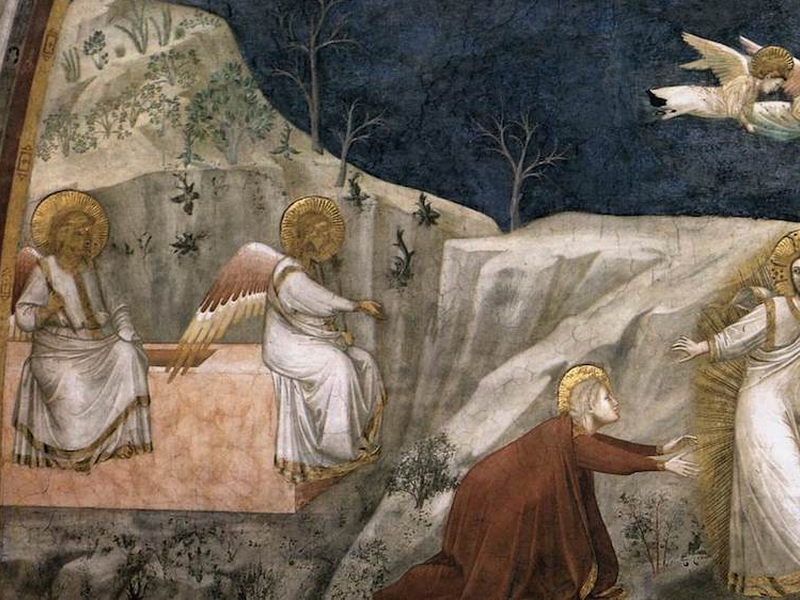
On a fresco in a chapel in Padua, Italy, there is a famous painting depicting the dramatic post-resurrection scene in John 20 with Mary and Jesus outside of the garden tomb. Giotto di Bondone painted it in the early 14th century. Jesus is striding from the tomb with a victor’s…

by Jeff MeyersApril 1, 2015

Showing page 156 of 309

See all
See all

Inner Word and Culture

Cavadini suggests that Augustine’s theory of the inner word is a theory of cultural production, formation, and transformation. First, Augustine’s theory opens space for the person’s transcendence of culture, a space that allows for critique and transformation. But this transcendence of culture does not mean removal from culture. The inner…

November 24, 2007

Inner word

Colin Gunton has cited Augustine’s doctrine of the “inner word” as a sign of his preference for abstract over the material/concrete. John Cavadini (Theological Studies 1997) responds: “Augustine’s distinctions, between the presignified and the signified, are evidence unobserved and unaccounted for by Gunton, who sees a distinction only between the…

November 24, 2007

Multiple selves

In his 1969 book on self-deception, Herbert Fingarette pointed out that self-deception could only work if the self was divisible, and suggested that the self is not a unit but a community of “subselves.” Fingarette traced this theme to Plato, and saw it intensified by the New Testament polarity of…

November 22, 2007
History

Early Modern Skepticism

John D. Cox points out in his recent Baylor Press book on Shakespeare that ancient skepticism was not a-religious in the Renaissance and Reformation, but often served the purposes of reform. Erasmus, for instance, deployed skeptical arguments in challenging traditional, but corrupt, practices in the Catholic church. Like More, he…

November 22, 2007

Tennis scoring

Why 15-Love? “Love” is a corruption of the French “l’oeuf,” “the egg,” as in “the big goose egg.”

November 22, 2007
History

Germanic war

Tacitus records in Germania , 7, concerning the Germans in warfare: “They therefore carry with them when going to fight, certain images and figures taken out of their holy groves. What proves the principal incentive to their valour is, that it is not at random nor by the fortuitous conflux…

November 22, 2007

Showing page 1602 of 2212

Browse by Category

In Medias Res

Your weekly digest for all things Theopolis.

Donate

Theopolis is nearly 100% donor-supported. Consider joining us on our mission.