Theopolis Logo

Writing

Explore our collection of theological essays, biblical studies, and reflections on faith and culture.

See all
screenshot-2025-01-28-at-9-02-46-am
Postmillennialism

Pessimistic Postmillennialism

For ye had compassion of me in my bonds, and took joyfully the spoiling of your goods, knowing in yourselves that ye have in heaven a better and an enduring substance. Hebrews 10:34 There is an old Puritan dictum that goes, “Sit lightly on the world.” George MacDonald places it…

by Garrett SoucyJanuary 28, 2025
1411px-diego_velazquez_065
Biblical Theology

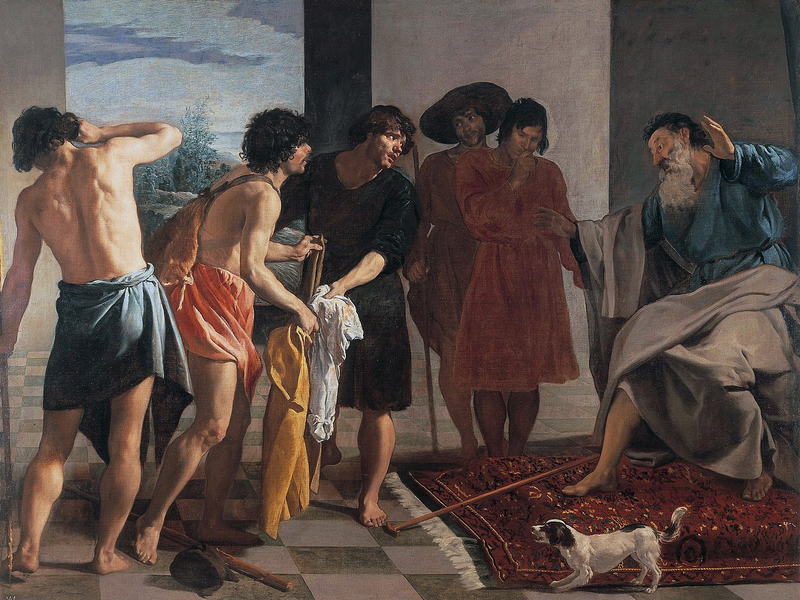
Joseph, Jesus, and the Descent to Egypt

As Genesis unfolds, God chooses a line of promise out of the nations. One by one its offshoots are peeled away as the story zooms in on God’s chosen people, Israel. First, the line of Cain is peeled away as Cain is sent out from the presence of YHWH. Though…

by James BejonJanuary 21, 2025
212342fgsdl
Exhortation

An Eschatological Vision for Ministry

The following article was an address given to Anselm Presbytery (CREC) in the Fall 2024. Grace to you and peace from God our Father and the Lord Jesus Christ. Pray with me. Father of Heavenly Lights and fount of all Wisdom, guide us we pray, by your Word and Spirit,…

by Bo CogbillJanuary 14, 2025
451199882_864804372346894_3713307977104331839_n
Books

What I Read Last Year

At my age, I’ve given up on the fantasy of “keeping up.” Much of my reading is now narrowly focused, research-reading in service of writing projects. If you want bibliography on the ontology of artifacts in Aristotle and Thomas Aquinas (which you don’t), or the purity laws of Leviticus, or…

by Peter LeithartJanuary 6, 2025
aaron-burden-qjdzyt_k8xg-unsplash
Books

What I'm Reading

I have been reading, thinking, and writing about the Internet and its effects upon our identities, communities, polities, and discourses for nearly a copy of decades. In that time, I have encountered no book as perceptive on the subject as Antón Barba-Kay’s A Web of Our Own Making: The Nature…

by Alastair RobertsDecember 31, 2024
screen-shot-2022-08-04-at-9-36-57-am
Philippians

Enemies of the Cross: Philippians 3:18

Identifying the men Paul refers to as “enemies of the cross” in Philippians 3:18 turns out to be relatively difficult. Peter O’Brian speaks of “all kinds of suggestions regarding their identity,” and offers a list of interpretations: “moral libertinists, behavioural materialists, orthodox Jews, lapsed or apostate Christians—because of persecution, Jewish…

by Ralph Allan SmithDecember 30, 2024

Showing page 14 of 309

See all
See all

Tale of Two Women

In Numbers 12, Miriam and Aaron object to Moses’ Cushite wife. Miriam becomes leprous, is excluded from the camp, and restored on the eighth day. That is to say: The Messiah’s Jewish sister objects to the Gentile bride, and is cast out of the camp, but then she is cleansed…

November 9, 2007

Sacrificial sequence

Hicks again: He organizes his discussion of the New Covenant fulfillment of the sacrificial system in the phrases “life surrendered,” “life transformed,” and “life shared.” Reconciliation is made on the basis of life surrendered, blood shed, but that’s not the end point of the reconciling sacrifice. This enables him to…

November 8, 2007

Burning flesh

FCN Hicks writes in his 1946 book on sacrifice that the burning of an animal on the altar was not destructive but transforming: “The offering is not destroyed but transformed, sublimated, etherealised, so that it can ascend in smoke to the heaven above, to the dwelling-place of God.” He cites…

November 8, 2007
Philosophy

Signs and domination

Only God, Augustine argues in his treatise on music, acts on rational souls directly, “per seipsum.” Human beings operate on one another’s souls through intervening bodies, that is, through the words and other signs. God has arranged the world this way, he says, as a check on human ambition and…

November 8, 2007

Signa data

Many translators and interpreters of Augustine’s de doctrina Christiana translate “signa data” as “conventional signs.” But there’s something to be said for taking the phrase literally (as some commentators do). The difference between naturalia and data, Augustine says, is that the latter occur by the will of a sign-user while…

November 7, 2007
History

Sixteenth-century exchanges

Shakespeare recognized that something new was in the offing, but the actual situation of England and Europe in the sixteenth and seventeenth centuries was far more complicated that Timon of Athens suggests. The gift-society to which Timon is attached was not being completely replaced, nor was the market the main…

November 7, 2007

Showing page 1609 of 2212

Browse by Category

In Medias Res

Your weekly digest for all things Theopolis.

Donate

Theopolis is nearly 100% donor-supported. Consider joining us on our mission.