Theopolis Logo

Writing

Explore our collection of theological essays, biblical studies, and reflections on faith and culture.

See all
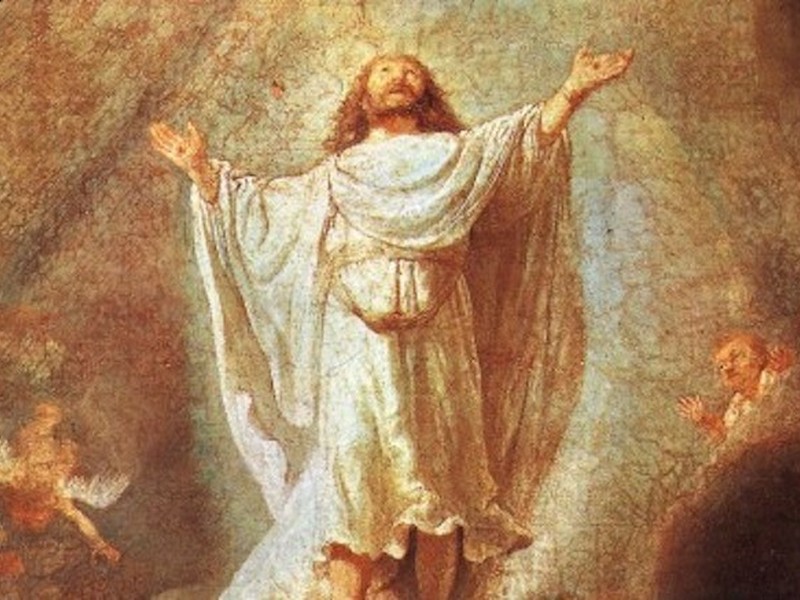
ascension-rembrandt
Ascension

On the Ascension of the Lord

Leo the Great's second sermon on the Ascension, Sermon 74 . I. The mystery of our salvation, dearly-beloved, which the Creator of the universe valued at the price of His blood, has now been carried out under conditions of humiliation from the day of His bodily birth to the end…

by TheopolisMay 25, 2017

cross-grunwald
Ecclesiology

Church on the Cross

Life, Eugen Rosenstock-Huessy says, is suffering, battle, pain, shock, failure, elation. Human beings are always torn, always riven. Much of human life, individually and col­lectively, is an effort to deal with suffering and death. By being the first Man, Jesus establishes the possibility of a different stance toward suffering and…

by Peter LeithartMay 23, 2017
e99a2313
Baptism

Baptism Impasse: Baptists vs. Presbyterians (Part 1)

Is Christian baptism given to believers only or to believers and their children? That’s the question that must be answered—but only if you’re Baptist or Presbyterian. That’s how the question is framed between these two denominations in this dispute, and it’s along these lines the debate unfolds as each side…

by Mani MarprelateMay 18, 2017
screen-shot-2017-05-01-at-1-09-10-pm
Political Theology

Philanthropic God

Again and again the liturgy of St Chrysostom calls God a lover of mankind. He is Philanthropolos Theos (man-loving God), Kurios Philanthropolos (man-loving Lord), Philopsychos (lover of the soul). Philanthropy wasn’t a Christian invention. Roman benefactors gave benefits to subordinates. What was new was the shape of philanthropy, for the…

by Peter LeithartMay 16, 2017
katharina_von_bora_900x600_213
Marriage

Marriage and Betrayal

Perhaps the most fearful of all possibilities in the world is the possibility of betrayal on the part of someone who is in a “position of trust.” This, unfortunately, is the first block in what ought to be the foundation of every marriage in the world. Every woman has a…

by Richard BledsoeMay 11, 2017
kevin-young-icmodywxuq-unsplash
City

Church in the Metropolis

It seems that denominationalism has had its day. A 2009 Barna survey found that denominational commitments have gone squishy in mainline Protestant churches, and Evangelicals don’t fare much better than the rest. After a similar survey, Ron Sellers of Ellison Research said that Protestants are as “loyal to their denominations…

by Peter LeithartMay 9, 2017

Showing page 112 of 309

See all
See all
Uncategorized

1 & 2 Kings

Uriah Y Kim reviews my Kings commentary in a recent issue of Reviews in Religion and Theology . He’s got some criticisms, but overall it’s a fair review. A couple of responses on specific points: 1) He thinks my contention that there is a “seventh-king” pattern is suspect; my counting…

October 22, 2007
History

Patronage

Richard Saller defines patronage by three features (summarized by Griffin): “(1) it involves the reciprocal exchange of goods and services; (2) that it is a personal relationship of some duration; (3) that it is asymmetrical, in the sense that the two parties are of unequal status and offer different kinds…

October 22, 2007

Gratitude in ancient thought

Griffin begins her essay: “The exchange of beneficia - gifts and services - was an important feature of Greek and Roman society at all periods. Its prominence was reflected in the number of philosophical works that analyzed the phenomenon. From the fourth century B.C. onwards, euergesia and charis became subjects…

October 22, 2007
History

Seneca and Roman Society

Miriam Griffin has a richly detailed discussion of Seneca’s de Beneficiis in a 2003 issue of The Journal of Roman Studies . The article discusses the appropriateness of “patronage system” as a description of Roman social relations, Seneca’s use of exaggeration for moral effect, the and similarities between Seneca and…

October 22, 2007
History

Pointy Greeks

Seneca found Chrysippus’s treatment of the Three Graces too subtle: He was a great man but “a Greek, whose intellect, too sharply pointed, is often bent and turned back upon itself; even when it seems to be in earnest it only pricks, but does not pierce.” Seneca himself found in…

October 22, 2007
Philosophy

Kant on Ingratitude

In his Lectures on Ethics, Kant says that ingratitude is among the vices that “are the essence of vileness and wickedness.” He adds, “It is inhuman to hate and persecute one from whom we have reaped a benefit, and if such conduct were the rule it would cause untold harm.…

October 22, 2007

Showing page 1617 of 2212

Browse by Category

In Medias Res

Your weekly digest for all things Theopolis.

Donate

Theopolis is nearly 100% donor-supported. Consider joining us on our mission.