Theopolis Logo

Writing

Explore our collection of theological essays, biblical studies, and reflections on faith and culture.

See all
hughes-auditorium-ryan-worthen-1024x576
American Culture

The Affections of Asbury

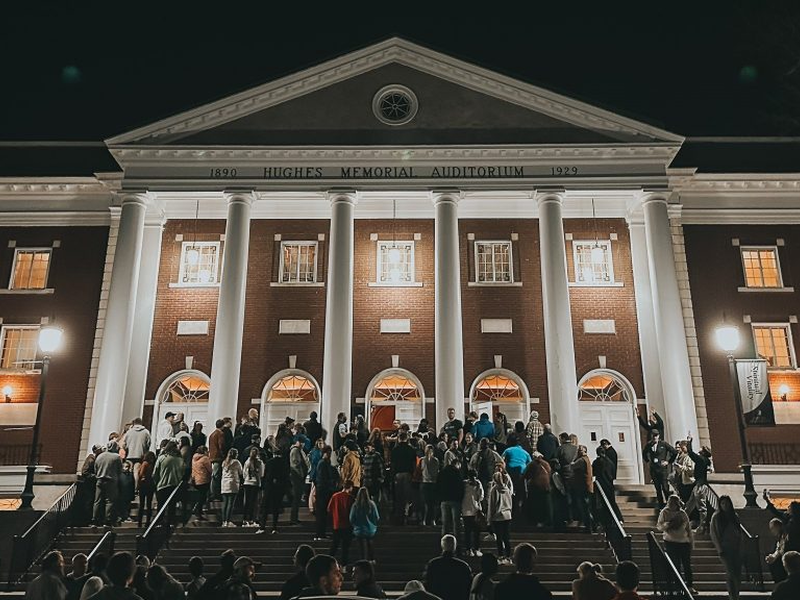
Over the past few days, quite the event has developed at Asbury University down in Wilmore, Kentucky. University students have appeared at the Hughes Auditorium to worship and sing praises to God, which has continued for over 90 hours at the time of this writing. There is recent reporting that…

by Charles JacobiFebruary 16, 2023
screen-shot-2023-02-14-at-1-15-58-pm
Apostle Paul

Paul and Nero

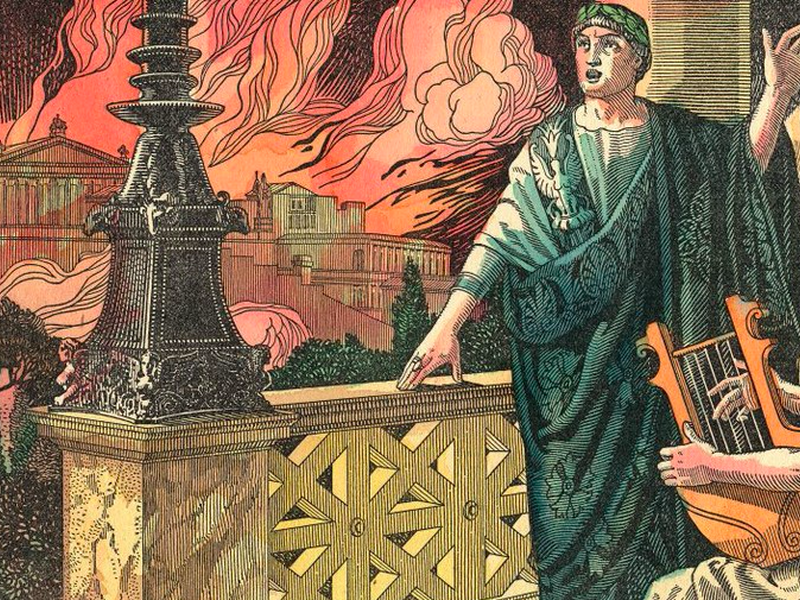
It is well-enough known that Nero was emperor from AD 54 when he was just 16 until his death as a young man of 30 in AD 68, just 14 years later. Paul ministered during most of those 14 years (we are not sure which year he died), accomplishing 3…

by Ralph Allan SmithFebruary 14, 2023
alexander-andrews-c91ls-jk7cw-unsplash
Apostle Paul

For Me to Live is Christ!

When the apostle Paul says, “For me to live is Christ!” (Philippians 1:21), we do not find it difficult to understand. Paul had been a faithful servant of Christ from the time that Christ confronted him on the road to Damascus (AD 30) and through Ananias told Paul that he…

by Ralph Allan SmithFebruary 9, 2023
vino-li-j4jjsfjkhpi-unsplash
Song of Songs

Bridal Song

I think there’s a layer to the Song of Songs which has been largely unexamined. The Song is about Christ and his church, Yahweh and Israel, the nature of the marriage covenant, and the marriage of the couple in the Song. But while the Song is “of Solomon” (or to…

by Daniel StanleyFebruary 8, 2023
screen-shot-2023-02-02-at-10-10-22-am
Biblical Studies

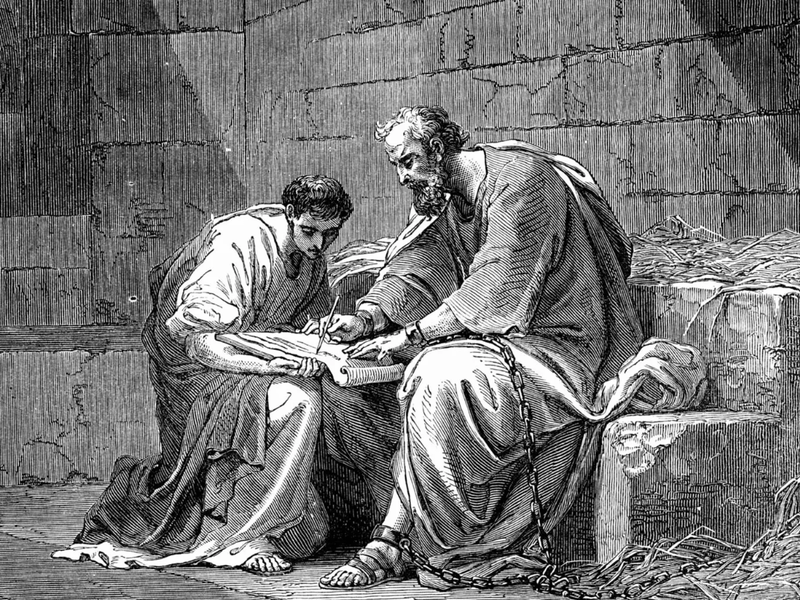
Paul and the Praetorian Guard

In Philippians 1:12-13, Paul informs his beloved brothers in Philippi that his Roman imprisonment — which one would naturally think hindered his ministry and the preaching of the Gospel — actually resulted in the surprising and wonderful progress of the Gospel. Of course, from our perspective 2000 years later and…

by Ralph Allan SmithFebruary 2, 2023
frank-mckenna-cseckew4tm0-unsplash
Biblical Theology

Abraham’s Seed: Heavens, Earth, and Sea Made New

In a recent post , I explored the threefold order of creation—heavens, earth, and sea—and suggested that in Genesis 1 God stamps heaven’s order, his own threefold nature, on the creation, giving earth a trinitarian shape. So what happens to the three-level architecture of creation after Genesis 1? We don’t…

by Josh JensenFebruary 1, 2023

Showing page 34 of 309

See all
See all
Uncategorized

1 & 2 Kings

Uriah Y Kim reviews my Kings commentary in a recent issue of Reviews in Religion and Theology . He’s got some criticisms, but overall it’s a fair review. A couple of responses on specific points: 1) He thinks my contention that there is a “seventh-king” pattern is suspect; my counting…

October 22, 2007
History

Patronage

Richard Saller defines patronage by three features (summarized by Griffin): “(1) it involves the reciprocal exchange of goods and services; (2) that it is a personal relationship of some duration; (3) that it is asymmetrical, in the sense that the two parties are of unequal status and offer different kinds…

October 22, 2007

Gratitude in ancient thought

Griffin begins her essay: “The exchange of beneficia - gifts and services - was an important feature of Greek and Roman society at all periods. Its prominence was reflected in the number of philosophical works that analyzed the phenomenon. From the fourth century B.C. onwards, euergesia and charis became subjects…

October 22, 2007
History

Seneca and Roman Society

Miriam Griffin has a richly detailed discussion of Seneca’s de Beneficiis in a 2003 issue of The Journal of Roman Studies . The article discusses the appropriateness of “patronage system” as a description of Roman social relations, Seneca’s use of exaggeration for moral effect, the and similarities between Seneca and…

October 22, 2007
History

Pointy Greeks

Seneca found Chrysippus’s treatment of the Three Graces too subtle: He was a great man but “a Greek, whose intellect, too sharply pointed, is often bent and turned back upon itself; even when it seems to be in earnest it only pricks, but does not pierce.” Seneca himself found in…

October 22, 2007
Philosophy

Kant on Ingratitude

In his Lectures on Ethics, Kant says that ingratitude is among the vices that “are the essence of vileness and wickedness.” He adds, “It is inhuman to hate and persecute one from whom we have reaped a benefit, and if such conduct were the rule it would cause untold harm.…

October 22, 2007

Showing page 1617 of 2212

Browse by Category

In Medias Res

Your weekly digest for all things Theopolis.

Donate

Theopolis is nearly 100% donor-supported. Consider joining us on our mission.