Theopolis Logo

Writing

Explore our collection of theological essays, biblical studies, and reflections on faith and culture.

See all
25f3baab-e5a9-42ec-aab6-649e53879085-3
John

Israel Redux: The Image of Christ in the Gospel According to John (Part IV)

John 18, 19: Latter Prophets and the Writings John 18 and 19 record the arrest, trial, torture, and death of Jesus as laid out in detail in Isaiah 53. After the Roman soldier pierces Jesus’ side, John quotes Zechariah: “They shall look at him whom they pierced” (Zech 12:10). In…

by Geert HeetebrijDecember 6, 2018

25f3baab-e5a9-42ec-aab6-649e53879085-3
John

Israel Redux: The Image of Christ in the Gospel According to John (Part III)

John 12.12 – John 17: Latter Prophets In the Hebrew Scriptures, Kings is followed by the Latter Prophets. John 12:15 quotes Zechariah 9:9 as having prophesied Jesus’ triumphal entry: “Do not be afraid, O Daughter of Zion; see, your king is coming, seated on a donkey’s colt.” [1] N.T. Wright…

by Geert HeetebrijDecember 5, 2018
25f3baab-e5a9-42ec-aab6-649e53879085-3
John

Israel Redux: The Image of Christ in the Gospel According to John (Part II)

John 6.16-70: Joshua The book of Joshua documents the nation of Israel entering the Promised Land. Consider the order of events: (1) Israel is still receiving the daily miracle of manna; (2) Israel miraculously crosses the Jordan on dry foot; (3) The day after Passover , Israel eats produce of…

by Geert HeetebrijNovember 29, 2018
25f3baab-e5a9-42ec-aab6-649e53879085-3
John

Israel Redux: The Image of Christ in the Gospel According to John (Part I)

Since my educational and professional training have revolved around story and narrative structure, I approach John’s Gospel from a literary and narrative perspective. In doing so, I have noticed structural story patterns and followed them where they seem to lead: the Gospel of John parallels the ordering of the books…

by Geert HeetebrijNovember 27, 2018
white-hall-hospital
Art

The Clouds of Mt. Sinai

The Mt. Sinai Hospital was neolithic on the black hill of Hollow, New Hampshire. Winter dampened the trees and the wind bit at the sparse branches, the sidewalks and stairs were perilous with soggy leaves, and the dim yellow light cast a pallor upon the milky stone building. Ambling inside…

by Remy WilkinsNovember 22, 2018
sodom-and-gomorrah-58ecfa883df78c5162cb92b5
Revelation

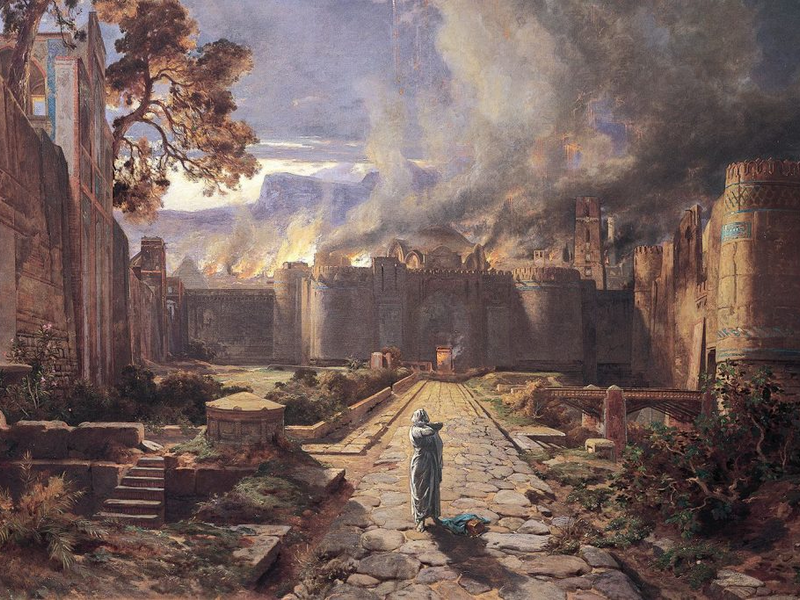
Egypt and Sodom, Where the Lord was Crucified

The Revelation can only be understood in the light of Old Testament symbols and sequences. The same is true of the epistle of Jude, which serves as a blistering hors d’oeuvre to John’s fiery feast. Possibly written by the apostle Judas Thaddaeus (Luke 6:16; Acts 1:13; John 14:22), the epistle…

by Mike BullNovember 20, 2018

Showing page 84 of 309

See all
See all
Uncategorized

1 & 2 Kings

Uriah Y Kim reviews my Kings commentary in a recent issue of Reviews in Religion and Theology . He’s got some criticisms, but overall it’s a fair review. A couple of responses on specific points: 1) He thinks my contention that there is a “seventh-king” pattern is suspect; my counting…

October 22, 2007
History

Patronage

Richard Saller defines patronage by three features (summarized by Griffin): “(1) it involves the reciprocal exchange of goods and services; (2) that it is a personal relationship of some duration; (3) that it is asymmetrical, in the sense that the two parties are of unequal status and offer different kinds…

October 22, 2007

Gratitude in ancient thought

Griffin begins her essay: “The exchange of beneficia - gifts and services - was an important feature of Greek and Roman society at all periods. Its prominence was reflected in the number of philosophical works that analyzed the phenomenon. From the fourth century B.C. onwards, euergesia and charis became subjects…

October 22, 2007
History

Seneca and Roman Society

Miriam Griffin has a richly detailed discussion of Seneca’s de Beneficiis in a 2003 issue of The Journal of Roman Studies . The article discusses the appropriateness of “patronage system” as a description of Roman social relations, Seneca’s use of exaggeration for moral effect, the and similarities between Seneca and…

October 22, 2007
History

Pointy Greeks

Seneca found Chrysippus’s treatment of the Three Graces too subtle: He was a great man but “a Greek, whose intellect, too sharply pointed, is often bent and turned back upon itself; even when it seems to be in earnest it only pricks, but does not pierce.” Seneca himself found in…

October 22, 2007
Philosophy

Kant on Ingratitude

In his Lectures on Ethics, Kant says that ingratitude is among the vices that “are the essence of vileness and wickedness.” He adds, “It is inhuman to hate and persecute one from whom we have reaped a benefit, and if such conduct were the rule it would cause untold harm.…

October 22, 2007

Showing page 1617 of 2212

Browse by Category

In Medias Res

Your weekly digest for all things Theopolis.

Donate

Theopolis is nearly 100% donor-supported. Consider joining us on our mission.