Theopolis Logo

Writing

Explore our collection of theological essays, biblical studies, and reflections on faith and culture.

See all
indiana-protests
American Politics

In Whom Do We Trust?

"Put not your trust in princes, in a son of man, in whom there is no salvation. When his breath departs, he returns to the earth; on that very day his plans perish. Blessed is he whose help is the God of Jacob, whose hope is in the Lord his…

by Gregory LaughlinMarch 31, 2015

macbeth
Literature

Macbeth and Nihilism

When it comes to the interpretation of Shakespeare, Harold Bloom is my favorite enemy. His writing is brilliant, his knowledge of things Shakespearean encyclopedic, and the insights he offers may puzzle, startle, or amaze, but they always educate. How then can he be an enemy? Because his anti-Christian bias is…

by Ralph Allan SmithMarch 31, 2015
london
Theopolis News

Theopolis in the UK

Theopolis President Peter Leithart spent the last week of March lecturing on worship and sacraments in England. He delivered four lectures on liturgy in Bolton, a town north of Manchester, arguing that Christian worship must be worship fit for the king and fit for the kingdom that has come in…

by TheopolisMarch 31, 2015
claudel-rheault-zvbv1aka-l4-unsplash
Creation

Heavenizing Earth: Eschatology in the Beginning

When we think about eschatology, we think immediately of Daniel, of Matthew 24-25, of 1 Corinthians 15 and 2 Thessalonians 2, and of course of Revelation. We don’t, I suspect, think about Genesis. Perhaps Genesis 3:15, with its promise of the woman’s seed, would come to mind. So might the…

by John BarachMarch 26, 2015
baptism
Baptism

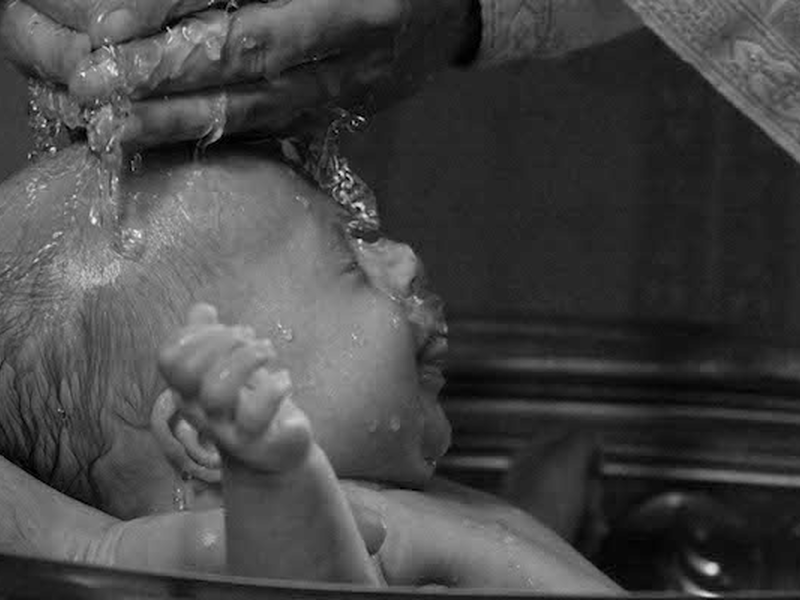
Baptism as Exorcism

Alexander Schmemann in his book, Of Water and the Spirit, expounds the question that appears in nearly all the older baptismal liturgies, “Do you renounce the devil and all his works, the vain pomp and glory of the world and all sinful lusts of the flesh.” This renunciation, according to…

by Steve WilkinsMarch 24, 2015
day-2-ferguson-protests-nationwide
American Culture

Franklin Graham and the Problem of Reaction

Franklin Graham recently posted the following statement on his Facebook page: “Listen up—Blacks, Whites, Latinos, and everybody else. Most police shootings can be avoided. It comes down to respect for authority and obedience. If a police officer tells you to stop, you stop. If a police officer tells you to…

by A. K. ShaukuMarch 20, 2015

Showing page 157 of 309

See all
See all
History

Painting and landscape

Following the Treaty of Utrecht in 1713, young English noblemen began traveling the continent in what became known as the Grand Tour. Along the way, the came across Italian landscape painters, and went home dreaming of turning England into little Italy. Maggie Lane writes, “The desire was awakened to create…

August 17, 2007
History

Enclosure and landscape

Most of England’s enclosure acts were passed between 1760 and 1815, and the acts transformed the British landscape. Before enclosure, yeoman farmers lived in villages, and trudged each day to their scattered strips of land to work. Before enclosure, according to Maggie Lane, “one-third of the land enclosed in England…

August 17, 2007
Literature

Dickens, mythologist

Chesterton admits that Dickens’s characters neither affect nor are affected by time or circumstances. This is, he says, because Dickens was constructing myths rather than novels: “Dickens was a mythologist rather than a novelist; he was the last of the mythologists, and perhaps the greatest. He did not always manage…

August 17, 2007

Proverbs 19:5-9

PROVERBS 19:5, 9 In this, the Proverb reiterates the threats of the Torah, which warns against false witness and false oaths (Leviticus 19:12; Deuteronomy 17:6-7). These two verses are almost identical. Both begin with “A false witness will not go unpunished,” and in the second line both use the phrase…

August 17, 2007
History

From ascribed to attributed celebrity

Rojek again: He claims that the story of celebrity over the past two centuries has been a shift from ascribed (hereditary) to attributed celebrity. Though some achieved international fame in earlier times, “they were always under strong pressures to conform to the established procedures and conventions set by the Court.”…

August 17, 2007
History

Cool

In their book, Cool Rules , Dick Pountain and David Robins define cool as “a permanent state of private rebellion,” one which “conceals its rebellion behind an ironic impassivity.”

August 17, 2007

Showing page 1645 of 2212

Browse by Category

In Medias Res

Your weekly digest for all things Theopolis.

Donate

Theopolis is nearly 100% donor-supported. Consider joining us on our mission.