Theopolis Logo

Writing

Explore our collection of theological essays, biblical studies, and reflections on faith and culture.

See all
temp_bg
Biblical Studies

Biblical Allusion and the Meaning of Othello

Understanding Shakespeare’s Biblical references is vital for the interpretation of many, if not all, of Shakespeare’s plays. For Othello , it is especially important, not only because the interpretation of the play is contested among various approaches — feminist, homosexual, post-colonial, Marxist, Freudian, new historical, and others — but also…

by Ralph Allan SmithJune 16, 2017

e99a9492-2
Ecclesiology

Attaining Unity: A Reply to Mike Allen

Mike Allen of Reformed Theological Seminary, Orlando, scores some points in his review of The End of Protestantism . He lodges the fair complaint that my rhetoric sometimes outruns my evidence. He argues that more stress on the present reality of the church’s unity deepens the tragedy of division; divisions…

by Peter LeithartJune 13, 2017
trinity-1-2
Eschatology

Comic Trinity

I begin with two observations. First, on any millennial view, the Christian account of history is progressive, moving from the garden to the city. It is eschatological not only in that there is an end, but that the end is a glorified beginning, not merely a return to origins. To…

by Peter LeithartJune 8, 2017
e99a2225
Ecclesiology

Political Church

The church is a new form of polity that erupts into the world as much as the Son of God comes into the world. It’s a real-world political alternative to the polities of the ancient world. It resolves many of the political dilemmas of the ancient world, though not simply…

by Peter LeithartJune 6, 2017
img_1456
Baptism

Baptism Impasse: Baptists vs. Presbyterians, (Part 2)

In my last post , I explained how Baptists really have a “one-ordinance-one sacrament” ecclesiology. I said this: “what Baptists really believe, in modern parlance, is that there is one ordinance (baptism which is a sign or symbol only) and one sacrament (the Lord’s Supper in which feeding upon Jesus…

by Mani MarprelateMay 30, 2017
medieval-knights
Political Theology

Obedience of Rulers

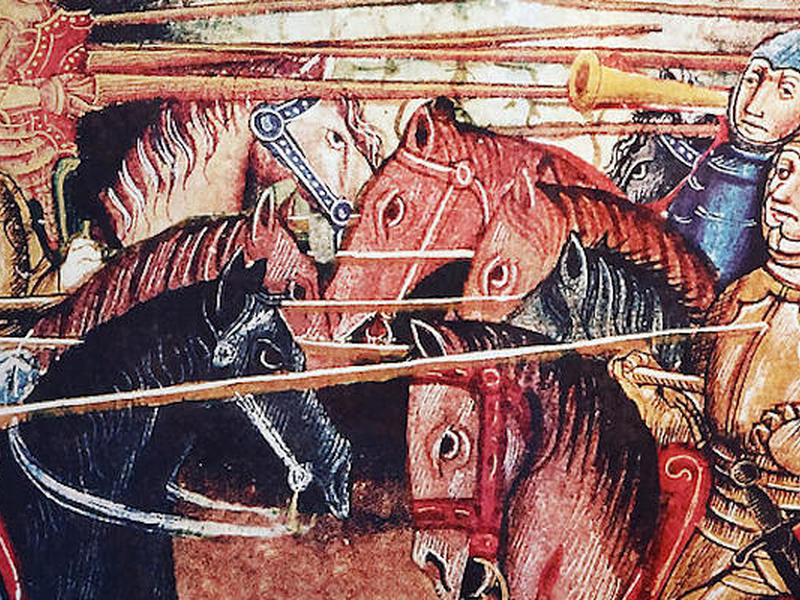
One of the most extensive and penetrating responses to the Yoder-Hauerwas attack on Constantiniansm is found in Oliver O’Donovan’s Desire of Nations , in a chapter entitled “The Obedience of Rulers.” O’Donovan defines the word “Christendom” as “a historical idea,” specifically “the idea of a professedly Christian secular political order,…

by Peter LeithartMay 30, 2017

Showing page 111 of 309

See all
See all

Day of Midian

Isaiah 9 describes not only a dawn, but the dawn of victory. With the light comes a multiplication of the nation, a repopulation of the land, gladness like the gladness of harvest (v. 3). This gladness is the result of a deliverance, a new exodus that will deliver Israel from…

August 11, 2007

Dawn and darkness

Matthew says that Jesus’ residence in Capernaum fulfills the prophecy of Isaiah 9 about the dawning in the land of Zebulun and Naphtali. There are several aspects to this. 1) Isaiah 9 comes at the end of a prophecy concerning the Aramean crisis in Judah. Rezin of Aram and Pekah…

August 11, 2007

Promise of Zebulun

It’s no wonder that the land of Zebulun and Naphtali, the region of Galilee, was considered a place of darkness. Towns had been sold to the Gentile Hiram, and apparently pronounced worthless (1 Kings 9). This region was the first to go into exile (2 Kings 15:29), and the Assyrians…

August 11, 2007
Literature

Austen the Romantic?

Though Austen lived almost two decades into the nineteenth century, she is usually characterized as a writer of the eighteenth. Her aesthetic and tastes were set in stone by 1800 (when she was 25), and she was untouched by romanticism. Indeed, she is often read as an anti-Romantic writer. The…

August 11, 2007
Literature

Austen the Abolitionist?

Gabrielle White offers an abolitionist reading of Austen’s work, and of Emma specifically. Part of the evidence is circumstantial. Some of Austen’s best-loved writers favored not only the abolition of the slave trade (which happened in 1807) but also the abolition of chattel slavery in British colonies (which didn’t happen…

August 11, 2007

Darcy and Elizabeth

Ellen Belton points out that in the 1995 BBC production of Pride and Prejudice , “Elizabeth and Darcy (Colin Firth) are hardly ever frames together until well into the second half of the film, and when they are shown in the same shot, the effect is to emphasize the obstacles…

August 11, 2007

Showing page 1649 of 2212

Browse by Category

In Medias Res

Your weekly digest for all things Theopolis.

Donate

Theopolis is nearly 100% donor-supported. Consider joining us on our mission.