Theopolis Logo

Writing

Explore our collection of theological essays, biblical studies, and reflections on faith and culture.

See all
timothy-eberly-djj49s6ud2o-unsplash
Leviticus

Yahweh's War Against Death

Stories, frankly all human stories are practically always about one thing aren’t they? Death. The inevitability of death. . . . “There is no such thing as a natural death. Nothing that happens to man is ever natural, since his presence calls the whole world into question. All men must…

by Brian MarrApril 14, 2014

screenshot-2023-09-21-at-4-52-42-pm
Matthew

Inescapable Blood

Matthew is organized around 5 discourses, which trace out the history of Jesus as a recapitulation of the history of God and Israel in the Old Testament. Jesus first speaks as a new Moses, instructing His disciples on a mountain about a righteousness that surpasses the righteousness of the scribes…

by Peter LeithartApril 10, 2014
screen-shot-2022-05-12-at-12-07-23-pm
Angels

Did Angels Marry People? The Sin of Cultural Intermarriage

The fall of the Sethites in Genesis 6 is the third fall of mankind, or the third degree of Adam’s original fall. Adam sinned in a Garden against his Father by stealing something he was supposed to wait to obtain. (“Every tree shall be food for you” Genesis 1:29.) Cain…

by James B. JordanApril 7, 2014
sixteen-miles-out-al48tflf4e8-unsplash
Angels

Did Angels Marry People? The Sons of God in Genesis 6

The recent fantasy film Noah and a slightly related blog comment by my friend Douglas Wilson have stirred up again the question of whether the “sons of God” in Genesis 6 who married the “daughters of men” were fallen angels or the priestly line of Seth. Doug argues for angels,…

by James B. JordanApril 4, 2014
kiwihug-l4gw27xzn1i-unsplash
Angels

The Angels of Jude

The prophecy of Jude concerns apostasy. An illustration of apostasy and its consequences is found in verse 6, which the New American Standard Bible translates this way: "And angels who did not keep their own domain, but abandoned their proper abode, He has kept in eternal bonds under darkness for…

by James B. JordanApril 3, 2014
screenshot-2023-09-21-at-4-22-42-pm
Matthew

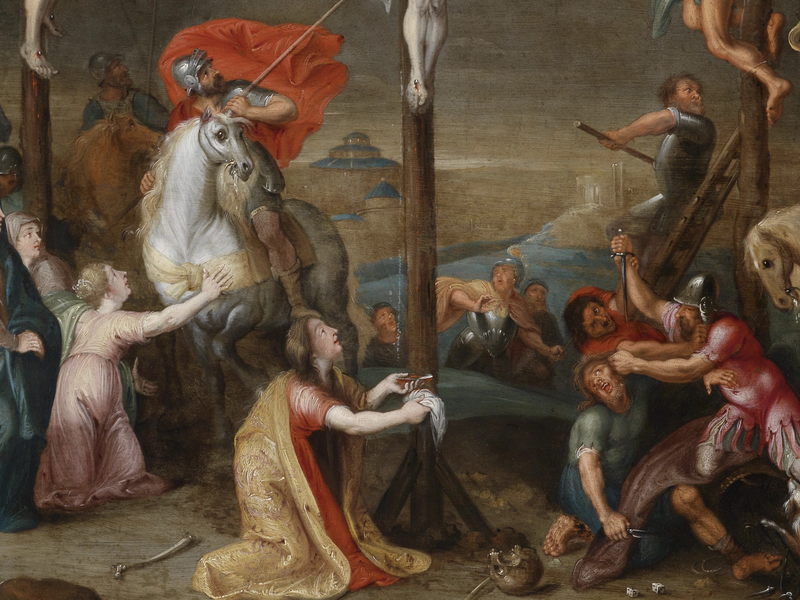
Women at the Cross

At His death, Jesus is surrounded by a Roman centurion and his cohort of Gentile solders. Matthew doesn't say that any disciples are there. But women are, and so is Joseph of Arimathea, identified as a “disciple” but, as John tells us, a “secret disciple for fear of the Jews,”…

by Peter LeithartMarch 31, 2014

Showing page 176 of 309

See all
See all

Day of Midian

Isaiah 9 describes not only a dawn, but the dawn of victory. With the light comes a multiplication of the nation, a repopulation of the land, gladness like the gladness of harvest (v. 3). This gladness is the result of a deliverance, a new exodus that will deliver Israel from…

August 11, 2007

Dawn and darkness

Matthew says that Jesus’ residence in Capernaum fulfills the prophecy of Isaiah 9 about the dawning in the land of Zebulun and Naphtali. There are several aspects to this. 1) Isaiah 9 comes at the end of a prophecy concerning the Aramean crisis in Judah. Rezin of Aram and Pekah…

August 11, 2007

Promise of Zebulun

It’s no wonder that the land of Zebulun and Naphtali, the region of Galilee, was considered a place of darkness. Towns had been sold to the Gentile Hiram, and apparently pronounced worthless (1 Kings 9). This region was the first to go into exile (2 Kings 15:29), and the Assyrians…

August 11, 2007
Literature

Austen the Romantic?

Though Austen lived almost two decades into the nineteenth century, she is usually characterized as a writer of the eighteenth. Her aesthetic and tastes were set in stone by 1800 (when she was 25), and she was untouched by romanticism. Indeed, she is often read as an anti-Romantic writer. The…

August 11, 2007
Literature

Austen the Abolitionist?

Gabrielle White offers an abolitionist reading of Austen’s work, and of Emma specifically. Part of the evidence is circumstantial. Some of Austen’s best-loved writers favored not only the abolition of the slave trade (which happened in 1807) but also the abolition of chattel slavery in British colonies (which didn’t happen…

August 11, 2007

Darcy and Elizabeth

Ellen Belton points out that in the 1995 BBC production of Pride and Prejudice , “Elizabeth and Darcy (Colin Firth) are hardly ever frames together until well into the second half of the film, and when they are shown in the same shot, the effect is to emphasize the obstacles…

August 11, 2007

Showing page 1649 of 2212

Browse by Category

In Medias Res

Your weekly digest for all things Theopolis.

Donate

Theopolis is nearly 100% donor-supported. Consider joining us on our mission.