Theopolis Logo

Writing

Explore our collection of theological essays, biblical studies, and reflections on faith and culture.

See all
eyasu-etsub-hn7scs05pju-unsplash
Leviticus

Priestly Animals

The first commandment given in the Levitical sacrificial legislation has to do with the animals appropriate to sacrifice: "When any man of you brings an offering to the Lord, you shall bring your offering of cattle ( behemah ), from the herd or the flock" (Lev. 1:2). Cattle alone were…

by Peter LeithartSeptember 3, 2024

james-coleman-hoznesupplm-unsplash
Baptism

Rome Won't Have Me

This post was originally posted in 2004 The ultimate condemnation of a position in Reformed circles is to show that it “leads back to Rome.” Indeed, one gets the feeling that Rome is a worse destination for a Presbyterian than even hell itself. The accusation of Rome stings deeply, of…

by Rich LuskAugust 27, 2024
alex-guillaume-2k4du3r1giy-unsplash-2
Biblical Theology

It's About Time

There are countless scholars who have helped me in my reading of various passages of Scripture. I have gleaned insights and keys from them that have unlocked texts that once perplexed me. However, no scholar has done so much to teach me how to read the Scripture more generally than…

by Alastair RobertsAugust 15, 2024
nicki-eliza-schinow-mg3nb1l2kdm-unsplash

The Dangers of Getting Ahead

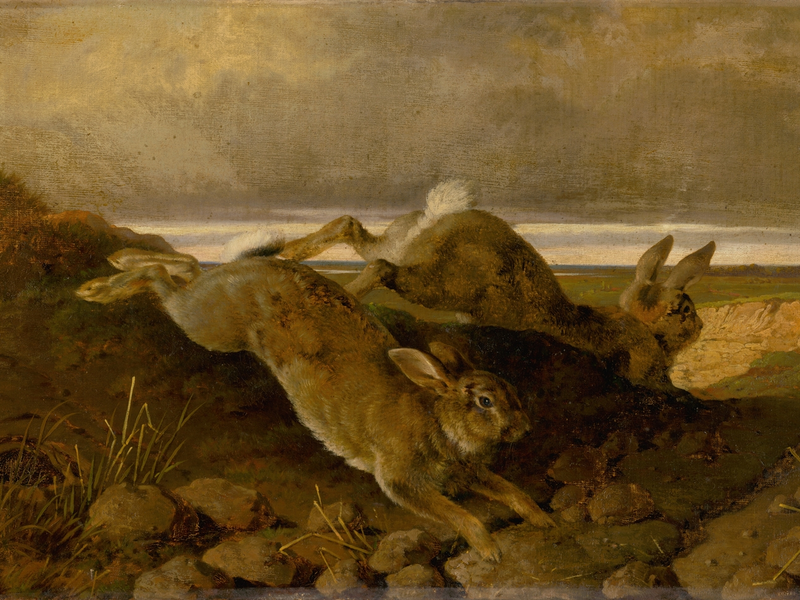
The Tortoise and the Hare is perhaps the most well-known of the Greek fables. Its story has been present in every era of human history. From the Indigenous retellings with hummingbirds and cranes to the Biblical account of David and Goliath, the basic furniture of an unlikely hero tale is…

by Garrett SoucyAugust 8, 2024
adam-and-eve-in-the-garden-of-eden-wenzel-peter
Genesis

Sinning Naked: Double the Exposure, Double the Shame

Sexual sins are perhaps the most shame-inducing sins experienced by Christians and non-Christians alike. All sins can bring shame, but sexual sins are deeply personal and affect us in profound ways. For example, adultery leaves its victim devastated by betrayal; porn addiction leaves men feeling gross, pathetic, and lazy; losing…

by Adam McIntoshAugust 6, 2024
714368ansdl
Books

Lessons from Watership Down: What Rabbits Can Teach the Church

If the mark of a good book is how many times a person can re-read it with pleasure, Richard Adams’ novel Watership Down is one of the best books of the 20 th century. I’ve taught this book in my middle school literature class for the past three years, and…

by Christian LeithartJuly 30, 2024

Showing page 18 of 309

See all
See all

Radical Penance

According to the Muslim commentator Ibn Abbas, “after the fall, Adam and Eve fasted for forty days and Adam abstained from having sex with Eve for a hundred years.”

July 13, 2007
History

Longing for myth

George Williamson argues in Longing for Myth in Germany (Chicago, 2004) that the search for a “new mythology” developed from “the postrevolutionary experience of historical rupture and religious crisis.” Nationalist writers gave a particular spin to this by calling for a “German mythology.” Originally, in the early German romantics, the…

July 13, 2007
Philosophy

Fruhromantik and postmodernism

It is widely argued today that the early German romantic movement anticipates postmodernism; the early romantics were postmoderns before their time. Frederick Beiser differs, and notes three critical differences between German romanticism and the mainstream of postmodern philosophy. First, the early romantics were Platonists “in their belief in a single…

July 13, 2007
Philosophy

Germans Against Descartes

German idealism is often seen as the completion of the subjectivization of knowledge and reality begun by Descartes. Not so, says Frederick Beiser in his massive 2002 history of German idealism (Harvard): “In fundamental respects it is more accurate to say the exact opposite: that the development of German idealism…

July 13, 2007
Philosophy

Amo, ergo sum

Jean-Luc Marion challenges the Cartesian cogito by stressing the primacy of the erotic. According to Descartes’s formula ( Ego sum res cogitans ), “it follows by omission that I am no longer supposed to love, nor to hate; or better: I am of such a sort that I have neither…

July 12, 2007
Theology

Reasonable Christianity

Barth argues that 18th-century rational theology was rooted in prior commitments to peaceable citizenship and morality. The dynamic goes something like this: Christianity is interpreted pragmatically - it’s about the transformation of human life; but it doesn’t work - human life isn’t transformed; there must therefore be something wrong with…

July 12, 2007

Showing page 1656 of 2212

Browse by Category

In Medias Res

Your weekly digest for all things Theopolis.

Donate

Theopolis is nearly 100% donor-supported. Consider joining us on our mission.