Theopolis Logo

Writing

Explore our collection of theological essays, biblical studies, and reflections on faith and culture.

See all
screen-shot-2023-02-24-at-1-48-41-pm
Biblical Chronology

Chronologies and Kings: Part 3

The chronology of the Kings of Judah and Israel can be divided into three periods with clearly defined boundaries. The first period begins with the death of Solomon and the accessions of Rehoboam in the south (Judah) and Jeroboam in the north (Israel). It ends with the deaths of Ahaziah…

by James B. JordanSeptember 22, 1991

johann-walter-bantz-clv9dfjlwac-unsplash-1-5
Art

Arts & Play, Part 1

Most modern people regard the arts as essentially decorative. They are hardly very important, as compared to business, politics, or religion. Yet, from a Biblical point of view, the arts lie close to the heart of human life. The universe that God created is itself an artistic masterpiece by the…

by James B. JordanSeptember 22, 1991
6273e95e0f5ac766258d8cf3_joshuasconquestoftheland-2
Exodus

Chronologies and Kings, Part 2

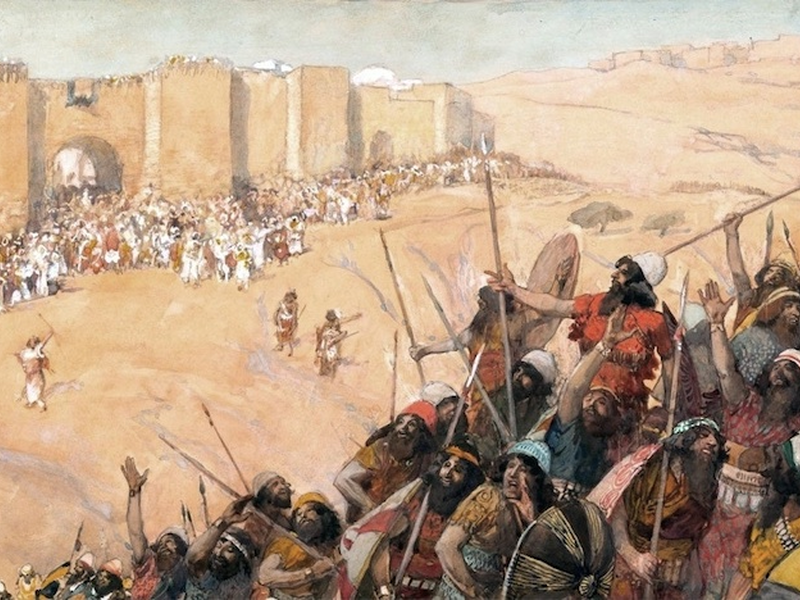
Before we move into a detailed survey of the history and chronology of the kings of Israel and Judah, let us review the chronological information that leads from creation to the kingdom. This will be helpful both to new readers of these essays, and a reminder for those who have…

by James B. JordanAugust 22, 1991
screen-shot-2023-02-24-at-1-48-41-pm
Biblical Chronology

Chronologies and Kings, Part 1

We have completed our overall survey of Biblical chronology, and now turn to a detailed examination of the Biblical information regarding the chronology of Israel’s kings. The first piece of chronological information we have regarding Israel’s kings is very cryptic, and it serves as an guide to the interpretation of…

by James B. JordanJuly 22, 1991
screenshot-2023-08-09-at-2-13-32-pm
Biblical Horizons

Book Review - To Take Place: Toward Theory in Ritual

Jonathan Z. Smith, To Take Place: Toward Theory in Ritual (Chicago: University of Chicago Press, 1987). Reviewed by Peter J. Leithart. The philosophes of the 18th century often attacked Christendom using the tools of anthropology and comparative religion. Rousseau contrasted the idyllic equality of primitive, natural peoples with the bondage…

by Peter LeithartJuly 6, 1991
screenshot-2023-08-09-at-1-47-41-pm
Biblical Horizons

Book Review: The Rise of Magic in Early Medieval Europe

Valerie I. J. Flint, The Rise of Magic in Early Medieval Europe (Princeton University Press, 1991). Reviewed by Peter J. Leithart. Valerie I. J. Flint, Professor of History at the University of Auckland, New Zealand, is refreshingly candid about her reasons for undertaking a study of The Rise of Magic…

by Peter LeithartJuly 6, 1991

Showing page 295 of 309

See all
See all

Radical Penance

According to the Muslim commentator Ibn Abbas, “after the fall, Adam and Eve fasted for forty days and Adam abstained from having sex with Eve for a hundred years.”

July 13, 2007
History

Longing for myth

George Williamson argues in Longing for Myth in Germany (Chicago, 2004) that the search for a “new mythology” developed from “the postrevolutionary experience of historical rupture and religious crisis.” Nationalist writers gave a particular spin to this by calling for a “German mythology.” Originally, in the early German romantics, the…

July 13, 2007
Philosophy

Fruhromantik and postmodernism

It is widely argued today that the early German romantic movement anticipates postmodernism; the early romantics were postmoderns before their time. Frederick Beiser differs, and notes three critical differences between German romanticism and the mainstream of postmodern philosophy. First, the early romantics were Platonists “in their belief in a single…

July 13, 2007
Philosophy

Germans Against Descartes

German idealism is often seen as the completion of the subjectivization of knowledge and reality begun by Descartes. Not so, says Frederick Beiser in his massive 2002 history of German idealism (Harvard): “In fundamental respects it is more accurate to say the exact opposite: that the development of German idealism…

July 13, 2007
Philosophy

Amo, ergo sum

Jean-Luc Marion challenges the Cartesian cogito by stressing the primacy of the erotic. According to Descartes’s formula ( Ego sum res cogitans ), “it follows by omission that I am no longer supposed to love, nor to hate; or better: I am of such a sort that I have neither…

July 12, 2007
Theology

Reasonable Christianity

Barth argues that 18th-century rational theology was rooted in prior commitments to peaceable citizenship and morality. The dynamic goes something like this: Christianity is interpreted pragmatically - it’s about the transformation of human life; but it doesn’t work - human life isn’t transformed; there must therefore be something wrong with…

July 12, 2007

Showing page 1656 of 2212

Browse by Category

In Medias Res

Your weekly digest for all things Theopolis.

Donate

Theopolis is nearly 100% donor-supported. Consider joining us on our mission.