Theopolis Logo

Writing

Explore our collection of theological essays, biblical studies, and reflections on faith and culture.

See all
ross-sneddon-zstkmnvmwsq-unsplash-2
Acts

No One Dared Join Them

And through the hands of the apostles many signs and wonders were done among the people. And they were all with one accord in Solomon's Porch. Yet none of the rest dared join them, but the people esteemed them highly. Acts 5:12-13 When Grandma needed healing, her children knew the…

by Tim NicholsAugust 31, 2021
james-coleman-heksmrnfajk-unsplash
How to Worship

Why Sacraments?

Like certain kinds of music, the unchanging rhythm of Aquinas's Summa gets into your bones. Read a few sections and it begins to run through your head. You start drumming your fingers, humming, swaying gently to the rhythm of Videtur-Sed Contra-Responsio, Videtur-Sed Contra-Responsio, “It seems-On the contrary-I answer.” The only…

by Peter LeithartAugust 26, 2021
alex-guillaume-2k4du3r1giy-unsplash
Biblical Chronology

The Embarrassment of Biblical Chronology

And Arpachshad lived thirty-five years, and became the father of Shelah . . . And Shelah lived thirty years, and became the father of Eber . . . and Eber lived thirty-four years and became the father of Peleg . . . and Peleg lived thirty years, and became the…

by James B. JordanAugust 24, 2021
screen-shot-2021-08-19-at-1-03-26-pm
Hermeneutics

The Fall of Satan

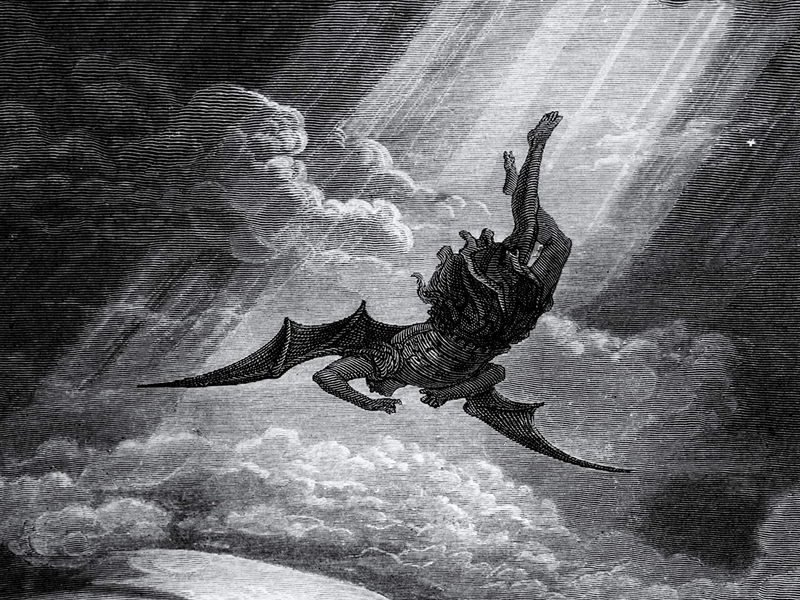
Of course, the title should be something like, “The Fall of the Angel Who Came to be Satan,” but that and other more accurate titles are too cumbersome. The question is: who is Satan, and when and how did he become “Satan” (Adversary, Accuser) and the “devil” (slanderer)? By my…

by Ralph Allan SmithAugust 19, 2021
harshit-sharma-wertrhhtz4s-unsplash
Baptism

Baptismal Rain and the Feast of Booths

In The Oddness of the Feast of Booths , we saw that the Feast of Booths is a commemoration of the first encampment of Israel at Sukkoth (Booths) in Exodus 12:37, almost certainly the first celebration of the week of Unleavened Bread after the first Passover. The Feast of Booths…

by James B. JordanAugust 17, 2021
screen-shot-2021-08-12-at-2-57-54-pm
Proverbs

An Antidote for Yuppie Postmillennialism

This piece was originally published in 1989. 1. The Blessed Hope "Looking for the blessed hope and the appearing of the glory of our great God and Savior, Christ Jesus." Titus 2:13 I was recently asked how I as a postmillennialist would preach on "The Blessed Hope." This is often…

by James B. JordanAugust 12, 2021

Showing page 52 of 309

See all
See all
Philosophy

Mirrors, ancient and modern

In her recent book The Mirror of the Self , Shadi Bartsch argues that ancient notions of introspection and self-examination do not employ the image of the mirror in the way we do in post-Cartesian philosophy. In the words of the TLS reviewer, for the ancients “the mirror was the…

June 27, 2007

Enjoyment in God

Wilken summarizes Augustine’s social vision of perfection this way: “This peace for which the city of God yearns is a ‘perfectly ordered and harmonious fellowship in the enjoyment of God,’ a peace of ‘enjoying one another in God.’ Notice that Augustine’s language is social, not individualistic. He does not say,…

June 26, 2007

Ecclesiology of perfection

When Plato thought about politics, he thought about an ideal city (at least in the Republic ). Not Augustine. Augustine recognized that Plato had portrayed “what kind of city ought there to be.” But Augustine was after something different. He presented an actual human society, a city of God in…

June 26, 2007
Theology

Empty minds

Aquinas wrote: “If the teacher determines the question by appeal to authorities only, the student will be convinced that the thing is so, but will have acquired no knowledge or understanding, and he will go away with an empty mind.”

June 26, 2007

Cyril and the Bible

In his wonderful book, The Spirit of Early Christian Thought , Robert Louis Wilken criticizes the Formula of Chalcedon as “formulaic and abstract,” which described Jesus as “one person,” but “seemed to divide Christ into a divine nature that, for example, healed the sick and raised the dead and a…

June 26, 2007
History

No heavenly good

Alcinous, a pagan philosopher of the second century AD claimed that God is “eternal, ineffable, self-sufficient, without need . . . and perfect in every respect.” The only way to know such a God was to ascend from earthly things to higher realities: “First one contemplates the beauty found in…

June 26, 2007

Showing page 1663 of 2212

Browse by Category

In Medias Res

Your weekly digest for all things Theopolis.

Donate

Theopolis is nearly 100% donor-supported. Consider joining us on our mission.