Theopolis Logo

Writing

Explore our collection of theological essays, biblical studies, and reflections on faith and culture.

See all
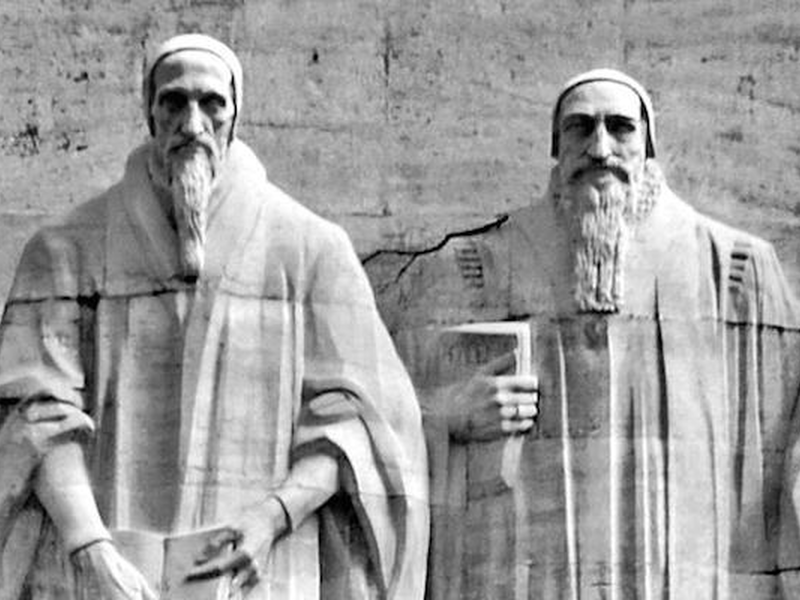
reformation-wall
History

How the Reformation Failed

The Reformers did not start out with a plan to found separated churches. Their goal was to reform the entire Latin church. In this they failed. The paradox is sharp, and we need to feel its point and its edge if we Protestants are to reckon honestly with our history…

by Peter LeithartApril 18, 2017

img_7521
Federal Vision

What is Conversion?

Conversion is a turning from sin to Christ. Now, let's think about that. Does conversion happen only once in a lifetime, or does it happen many times? That is the question, I believe, that needs answering. From my experience, and from my understanding of the Bible and of Christianity, there…

by James B. JordanApril 13, 2017
sky-from-bridge
Biblical Studies

Priests to the Nations

Israel was supposed to be a priest to the nations (Ex. 19:6). Her water would cause their trees to grow. This was signified to all men when Israel came out of Egypt, for "then they came to Elim, where they were twelve springs of water and seventy date palms, and…

by James B. JordanApril 11, 2017
holodomor
Ukraine

Borderland

Rousing Soviet songs surround us as we pass through a gloomy gauntlet of titanic statues on our way to Kyiv’s Museum of the Great Patriotic War. My friends, a Polish and a Ukrainian pastor, remember the songs, which played incessantly on the radio during their childhood. The sculpture complex depicts…

by Peter LeithartApril 6, 2017
img_0166
Eucharist

Worship and Ceremony, Part II: The Lord's Supper

This is the second installment of a two-part article. Click HERE to read Part I. The fourth perspective on ceremony is that of the action of the Lord's Supper. As we noted before, the inauguration of the Lord's Supper preceded its interpretation. Jesus did not at that point give an…

by James B. JordanApril 4, 2017
e99a9380
Course Recap

Architecture Course Recap

The best courses are those that make you see the Bible, the church, or the world differently. The recent Theopolis Architecture Course with Daniel Lee did exactly that. Architect Daniel Lee began the week with architectural theory, continued through the week taking students through a history of architectural practice, and…

by Brian MoatsMarch 31, 2017

Showing page 114 of 309

See all
See all

Public and Private Piety

Thanks to Jayson Grieser for sending along notes and quotations from Ramie Targoff’s 2001 Common Prayer: The Language of Public Devotion in Early Modern England . Targoff points out that, contrary to what we might think, Protestants were more interested than Catholics in communal worship. “For sixteenth-century Catholics,” she writes,…

April 7, 2007

Calvin and allegory

Calvin is harsher on allegorical interpretation than almost anyone, yet he is all in favor of typology. David, Zedekiah, Joseph, Aaron, Samson, Joshua, Zerubbabel, Cyrus and others are types of Christ. It is no easy task to discover where he draws the line between allegory and typology, though. At times,…

April 5, 2007

Yahweh/Iehave

“Yahweh” is often thought to be a purely modern rendering of the Hebrew name, but Smalley finds a medieval glossator who writes the name as “Iahave.” She goes on: “The ‘monstrous form’ Jehoveh was already known to Christians in the late thirteenth century. Henry Crossy seems to compromise between Jehoveh…

April 5, 2007

Kids in Mother’s Milk

Aquinas rejected Augustine’s dismisal of literal interpretations of the law as “absurdities,” arguing that “the end of the ceremonial precepts was twofold, for they were ordained to divine worship, for that particular time, and to the foreshadowing of Christ.” Applying this principle, he sought for a plausible literal interpretation of…

April 5, 2007

Man of Sorrows

Following Jewish exegetes of his time, Andrew of St. Victor interpreted Isaiah 53 as a prophecy of Israel. Isaiah used the phrase “man of sorrows” to speak “of the people as though of one man.” “Bearing infirmities” refers to “the people who were to suffer in the Babylonian captivity” and…

April 5, 2007

Showing page 1696 of 2212

Browse by Category

In Medias Res

Your weekly digest for all things Theopolis.

Donate

Theopolis is nearly 100% donor-supported. Consider joining us on our mission.