Theopolis Logo

Writing

Explore our collection of theological essays, biblical studies, and reflections on faith and culture.

See all
img_3944-2
Parenting

Guarding Our Eyes

It is a well-known movie trope, the sports car drives up, a stiletto-heeled starlet steps out and the camera follows her leg up the prodigious slit of her dress, then it takes in the rest of her figure before settling on her face, usually primed and puckered for some pro-feminist…

by Remy WilkinsSeptember 15, 2015

cappadocians
Books

Are the Divine Persons Persons?

The “personalist” understanding of the Trinity, articulated most influentially in the work of John Zizioulas, has fallen on hard times. Recent scholars have attacked Zizioulas’s idea that Cappadocian Trinitarianism represented an ontological revolution, hammering again and again the distinction between divine and human personhood. Michel Barnes’s conclusion is the most…

by Peter LeithartSeptember 10, 2015
austin-distel-tlzhfrlj6ny-unsplash
Culture

Face To Facebook

I sit here in my office and poke around on a keyboard that is not even physically connected to my laptop and characters appear on a screen. I have a phone in my pocket through which I talk to someone around the world, send a text message, and to which…

by Bill SmithSeptember 8, 2015
samuel-martins-3u7hcqkibb4-unsplash
Prayer

Repent of Your Piety

I want to give a pep talk. Nothing fancy, nothing clever. Jesus makes some astounding promises in Luke 11. I want to clear out the clutter and convince you to believe Him and to act on it. The chapter begins with Jesus praying and teaching His disciples to pray by…

by Peter LeithartSeptember 7, 2015
lazarus-raised
John

The Strange Love of Jesus

Eleonore Stump in her book Wandering in Darkness invites us to re-read the story of Lazarus (John 11) from Mary’s perspective. Stump argues that the story of Lazarus is a story of Mary, since both Lazarus and Martha are identified by their relationship with Mary. The true ending of the…

by Bogumil JarmulakSeptember 3, 2015
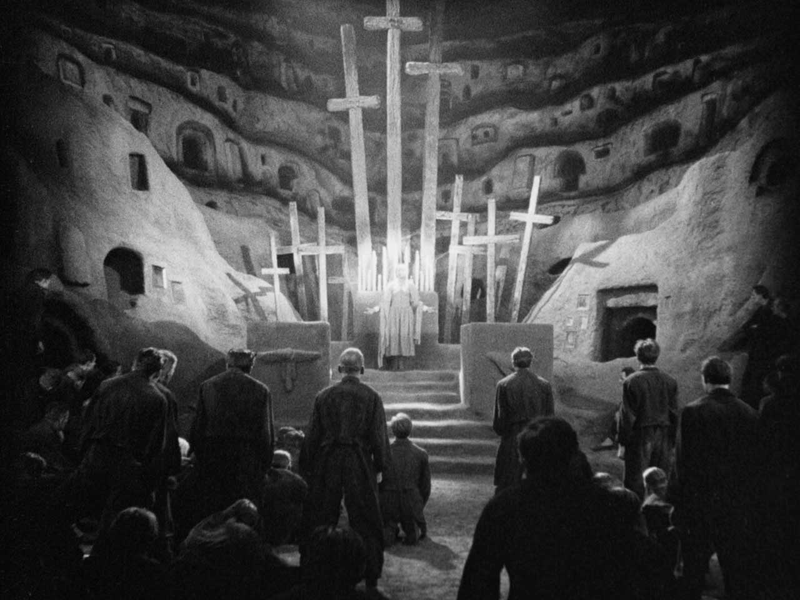
metro
Movies

Movies and Music with James Jordan

In his introduction to The Glory of Kings: A Festschrift in Honor of James B. Jordan , Peter Leithart says this about him: “Jordan is an unclassifiable thinker because he is an unclassifiable person . . . he closes his eyes in ecstasy listening to Messiaen or Rachmaninoff . .…

by Brian MoatsSeptember 2, 2015

Showing page 144 of 309

See all
See all

Exegetical progress

If the fathers have already explained the Scriptures, Andrew of St. Victor asked, why do I need to? He answered that truth dwells “deep” and “screens herself from mortal sight.” There is always more truth to dig up because truth “hides, yet so as never wholly to be hidden. Careful…

April 4, 2007
Literature

Jane Austen, Economist

England’s economy in Austen’s time was still dominated by land ownership. Land was the most settled and permanent form of wealth, and writers like Coleridge and Burke asserted that landownership formed a “natural” governing class that had a physical stake in the nation. In 1710, Parliament enacted property qualifications for…

April 4, 2007
History

Equality and fashion

In 1767, one N. Foster wrote, “In England the several ranks of men slide into each other almost imperceptibly, and a spirit of equality runs through every part of their constitution. Hence arises a strong emulation in all the several stations and conditions to vie with each other; and the…

April 3, 2007
History

Consumer revolution

In the 1982 symposium, The Birh of a Consumer Society , Neil McKendrick identifies some of the chief features of the demand-side of the social and economic of the 18th century. What did it mean for England to become a “consumer society”? 1. More people than ever could acquire material…

April 3, 2007
History

Mimetic adverts

Samuel Johnson recognized the character of avertising quite early. he noted in 1761 that “advertisements are now so numerous that they are very negligently perused, and it is therefore become necessary to gain attention by magnificence of promises and by eloquence sometimes sublime and sometimes pathetic.” And he saw that…

April 3, 2007
History

Early advertising

Seen in the advertising section of many 18th-century English newspapers: “a fine young breast of milk willing to enter a gentleman’s household.” Presumably attached to a wet nurse. And an advertisement for a bed that “at the head . . . in the full centre front, appears sparkling with electrical…

April 3, 2007

Showing page 1697 of 2212

Browse by Category

In Medias Res

Your weekly digest for all things Theopolis.

Donate

Theopolis is nearly 100% donor-supported. Consider joining us on our mission.