Theopolis Logo

Writing

Explore our collection of theological essays, biblical studies, and reflections on faith and culture.

See all
james-coleman-642705-unsplash
Biblical Studies

A Daughter of Abraham

Some of the key ways Biblical writers draw attention to important details in their stories are by the use of key words, repetition, and structural devices like chiasms and parallel constructions. The Bible sounds different, even odd, to us sometimes because of the use of these and similar literary conventions.…

by Ralph Allan SmithApril 16, 2019

why-man-cannot-quit-porn-alone
Autonomy

Rehabilitating Autonomy

It is pretty standard in conservative Christian circles to condemn unbelief for pretensions of “autonomy.” Cornelius Van Til famously (at least among those of us who knows who he is) said that “There is no alternative but that of theonomy and autonomy.” Greg Bahnsen appealed to this quotation by labeling…

by Mark HorneApril 9, 2019
jesus_preaching
John

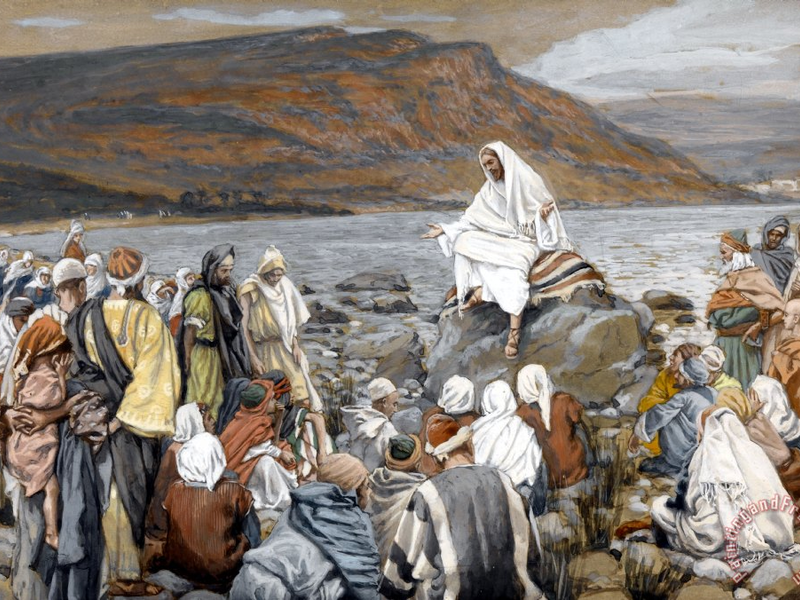
Jesus: Preacher of Paradox

Jesus was the greatest teacher who ever taught — the Light of the World, whose pure Truth brought sight to the blind (John 9). Almost no one — even those who speak openly against Him — disputes His reputation as a wise and good teacher of the way of love.…

by Ralph Allan SmithApril 2, 2019
esther
Esther

The Book of Esther in Covenant History

It is clear that the events in Esther are an integral part of the history of the formation of the Restoration Covenant Era. Amalek attacks. Amalek is spoiled. The spoils are used to build the Temple, in the sense that the crude Temple of Zerubbabel can now be glorified with…

by James B. JordanMarch 28, 2019
img_9025
How to Worship

A Positive View of Music

It is not coincidental that John Calvin speaks most strongly in defense of vernacular language just after his defense of singing in church. "From this also it plainly appears that public prayers must be couched not in Greek among the Latins, nor in Latin among the French or English, as…

by John AhernMarch 26, 2019
david-4
Biblical Theology

The Reopened Wounds of Jacob

In A Voyage Around the World , George Anson recounts the effects of scurvy upon an unfortunate man: But a most extraordinary circumstance, and what would be scarcely credible upon any single evidence, is, that the scars of wounds which had been for many years healed, were forced open again…

by Alastair RobertsMarch 19, 2019

Showing page 80 of 309

See all
See all
History

Converted Jerusalem

In his fascinating Rise of Christianity , Rodney Stark cites estimates that there were between 10,000 and 20,000 inhabitants of Jerusalem in the first century. Stark uses this to falsify Luke’s claims that there were 5000 Christians in Jerusalem (Acts 4:4) and “many thousands” of Jews (Acts 21:20): “Had there…

March 30, 2007

Hebraic hermeneutics

One Rhonda Wauhkonen discusses Nicholas of Lyra’s “Hebraic” semiotics and hermeneutics in a 1992 article on Chaucer. She begins by contrasting Augustine’s signum/res distinction to Lyra’s Hebraic viewpoint: “In the Hebrew system as evidenced in Scripture and as adapted by Nicholas, such stratification of signification did not exist, for the…

March 29, 2007

Last and first

Nicholas of Lyra is known for his notion of a “double literal” sense to Scripture. For him, interpretation ad litteram includes both the historical and the doctrinal/christological senses, and he suggests that the ancient Hebrews could well have seen the Messianic sense as the literal sense. He also suggests that…

March 29, 2007

Nicholas of Lyra’s afterlife

In Book 3 of Gargantua and Pantagruel, Rabelais attributes an odd opinion to the 14th-century exegete, Nicholas of Lyra: “Pantagruel, having wholly subdued the land of Dipsody, transported thereunto a colony of Utopians, to the number of 9,876,543,210 men, besides the women and little children, artificers of all trades, and…

March 29, 2007

Nicholas of Lyra’s afterlife

In Book 3 of Gargantua and Pantagruel, Rabelais attributes an odd opinion to the 14th-century exegete, Nicholas of Lyra: “Pantagruel, having wholly subdued the land of Dipsody, transported thereunto a colony of Utopians, to the number of 9,876,543,210 men, besides the women and little children, artificers of all trades, and…

March 29, 2007

Thomas on the Parable of the Workers

Steinmetz summarizes Thomas’s remarkably “NTWrightian” commentary on Matthew 20:1-16. While acknowledging an Origenist tradition that sees the hours as moments of an individual life, Thomas is more interested in the Irenaean tradition that interprets the parable in terms of redemptive history: “The hours mentioned in the parable are not stages…

March 29, 2007

Showing page 1699 of 2212

Browse by Category

In Medias Res

Your weekly digest for all things Theopolis.

Donate

Theopolis is nearly 100% donor-supported. Consider joining us on our mission.