Theopolis Logo

Writing

Explore our collection of theological essays, biblical studies, and reflections on faith and culture.

See all
cain-killing-abel-unknown-19th-century
Biblical Theology

The Gospel of Genealogy

Genesis 3 ends on a decisive, and decisively negative, note. Yahweh “drove the man out” of the garden, and, in addition, “at the east of the garden of Eden He stationed the cherubim, and the flaming sword which turned every direction, to guard the way to the tree of life.”…

by Peter LeithartJuly 15, 2014
screen-shot-2017-08-16-at-11-40-48
Books

Catholic Novelist

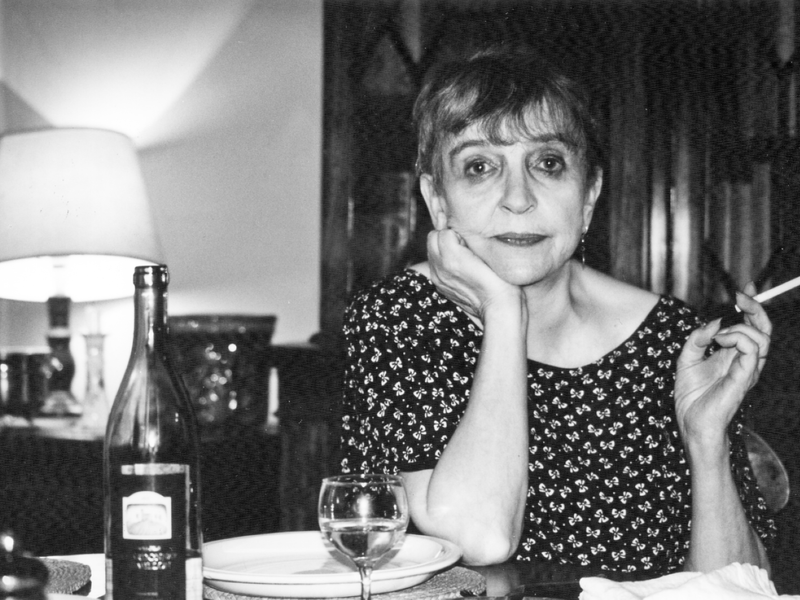
When she died in 2005 at the age of 72, Anna Haycraft, the author who published under the name Alice Thomas Ellis, was a celebrated writer in Great Britain. While working at Duckworth Publishers(which her husband owned), she produced a dozen novels, a collection of short stories, a cookbook, volumes…

by Peter LeithartJuly 9, 2014
523501ldsdl
History

Postmodernism and Me

Some have suggested recently that my "project" is postmodern. To clarify my views on postmodernism, I'm re-posting something I wrote in 2005, with a few modifications. For a fuller discussion, you can check out my Solomon among the Postmoderns (Canon, 2008). First, it is helpful to distinguish, as many writers…

by Peter LeithartJuly 8, 2014
306571rgsdl
Ezekiel

Holy City

Calling Jerusalem the "holy city" comes so naturally to Christians that it comes as something of a surprise to realize how infrequently the phrase is used in Scripture. Not only is Jerusalem rarely called holy, but in the Old Testament this classification is found only in texts that refer to…

by Peter LeithartJuly 3, 2014
the-choir-lesson-auguste-joseph-trupheme-oil-painting
How to Worship

The Lame Can't Dance

Asking why the church doesn’t sing hymns or even why men don’t sing in church is a bit like lamenting over the lame man who can’t waltz on the dance floor. While it is a valid question, the more immediate question would seem to be, “why doesn’t the lame man…

by Jarrod RicheyJune 30, 2014
ben-white-w8qqn1pmqh0-unsplash
Heresy

Heretics in the Latter Days: The Theme of 1 Timothy

The theme of 1 Timothy is the distinction between the true children in the Household of God and false children who really belong to the household of Satan. This is seen in the fact that in the chiastic structure of the Epistle, heresy is the subject in the center (…

by Joseph NorrisJune 18, 2014

Showing page 172 of 309

See all
See all
Philosophy

Rousseau and Voltaire

Rosenstock-Huessy’s discussion of Voltaire and Rousseau depends on his prior discussion of the role of inspired literature in the formation of a nation. They are adherents to the revolutionary creed of literary inspiration, the “cult o f an inspired literature.” He compares the two to Tolstoy and Dostoevsky, for like…

January 25, 2007
History

Paris and French Nationhood

Rosenstock-Huessy deals with a number of interrelated issues in a section of Out of Revolution dealing with Paris and the French notion of nationhood: He talks about the establishment of Paris as the intellectual center of France and of Europe; about the division between Paris and Versailles as background to…

January 25, 2007

Calvin on Baptism again

A couple of thoughts on the Calvin quotations I posted yesterday, inspired by a reader’s response. 1) Calvin appeals to his doctrine of “accommodation” to explain why the sign of baptism is necessary. God does speak in ways we can grasp; if that’s all accommodation is, fine. But it often…

January 25, 2007

Father and Son

Tom Smail’s Like Father, Like Son: The Trinity Imaged in Our Humanity (Eerdmans 2005) has a lot going for it. Written for a general Christian readership, it reflects a thorough familiarity with both tradition and contemporary work on the Trinity, and applies Trinitarian patterns to human life in interesting ways.…

January 25, 2007

Timely words

Stahmer offers this useful summary of Rosenstock-Huessy’s and Rosenzweig’s attack on “objectivity”: “For J. G. Hamann, and for all those who have accepted the sacramental qualities inherent in the frailty and tentativeness of human speech, the ambiguities and relativity of history could not possibly be denied. Both Rosenstock-Huessy and Rosenzweig…

January 24, 2007

Ahead of the Curve

In their capacity as Sprachdenkern - Speech-thinkers, Rosenstock-Huessy and Rosenzweig anticipated a number of developments in philosophy, theology, and hermeneutics. Stahmer writes, “Both Rosenzweig and Rosenstock-Huessy, but most especially the latter, can now be seen to have been hermeneutical pioneers who anticipated, by many years, the work of Martin Heidegger,…

January 24, 2007

Showing page 1729 of 2212

Browse by Category

In Medias Res

Your weekly digest for all things Theopolis.

Donate

Theopolis is nearly 100% donor-supported. Consider joining us on our mission.