Theopolis Logo

Writing

Explore our collection of theological essays, biblical studies, and reflections on faith and culture.

See all
last-supper
Luke

Table Talk

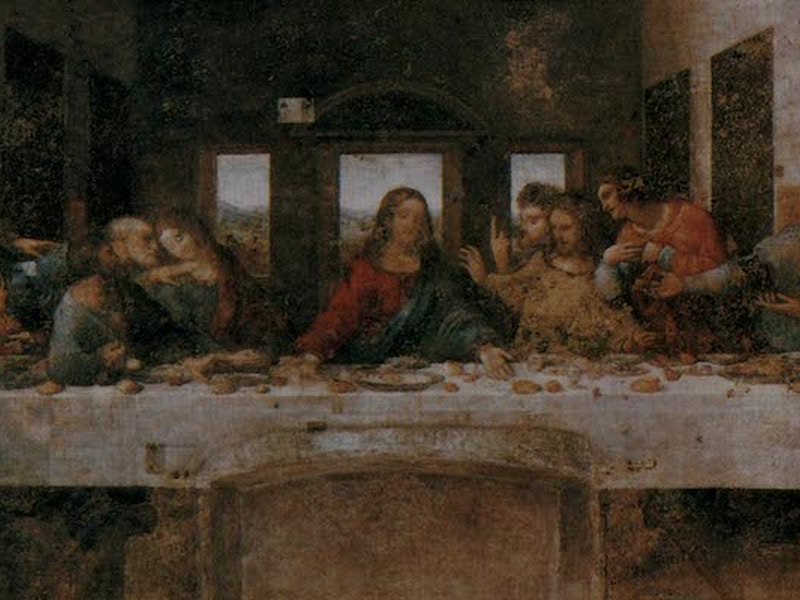
Along His journey to Jerusalem, Jesus stops frequently to have meals, three times with Pharisees (7:37-50; 11:37-54; 14:1-35). Meals were central to Jesus’ ministry. He comes “eating and drinking” (Luke 7:34). While His meals are not just for refreshment, they are opportunities for teaching the protocols of the kingdom. Meals…

by Peter LeithartApril 19, 2016

music-violin
Biblical Theology

A Musical Case for Typological Realism, (Part 4)

Time as a realm of participation can be difficult for us imaginatively to grasp. While music is a profoundly temporal art, exploring the medium of time like no other, most of our temporal experience seems decidedly unmusical in character, disjointed and unorchestrated. The form in which we naturally discover time…

by Alastair RobertsApril 14, 2016
John

Jesus' Burial Clothes

John devotes much attention to Jesus’ burial clothes. He tells us that Nicodemus brought about a hundred pounds of myrrh and aloes to spice Jesus body, and that He was bound in linen wrappings. We find out that His body and His head were wrapped separately. (John 19:39-40; 20:6-7). When…

by James B. JordanApril 12, 2016
clock
Biblical Theology

A Musical Case for Typological Realism, (Part 3)

Thinking about time in terms of music also helps us to appreciate its unity and inner relations. Henri Bergson observes our cultural habit of dividing time into discrete moments, and conceiving of these as if akin to objects in a spatial succession. [1] Against such a notion, Bergson argues for…

by Alastair RobertsApril 7, 2016
screen-shot-2016-03-31-at-9-32-11-am
Biblical Theology

A Musical Case for Typological Realism, (Part 2)

As we attend to these and other aspects of music’s temporality, Begbie suggests, we will find means by which to resist some of our habitual modern ways of conceptualizing time, most especially our tendency to conceive of time as if it were a homogeneous set of technologically quantifiable units laid…

by Alastair RobertsMarch 31, 2016
biblioteca-vasconcelos-crop
Biblical Theology

Systematic Typology (Part Three)

The Hidden Dimension In many fields of scientific study, the apparent complications and contradictions are dispelled once the internal logic is perceived. Biblical hermeneutics is no different, since the author of Creation is the Author of the Word. The Bible’s literary labyrinth radiates organically from an algorithm so simple it…

by Mike BullMarch 29, 2016

Showing page 133 of 309

See all
See all
Biblical Studies

Incarnational revelation

Westminster OT professor Pete Enns has been a friend since he taught me German at seminary nearly twenty years ago, and as editor of the Westminster Journal he regularly published my work. I have raised questions to him in private in the past, and we have had our friendly disagreements.…

November 17, 2006

Cleanse, consecrate, atone

Jay Sklar of Covenant Seminary carefully examined the uses of various terms for cleansing, consecrating, and atonement, particularly aiming to distinguish “atone” (Heb kpr) from the others. He took aim particularly at Milgrom’s claim that kipper “means purge and nothing else,” and is synonymous with other terms for purging. Against…

November 17, 2006

Eternity in the heart

Brian Gault gave a carefully-argued paper on the meaning of “ha-olam” in Ecclesiastes 3:11 - normally translated as “eternity.” Gault ran through a number of possible interpretations of the verse, finally suggesting a repointing leads to a translation as “darkness” or “ignorance.” The point is that God makes the world…

November 17, 2006

Vestigia trinitatis

Keith Johnson gave a solid exposition of Augustine’s views on the vestigia trinitatis in an ETS session this morning. He argued that Augustine is not using the vestigia to prove the Trinity or as a “second root” (Barth) in addition to the economic revelation of the Trinity. In fact, Augustine…

November 16, 2006
Politics

True Toleration

J. Budziszewski gave a sharply argued and spryly humorous deconstruction of liberalism’s neutralist view of tolerance, arguing that liberal states are confessional states that pretend not to be and that liberalism leads to a disguised dictatorship (a plenary ETS session). He suggested that a confessional state that follows what he…

November 16, 2006
History

Purity

No doubt it goes without saying after the previous few posts, but Latour’s anthropological assessment of modernity provides a lot of ammo for a study of modernity that would treat it as the creation of a purity culture, as dirt-avoidance.

November 15, 2006

Showing page 1762 of 2212

Browse by Category

In Medias Res

Your weekly digest for all things Theopolis.

Donate

Theopolis is nearly 100% donor-supported. Consider joining us on our mission.