Theopolis Logo

Writing

Explore our collection of theological essays, biblical studies, and reflections on faith and culture.

See all
screen-shot-2021-08-12-at-2-57-54-pm
Matthew

What Tune is Playing? (Matthew 11:1-19)

Matthew’s gospel is a replay of Israel’s history, and this replay occurs at two different levels. On the one hand, Jesus relives Israel’s history and does it faithfully. He is the Son, the true Israel, called out of Egypt, baptized in the sea, tempted in the wilderness. He is the…

by Peter LeithartJanuary 14, 2014

markus-winkler-aid-xyrtlec-unsplash
Theopolis News

Constantine, Christendom, Christian Renewal

Trinity House President Peter Leithart will deliver two lectures at the Eighth Day Institute annual conference in Wichita, Kansas, January 16-18. The conference theme is "Constantine, Christendom, and Christian Renewal," and Dr. Leithart will be lecturing on Constantine. Dr. Leithart will preach on Sunday, January 19, at Trinity Covenant Church…

by Peter LeithartJanuary 13, 2014
screenshot-2023-08-30-at-11-50-23-am
Matthew

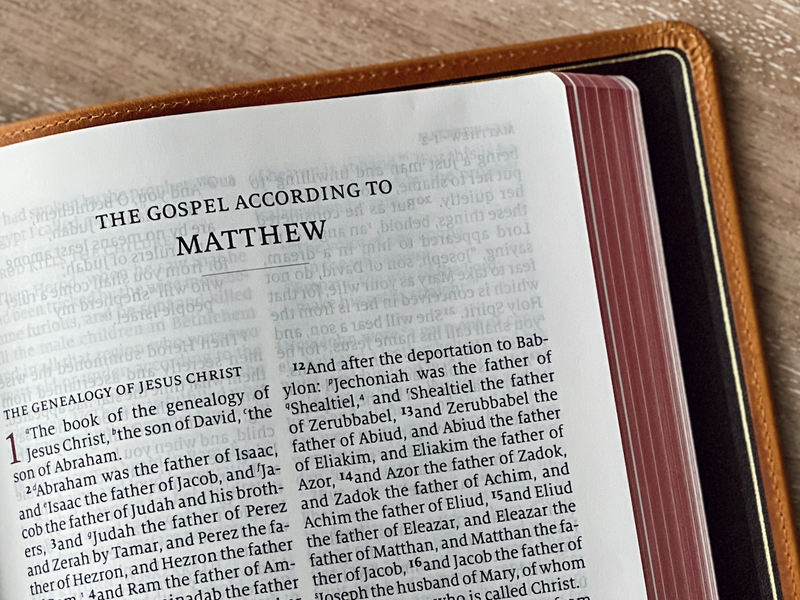
Treasures in Matthew's Genealogy, 2

In the previous article, we considered the life of Abraham up to the birth of Isaac and the way in which his life up to that point foreshadows later redemptive history. Our reason for this consideration was at the Gospel of Matthew's behest. He pointed us in that direction. He…

by Kelly KerrJanuary 9, 2014
annie-spratt-ia-cxcviwty-unsplash-3
Theology

The Trinity and the Nations, 3

The Spirit of Speech The last period in Israel’s history arrives almost from nowhere. The prophets appear unannounced, give short, but earth-shattering messages and then are whisked away by the Spirit (1 Kings 18:12). They do not hold high positions in Israel, but their words give them great political sway.…

by Brian MarrJanuary 7, 2014
markus-winkler-aid-xyrtlec-unsplash
Theopolis News

Nevin Lectures

Trinity House Institute is delighted to announce our first annual series of Nevin Lectures. Timothy George, Dean and Professor of Church History at Beeson Divinity School, will deliver four lectures on “Sacramental Theology from a Baptist Perspective” on February 7-8, 2014 at Trinity Presbyterian Church in Birmingham, Alabama. More information...…

by TheopolisJanuary 2, 2014
screen-shot-2022-08-04-at-9-36-57-am
Revelation

Him Whom They Pierced

Revelation 1: 7 states the theme of Revelation. It is a self-standing verse, beginning and ending with “Amen” (the “Amen” at the end of verse 6 should be taken as the beginning of the statement in verse 7). A double Amen as a double witness, and it becomes a threefold…

by Peter LeithartJanuary 1, 2014

Showing page 181 of 309

See all
See all
Philosophy

Heidegger in his woods

Latour is tired of being accused of having forgotten Being, and offers this clever brush-off of Heidegger: “If, scorning empiricism, you opt out of the exact sciences, then the human sciences,, then traditional philosophy, then the sciences of language, and you hunker down in your forest - then you will…

November 15, 2006
History

Semi-modernism

Postmoderns, Latour suggests, think they are still modern, but in fact they have greatly oversimplified the modern Constitution. Postmoderns might emphasize the separation of subject and world, and stretch that opposition to a breaking point (Latour vividly describes them as doing the splits to keep subject and world apart); but…

November 15, 2006
History

Modern temporality

In his very good section on modern temporality, Latour argues that modernity assumes that everything in the present, modern moment, is purely modern, novel. Anything that appears that is not up-to-date is a “archaism,” and moderns worry constantly that this or that event or trend might “turn back the clock.”…

November 15, 2006
History

Representation

One of the key moves made since the 17th century, Latour argues, is a distinction between modes of “representation.” In the laboratory Boyle is representing things before selected witnesses through scientific experiments, giving mute nature a voice through the scientist, while in politics Hobbes suggests that the Sovereign speaks for…

November 15, 2006
History

We Have Never Been Modern

Bruno Latour’s We Have Never Been Modern (Harvard 1993) is a rich study. He describes modernity in terms of a dual process of “purification” and “hybridization.” Purification involves the clean construction of a nature (and science) separated off from society and the self, while hybridization involves mixtures of nature and…

November 15, 2006

Tears of things

And/Or: Virgil is aware that the furor of civil war can be curbed only by an opposing, and more intense, furor. That, as Milbank says, is the way of paganism - peace established only by superior violence against violence. But in those tears Virgil expresses the the painful recognition -…

November 13, 2006

Showing page 1763 of 2212

Browse by Category

In Medias Res

Your weekly digest for all things Theopolis.

Donate

Theopolis is nearly 100% donor-supported. Consider joining us on our mission.