Theopolis Logo

Writing

Explore our collection of theological essays, biblical studies, and reflections on faith and culture.

See all
31-03-0213
Hermeneutics

Apocalyptic Eyes

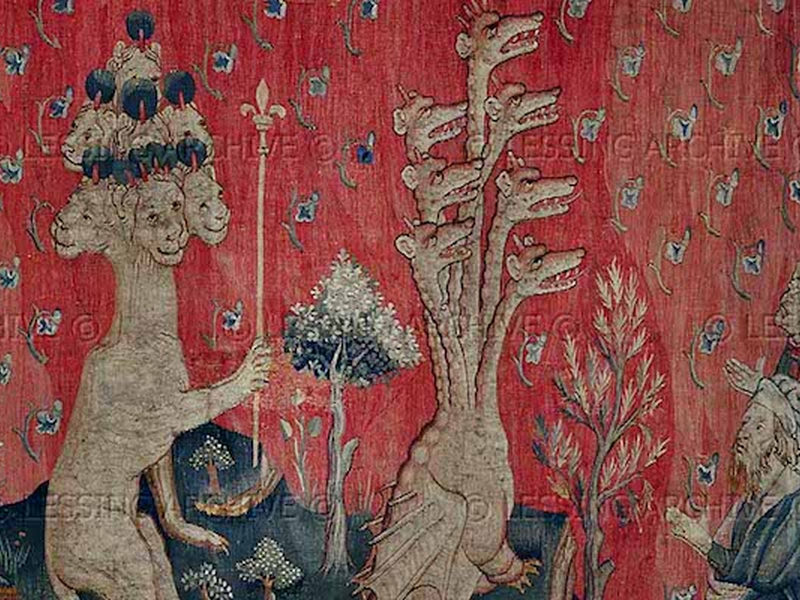
Flying scrolls. Red horses. Beasts coming out of the sea. Winged women. The list goes on. Apocalyptic literature in the Bible is like a cross between science fiction and Marvel comics. And the Bible has a fair bit of this sort of thing. Daniel sees visions in Babylon, Zechariah sees…

by Toby SumpterNovember 4, 2014

bhm-skyline-2
Theopolis News

New Name, New Look

Trinity House Institute has taken a new name, the Theopolis Institute. This striking new name expresses our unique vision and mission and captures the unified purpose behind all our specific programs and activities. We still have Bible, liturgy, and culture in our tagline. We still offer the same courses on…

by TheopolisNovember 4, 2014
istock_000012860926small
Atonement

Not Fearing the Devil

Adam Kotsko offers a socio-political variation on the Christus Victor atonement theory in his 2010 study, The Politics of Redemption: The Social Logic of Salvation . He does this by explaining "the devil" in terms of the Hegelian concept of "objective spirit," Geist . As Kotsko puts it, Geist "refers…

by Peter LeithartOctober 13, 2014
jez-timms-8muutamcwu4-unsplash
Leviticus

The Meaning of Sacrifice

Two factors keep Nahtali Meshel from discussing the meaning of sacrifice until late in his The "Grammar" of Sacrifice . The first has to do with the texts he draws from: "P says little about the meaning of its rituals" (174). The other has to do with the grammatical theory…

by Peter LeithartOctober 8, 2014
jez-timms-8muutamcwu4-unsplash
Leviticus

Praxemics

Chapter 5 of Naphtali Meshel's The "Grammar" of Sacrifice focuses on "praxemics," the physical actions of sacrificial ritual. Praxemes are constituted by six elements: an "atomact," an elementary physical act or gesture; an actor; an object that is acted up; a target for the action and often for the object…

by Peter LeithartOctober 6, 2014
markus-winkler-aid-xyrtlec-unsplash
Leviticus

Jugation and Hierarchy

Two chapters of Naphtali Meshel’s The “Grammar” of Sacrifice cover what he calls “jugation” and “hierarchies.” The first involves the addition of other materials to an animal offering. Jugates include wine, cereal, and oil that are added to the animals (zoemes) that are offered in sacrifice. Some jugates are coordinated…

by Peter LeithartOctober 1, 2014

Showing page 167 of 309

See all
See all
History

Universal exile

Ancient politics had to do with governing a people set in a particular location; so did the modern politics of the nation-state. With the large-scale population movements of the last half-century, the ethnic homogeneity of the nation-state (never entirely homogenous to begin with) has dissolved further. Nationality is no longer…

November 8, 2006
History

World Citizens

Political scientist David Jacobson notes the connection between immigration and shifts in understandings of rights: “Transnational migration is steadily eroding the traditional basis of nation-state membership, namely citizenship. As rights have come to be predicated on residency, not citizen state, the distiction between ‘citizen’ and ‘alian’ has eroded. The devaluation…

November 8, 2006
Economics

Iconomics

The reviewer of Ernest Sterberg’s 1999 Economy of Icons in the American Journal of Economics and Sociology summarizes some main points from this latter-day Thorstein Veblen: “The thesis of this controversial book is that ‘enterprises make their way in the capitalist economy by transforming commodities into icons.’ An icon is…

November 8, 2006
History

Artificial selves

Discussions of the postmodern self often trace a genealogy from Descartes to Locke to Kant to Nietzsche to Heidegger to Foucault. But though philosophers no doubt have some influence on the daily experiences of normal humans, this sort of treatment doesn’t quite get to the ground level. In 1991, Paul…

November 7, 2006
History

End of history

Evidence that Fukuyama may have had it right: Walter Truett Anderson writes that “the International Commission on Peace and Food (in its 1994 report) pointed to the urgent need to create employment for hundreds of millions of poor people, and at the same time dismissed the notion that most of…

November 7, 2006
History

We’re All Communitarians now

Psychologist Brewster Smith decries the solvents of postmodern life - cynicism, shallowness, sensationalism, warfare between fundamentalisms and relativisms, uncertainty about all standards, the “fin de siecle sense of drift and doom” (even after the fin). What’s his solution? Find yourself a community that can give you values, standards, a heritage,…

November 7, 2006

Showing page 1768 of 2212

Browse by Category

In Medias Res

Your weekly digest for all things Theopolis.

Donate

Theopolis is nearly 100% donor-supported. Consider joining us on our mission.