Theopolis Logo

Writing

Explore our collection of theological essays, biblical studies, and reflections on faith and culture.

See all
screen-shot-2023-02-24-at-1-48-41-pm
Biblical Chronology

Chronologies and Kings: Part 3

The chronology of the Kings of Judah and Israel can be divided into three periods with clearly defined boundaries. The first period begins with the death of Solomon and the accessions of Rehoboam in the south (Judah) and Jeroboam in the north (Israel). It ends with the deaths of Ahaziah…

by James B. JordanSeptember 22, 1991

johann-walter-bantz-clv9dfjlwac-unsplash-1-5
Art

Arts & Play, Part 1

Most modern people regard the arts as essentially decorative. They are hardly very important, as compared to business, politics, or religion. Yet, from a Biblical point of view, the arts lie close to the heart of human life. The universe that God created is itself an artistic masterpiece by the…

by James B. JordanSeptember 22, 1991
6273e95e0f5ac766258d8cf3_joshuasconquestoftheland-2
Exodus

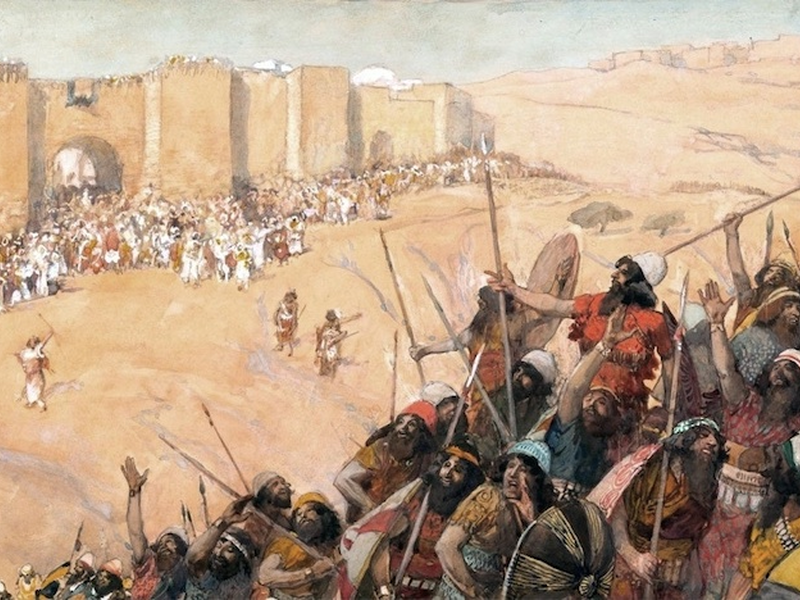
Chronologies and Kings, Part 2

Before we move into a detailed survey of the history and chronology of the kings of Israel and Judah, let us review the chronological information that leads from creation to the kingdom. This will be helpful both to new readers of these essays, and a reminder for those who have…

by James B. JordanAugust 22, 1991
screen-shot-2023-02-24-at-1-48-41-pm
Biblical Chronology

Chronologies and Kings, Part 1

We have completed our overall survey of Biblical chronology, and now turn to a detailed examination of the Biblical information regarding the chronology of Israel’s kings. The first piece of chronological information we have regarding Israel’s kings is very cryptic, and it serves as an guide to the interpretation of…

by James B. JordanJuly 22, 1991
screenshot-2023-08-09-at-2-13-32-pm
Biblical Horizons

Book Review - To Take Place: Toward Theory in Ritual

Jonathan Z. Smith, To Take Place: Toward Theory in Ritual (Chicago: University of Chicago Press, 1987). Reviewed by Peter J. Leithart. The philosophes of the 18th century often attacked Christendom using the tools of anthropology and comparative religion. Rousseau contrasted the idyllic equality of primitive, natural peoples with the bondage…

by Peter LeithartJuly 6, 1991
screenshot-2023-08-09-at-1-47-41-pm
Biblical Horizons

Book Review: The Rise of Magic in Early Medieval Europe

Valerie I. J. Flint, The Rise of Magic in Early Medieval Europe (Princeton University Press, 1991). Reviewed by Peter J. Leithart. Valerie I. J. Flint, Professor of History at the University of Auckland, New Zealand, is refreshingly candid about her reasons for undertaking a study of The Rise of Magic…

by Peter LeithartJuly 6, 1991

Showing page 295 of 309

See all
See all
History

Foucault’s eschatology

Berman offers this very sharp summary of Foucault’s work, whom he says is “about the only writer of the past decade who has had anything substantial to say about modernity” (Berman is writing in 1982). Then: “what he has to say is an endless, excruciating series of variations on the…

November 5, 2006
History

Flattened modernity

In the introduction to his All That Is Solid Melts Into Air , Marshall Berman argues that nineteenth century critics of modernity had a much richer grasp of the costs and promise of modernity than do twentieth century observers. Modern life is, Rousseau said, a whirlwind ( le tourbillon social…

November 5, 2006
History

Religious Liberty and the Whig Interpretation

The following is a portion of a lecture at the NSA disputatio. WHIGGISH HISTORY The Whigs were of course a loose British political alliance, the predecessor of today’s Liberal Democrats. The term was first applied, interestingly, to the Scottish Covenanters who marched on Edinburgh in 1648, and then to the…

November 3, 2006
American Religion

Innocent abroad

In a recent issue of TNR , Alan Wolfe reviewed David Kuo’s book telling the story of his service in the current Bush administration. Kuo worked in the office of faith-based initiatives, and though he left the administration he still praises Bush because of his Christian testimony. What strikes Wolfe…

November 3, 2006
History

World Cities again

Thinking again about Mike Featherstone’s comments on the fact that multiculturalism developed first in Southern Hemisphere cities (quoted in a post from September 2006), it strikes me that one of the dynamics of the current global situation is a reversal of colonialism. That’s true in the sense that Featherstone notes…

November 2, 2006
History

Mass culture

The point of theories of “mass culture” is not so much the “mass” as the “culture.” Goods and services may be distributed to a large number of people in economies where what is called “mass culture” doesn’t exist. When theorists use the phrase, they want to emphasize the fact that…

November 2, 2006

Showing page 1771 of 2212

Browse by Category

In Medias Res

Your weekly digest for all things Theopolis.

Donate

Theopolis is nearly 100% donor-supported. Consider joining us on our mission.