Theopolis Logo

Writing

Explore our collection of theological essays, biblical studies, and reflections on faith and culture.

See all
308750rgsdl
Biblical Theology

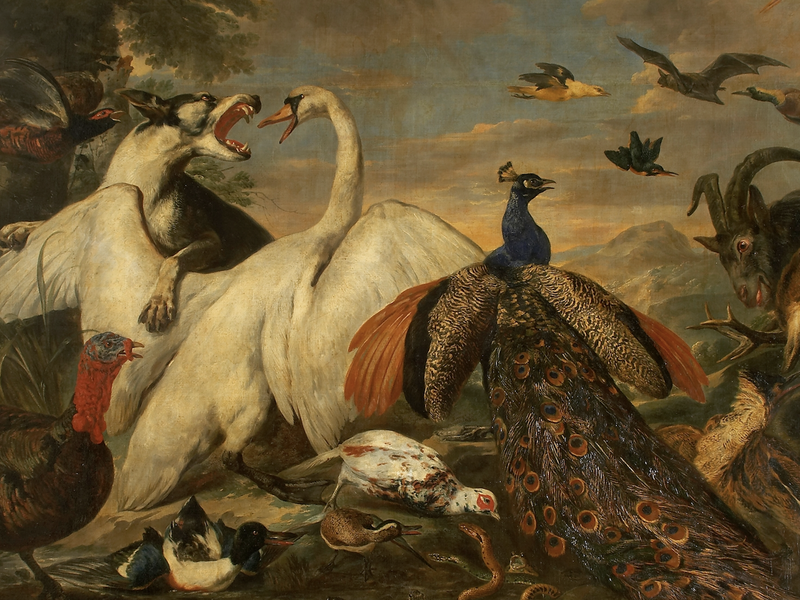
Biblical Bestiary and Covenant Creatures, Part 3: Reunion of Man and Beast in Christ

Abbreviated Introduction to the Series Scripture is absolutely dripping with animal metaphors. Animal traits, characteristics, and appearances are attributed to God, Man, Angels, Nations, Armies. Since animals are the lowest creature in the three-tiered hierarchy, they are useful to metaphorically focus on a single aspect of God (bold like a…

by Jonathan WhiteOctober 27, 2025
screenshot-2025-10-21-at-2-22-31-pm
Matthew

Authority that Heals: Unpacking Matthew 4:18 – 10:4

Many years ago, while perusing Janice Anderson’s revised doctoral dissertation, Matthew’s Narrative Web: Over, and Over, and Over again , I was impressed by her attention to literary structures of repetition within and across Matthew’s Gospel. 1 Her research, in part, nudged me closer toward my present conviction that Matthew…

by Jonathan SedlakOctober 21, 2025
screenshot-2025-10-20-at-4-47-19-pm
Biblical Theology

Biblical Bestiary and Covenant Creatures, Part 2: The Animalistic Dehumanization of Sin

Abbreviated Introduction to the Series Scripture is absolutely dripping with animal metaphors. Animal traits, characteristics, and appearances are attributed to God, Man, Angels, Nations, Armies. Since animals are the lowest creature in the three-tiered hierarchy, they are useful to metaphorically focus on a single aspect of God (bold like a…

by Jonathan WhiteOctober 20, 2025
screen-shot-2025-10-14-at-7-34-36-am
Song of Songs

Like a Lily Among Thorns: Hailing the Suffering Christ in Canticles

“Like a lily among the thorns, so is my love among the maidens… My beloved is mine and I am his; he pastures among the lilies.” Song 2:2, 16 In chapter two of the Song of Solomon, the Beloved compares his Love to a lily among thorns. The language of…

by Mark BriansOctober 14, 2025
eric-welch-xuch5jnrfig-unsplash
Biblical Theology

Biblical Bestiary and Covenant Creatures, Part 1: The Shared Spirit of Men and Beasts

Introduction From the very beginning, angels and animals have played mediating roles between God and Man. Just as the World was made three-tiered (Heaven, Earth, Deep), so the creatures were made (Angels, Men, Animals). Before Christ came to build the permanent bridge across the chasm between God and Man, various…

by Jonathan WhiteOctober 13, 2025
getty-images-nim1o1t51qq-unsplash
Matthew

Parables of Land and Sea in Matthew 13

Matthew 13, the third major discourse of the apostle’s gospel, is comprised almost entirely of parables. While it may seem that all the parables serve the same purpose in fulfilling the prophet Isaiah (Matthew 13:14), the parables found in verses 44–52, at the very least, function outside that purpose. This…

by David TownsendOctober 9, 2025
See all
See all

Really Lost

Last year, we got the first season of Lost on DVD and were instantly hooked. These guys sure know how to hold an audience. But for me the hold is weakening as we begin watching the second seson, as it becomes increasingly clear that all these people escaped from a…

September 21, 2006

In Praise of Coffee

An early modern document celebrates the purifying qualities of coffee: Coffee is good for “fat persons whose thickened humors circulate with difficulty.” And, it reduces impurities and generally clears out the system: “it restores the stomach, consumes its superfluous humidity, dissipates wind, dissolves the phlegm of the bowels, where it…

September 20, 2006
History

Descartes’s exorcism

Madness in what Foucault calls the “classical period” is conceived as a dazzlement - the madman is darkened with excessive light. In this context, “the Cartesian formula of doubt is certainly the great exorcism of madness. Descartes closes his eyes and plugs up his ears the better to see the…

September 20, 2006
History

Divine madness

For the Renaissance, Foucault argues, the line between madness and reason was thin and easily crossed. The madman, in fact, frequently gained insight that the sane did not; think Lear howling on the heath. Over time, madness and truth had been clearly distinguished, and madness ceased to be instructive. Foucault…

September 20, 2006

Exorcizing Zwingli

Dr Jim West is annoyed at me (http://drjimwest.wordpress.com/2006/09/19/confession-time-im-annoyed), though he doesn’t name me. He is responding to an article I wrote attacking what I called “Zwinglian poetics,” where I suggested that Protestants must “exorcise the ghost of Zwingli” if we are going to develop a solid Protestant poetics, which, I…

September 20, 2006

Showing page 1790 of 2212

Browse by Category

In Medias Res

Your weekly digest for all things Theopolis.

Donate

Theopolis is nearly 100% donor-supported. Consider joining us on our mission.