
Theopolis Logo

Writing

Explore our collection of theological essays, biblical studies, and reflections on faith and culture.

See all
giammarco-zeh-ljawhtg-unsplash
Biblical Horizons

OPEN BOOK: Views and Reviews

Isaac E. Mozeson, The Word: The Dictionary that Reveals the Hebrew Sources of English (Northvale, NJ: Jacob Aaronson Inc., 1995), 310 pp. Reviewed by James B. Jordan. Once there was only one language in the world, the language God spoke to Adam. At the Tower of Babel, there came to…

by James B. JordanJune 28, 1996
tim-wildsmith-j6jv-mkdzqs-unsplash
Esther

Esther: Historical & Chronological Comments (IV)

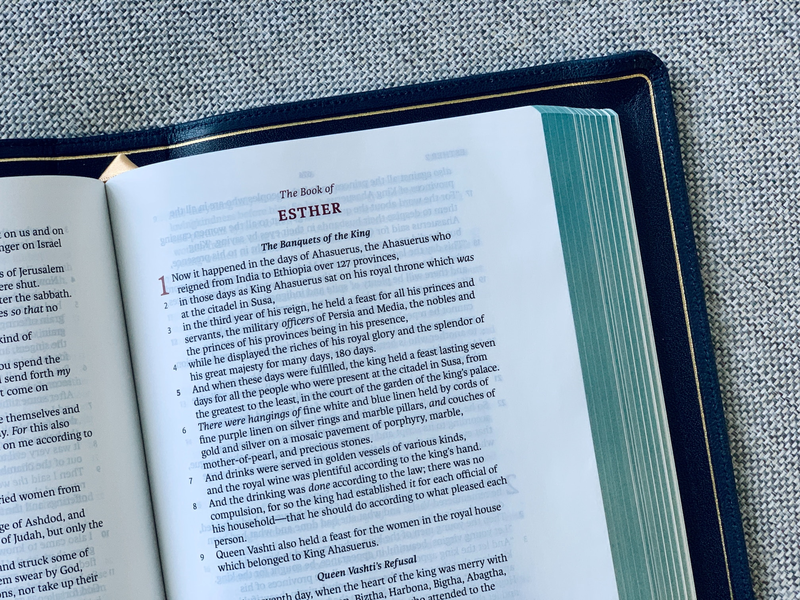
2. The Setting of the Book of Esther A. Xerxes (continued from previous issue) Ezra 6:14 says that the Jews finished building "according to the command of the God of Israel and the decree of Cyrus and Darius and Artaxerxes king of Persia." The problem with this verse is that…

by James B. JordanJune 28, 1996

ales-krivec-4mibe6zg5r0-unsplash
Acts

Jesus and Amalek

This essay goes with our previous study of the Amalek pattern back in Biblical Horizons No. 2. Since many do not have this essay, entitled "The Battle of Gog and Magog," let me cite the relevant paragraphs: Note in Genesis 12-15 that Abram moves into the land after escaping Pharaoh…

by James B. JordanJune 28, 1996

aaron-burden-1ebsmyrau-s-unsplash
Proverbs

The Strange Woman

Proverbs 7:6-23 is one of several passages early in the Proverbs in which Solomon warns his son about the wiles and dangers of the "strange woman." It is certainly quite proper to take these as straightforward warnings against sexual sins, and these are certainly warnings that need to be impressed…

by Peter LeithartJune 27, 1996
jan-kahanek-g3o5ztrk2e4-unsplash
Biblical Studies

Some Observations

1. In Luke 4:20 we read that after Jesus finished reading from Isaiah, "the eyes of all in the synagogue were fixed upon Him." This is usually taken in a psychological sense: They were amazed at Jesus somehow. I suggest that, as always, a merely psychological reading is a modern…

by James B. JordanMay 28, 1996
tim-wildsmith-j6jv-mkdzqs-unsplash
Esther

Esther: Historical & Chronological Comments (III)

2. The Setting of the Book of Esther Up to now we have assumed what we must prove, that the king in Esther is Darius the Great. While Biblical chronologists have usually taken this position, commentators on the book of Esther have often taken others as the king. One view,…

by James B. JordanMay 28, 1996

Showing page 265 of 309

See all
See all

Sermon Outline

INTRODUCTION Joash’s story is an ironic tragedy of Shakespearean dimensions. His reign begins well, with a dramatic and surprising renewal of the Davidic line, and he pays his dues by repairing the temple. Before the end of his life, he loots the very temple he has repaired. THE TEXT “In…

February 13, 2006

Eucharistic meditation, Sixth Epiphany

2 Kings 11:1: When Athaliah the mother of Ahaziah saw that her son was dead, she rose and destroyed all the royal seed. At the beginning, the story of Athaliah appears to be the story of the destruction of the house of David. Athaliah kills all the royal seed, and…

February 12, 2006

Baptism Meditation, Sixth After Epiphany

2 Kings 11:3: So Joash was hidden with her in the house of Yahweh six years, while Athaliah was reigning over the land. The story in the sermon today is the story of two kingdoms, two rulers, two reigns. One is open, public, evident to everyone who reads the newspapers.…

February 12, 2006

Exhortation, Sixth After Epiphany

Athaliah, daughter of Ahab and Jezebel, knew she had to protect herself. She was related to the Davidic line only by marriage, and knew that many in Judah would be suspicious of her. A live Davidic prince could become the focal point for a revolt that would topple her from…

February 12, 2006
Literature

Shakespeare and Puritans

Jeffrey Knapp suggests that, though Shakespeare was probably raised a Catholic, he chose to conform to the established religion but without taking a high profile at church. In a comment that rings true, Knapp suggests that above all Shakespeare “deplored sectarianism. Shakespeare’s puritanical characters are typically divisive figures, longing for…

February 11, 2006

Eye for Eye

Athaliah the murderous mother is undone by Jehosheba the protective mother. To be specific: Athaliah renounces her blood ties with her grandchildren and slaughters the royal seed (2 Kings 11). Jehosheba renounces her blood ties with her own mother, Athaliah, and saves the royal seed. Wicked family disloyalty is undone…

February 11, 2006

Showing page 1886 of 2212

Browse by Category

In Medias Res

Your weekly digest for all things Theopolis.

Donate

Theopolis is nearly 100% donor-supported. Consider joining us on our mission.