Theopolis Logo

Writing

Explore our collection of theological essays, biblical studies, and reflections on faith and culture.

See all
jelleke-vanooteghem-gnxb59lgu1m-unsplash
Baptism

Baptism and the Spirit

Pneumatology, the doctrine of the Holy Spirit, is often formulated along dispensational lines. The Holy Spirit’s work in the Old Testament, we tend to think, was earthly, concerned with political and military leadership, while in the New Testament the Spirit’s work has to do with mediating salvation achieved by Christ.…

by Peter LeithartMay 27, 1996

trnava-university-beeyeib-am8-unsplash
Biblical Horizons

Open Book 6: Views & Reviews

Homosexuality and the Love of Death Some years ago (September, 1980) Midge Decter published in Commentary one of the most illuminating pieces that I have ever seen on homosexuality. It was a very autobiographical piece dealing with her own summer vacation experiences on Fire Island off of New Jersey. When…

by Richard BledsoeApril 28, 1996
tim-wildsmith-j6jv-mkdzqs-unsplash
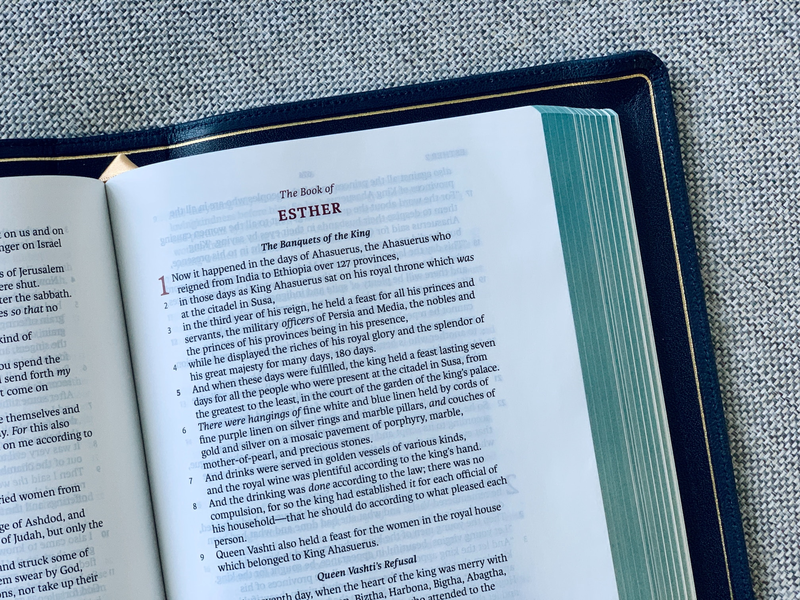
Esther

Esther: Historical & Chronological Comments (II)

C. The Battle of Gog and Magog (Ezekiel 38-39) (continued for previous issue) A final corroboration of this interpretive hypothesis comes from what we might call the "Amalek Pattern" in the Bible. Note in Genesis 12-15 that Abram moves into the land after escaping Pharaoh (ch. 12), settles down and…

by James B. JordanApril 28, 1996
image-20150409-15244-1r08rsu
Romans

Christ in the Holy of Holies: The Meaning of the Mount of Olives

Speaking of the Church, Romans 11:16-17 says, "And if the root be holy, the branches are also. But if some of the branches were broken off, and you, being a wild olive were grafted in among them and became partaker with them of the root of the fatness of the…

by James B. JordanApril 28, 1996
aaron-burden-h8s0pf2rcqs-unsplash
Romans

Committed to the Form of Teaching

But thanks be to God that though you were slaves of sin, you became obedient from the heart to that form of teaching (tupos didaskales) to which you were committed, and having been freed from sin, you became slaves of righteousness (Romans 6:17-18). In his study of the use of…

by Peter LeithartApril 27, 1996
screenshot-2023-07-27-at-10-25-35-am
Biblical Horizons

Review: Biblical Theology, by John Owen

John Owen (1616-1683), Biblical Theology, or the Nature, Origin, Development, and Study of Theological Truth in Six Books, translated by Stephen P. Westcott (Pittsburgh: Soli Deo Gloria Publications, [1661] 1994), hardcover, 911 pages, $50.00. Here for the first time in English is one of Owen’s most important Latin works, along…

by James B. JordanMarch 28, 1996

Showing page 266 of 309

See all
See all

Baptism and personhood

In his recently re-released Bioethics: A Primer for Christians , Gilbert Meilaender discusses baptism to formulate a Christian understanding of the person. Baptism, he points out, is a communal act but also individualizing: “the first thing to note about baptism is that it is a deeply individualizing act. Our parents…

December 21, 2005
Art

Allegory with Venus and Cupid

In his book, Erotic Faith , Robert M. Polhemus offers an intriguing analysis of Bronzino’s Allegory with Venus and Cupid . The allegory suggests that “worship of Venus . . . blinds one to the menace of time and death.” Seeking sexual fulfillment means “betraying self, God, and humankind as…

December 21, 2005
Philosophy

Mirror and Lamp

In his classic study of romanticism and literary theory, The Mirror and the Lamp , MH Abrams points out the crucial change in images of the mind - from the mind as a “mirror” of outside reality to the mind as a “lamp” or a “fountain” that determines what it…

December 21, 2005
History

Consumption v. Culture

Hannah Arendt claimed that “An object is cultural depending on the duration of its permanence: its durable character is opposed to its functional aspect, that aspect which would make it disappear from the phenomenal world through use and wear and tear . . . . Culture finds itself under threat…

December 20, 2005
Literature

Shakespeare and the Law

At the climactic moment of reversal in the court scene in Merchant of Venice , Portia tells Shylock: “This bond doth give thee here no jot of blood.” “Jot” comes to English through the Greek iota , which is linked to the Hebrew YOD through Jesus’ usage in Matthew 5.…

December 20, 2005

Not quite haiku

spectral rime-frosted trees in early morning moonlight cast shadows on the pasture

December 18, 2005

Showing page 1910 of 2212

Browse by Category

In Medias Res

Your weekly digest for all things Theopolis.

Donate

Theopolis is nearly 100% donor-supported. Consider joining us on our mission.