Theopolis Logo

Writing

Explore our collection of theological essays, biblical studies, and reflections on faith and culture.

See all
tanner-mardis-xuxghzhibn4-unsplash-1-2
Biblical Studies

Tweets-turned-Notes on the Bible’s Chronology

Summary In what follows, I will consider the “year-stamps” employed in Scripture, i.e., statements of the form, “Such-and-such an event took place in the Xth year of Y.” In the process, I will suggest some ways in which the Biblical narrative might relate to events in the extra-Biblical world, though…

by James BejonJuly 16, 2019
durer-prodigal-son-2
Luke

Perspectives on the Prodigal, (Part 2)

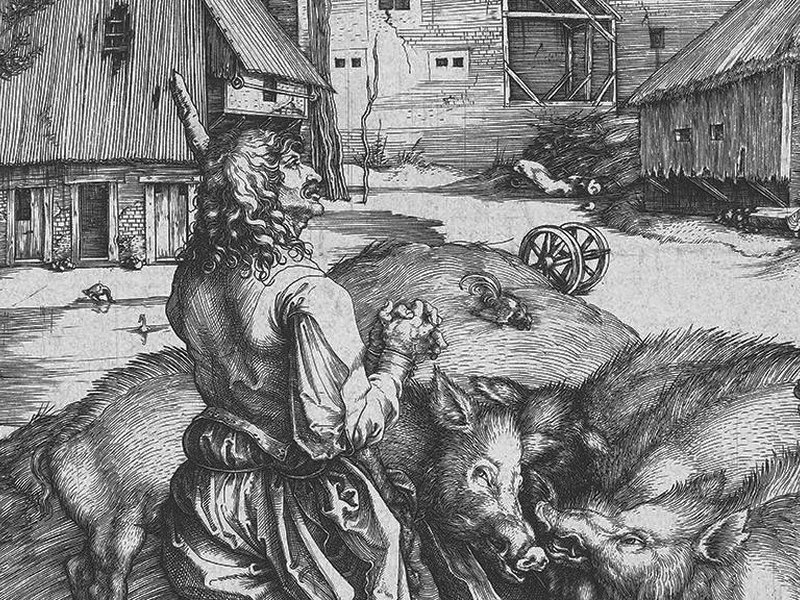
In the first essay on the parable of the Prodigal Son, I suggested that the problems commentators and others encounter in interpreting Jesus three-part parable are not accidental. These are not just problems in our ignorance of cultural background. They are intentional features of the stories —stories designed to poke…

by Ralph Allan SmithJuly 11, 2019
durer-prodigal-son-2
Luke

Perspectives on the Prodigal, (Part 1)

The story of the Prodigal Son is perhaps the most well-known story in the Bible. As others have observed, it may also be one of the most misunderstood. In two short essays, I will point out features of this story that are commonly neglected, aspects of Jesus’ parable that might…

by Ralph Allan SmithJuly 9, 2019
de-rijke-man-en-de-arme-lazarus-by-jacopo-da-ponte-16th-century
Luke

Lazarus and the Rich Man

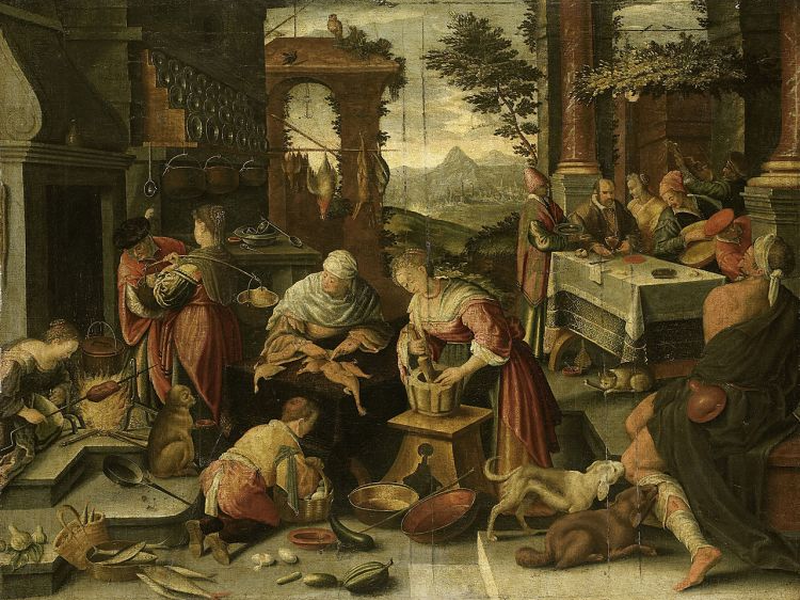
The parable of Lazarus and the nameless rich man is not an independent story. It is part of a long context that begins in Luke 15:1, where Jesus is eating with tax collectors and sinners and the scribes and Pharisees grumble. In response to their hardheartedness, Jesus tells a three-part…

by Ralph Allan SmithJuly 4, 2019
aaron-burden-uynrnfdkjwg-unsplash
Luke

Everybody has Dropsy - Luke 14:1-24

The Bible is written so that even when a reader cannot pick up on what might be deeper or more detailed aspects of a text, there is virtually always a message to be heard. In the ancient world, where the “reader” of Scripture would likely be a church official facing…

by Ralph Allan SmithJuly 2, 2019
communion
Biblical Theology

Fruit Trees and Grain Plants

The distinction between garden (or vineyard) and field begins in Genesis 2. This relates to the ordering of the formless world. Plants of the field are contrasted with the garden planted by God in Genesis 2:5&8. Later on, under the Old Covenant the Israelites will be required to keep their…

by James B. JordanJune 27, 2019

Showing page 77 of 309

See all
See all
Philosophy

Privileging Sight

For postmoderns, there is a close link between the timeless self of ancient and modern thought and the primacy of the gaze. The exaltation of the visual that Foucault attacks is expressed quite openly in an essay by Hans Jonas, “The Nobility of Sight,” who describes some of the philosophical…

December 6, 2005

A Faustian Christmas

A bit of nonsense from several years ago. Scene 1 Mr Faust sitting in a big chair, with Little Faust on his lap, reading. Mrs Faust sitting in another chair, knitting or something. Mr Faust: And I heard him exclaim As he drove out of sight Merry Christmas to all…

December 6, 2005

Sermon Outline, Third Advent

INTRODUCTION The Roman Catholic church teaches many false things about Mary the mother of Jesus, but in reaction Protestants have sometimes simply ignored her. Like Joseph, she is a model of discipleship; and she is a living portrait of the church, the people in whom Christ takes shape (cf. Galatians…

December 6, 2005
Philosophy

Oracular and Death

Michel Foucault suggests that the modern exalation of sight, the gaze, particularly the medical gaze, is associated with death: “That which hides and envelops, the curtain of night over truth, is, paradoxically, life; and death, on the contrary, opens up to the light of day the black coffer of the…

December 6, 2005
Philosophy

Identity and time

The Western quest for “personal identity” rests, in part, on a confusion of different senses of the term. We recognize that there are degrees of sameness among things: Identical twins are never strictly identical. Paul Ricoeur has pointed out, further, that we tend to confuse two senses of “identity,” which…

December 6, 2005

The Book of Mordecai

Grading several papers on Esther, it occurs to me that the book is more about Mordecai’s exalation than about Esther. Esther’s exalation to queen is part of the means by which Mordecai and the Jews are ultimately saved, and the story climaxes with Mordecai at the right hand of the…

December 5, 2005

Showing page 1916 of 2212

Browse by Category

In Medias Res

Your weekly digest for all things Theopolis.

Donate

Theopolis is nearly 100% donor-supported. Consider joining us on our mission.