Theopolis Logo

Writing

Explore our collection of theological essays, biblical studies, and reflections on faith and culture.

See all
tanner-mardis-xuxghzhibn4-unsplash-1-2
Biblical Studies

Tweets-turned-Notes on the Bible’s Chronology

Summary In what follows, I will consider the “year-stamps” employed in Scripture, i.e., statements of the form, “Such-and-such an event took place in the Xth year of Y.” In the process, I will suggest some ways in which the Biblical narrative might relate to events in the extra-Biblical world, though…

by James BejonJuly 16, 2019
durer-prodigal-son-2
Luke

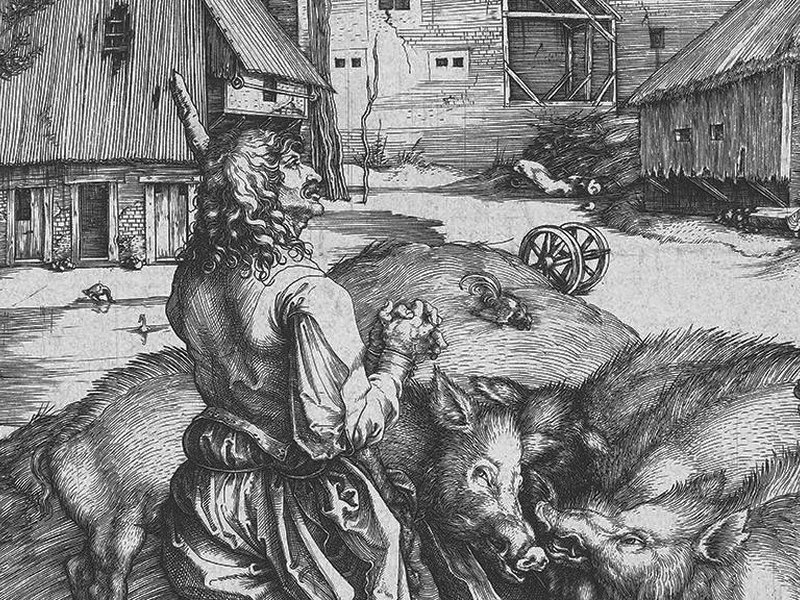
Perspectives on the Prodigal, (Part 2)

In the first essay on the parable of the Prodigal Son, I suggested that the problems commentators and others encounter in interpreting Jesus three-part parable are not accidental. These are not just problems in our ignorance of cultural background. They are intentional features of the stories —stories designed to poke…

by Ralph Allan SmithJuly 11, 2019
durer-prodigal-son-2
Luke

Perspectives on the Prodigal, (Part 1)

The story of the Prodigal Son is perhaps the most well-known story in the Bible. As others have observed, it may also be one of the most misunderstood. In two short essays, I will point out features of this story that are commonly neglected, aspects of Jesus’ parable that might…

by Ralph Allan SmithJuly 9, 2019
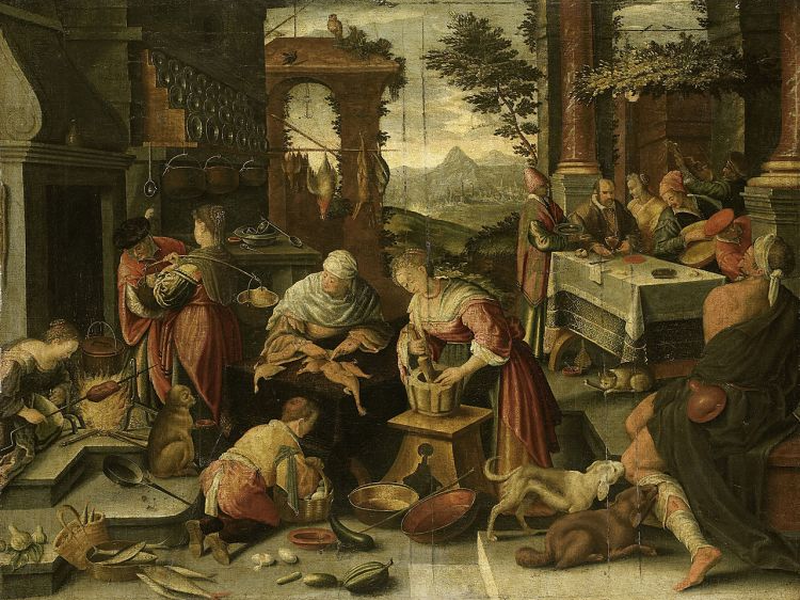
de-rijke-man-en-de-arme-lazarus-by-jacopo-da-ponte-16th-century
Luke

Lazarus and the Rich Man

The parable of Lazarus and the nameless rich man is not an independent story. It is part of a long context that begins in Luke 15:1, where Jesus is eating with tax collectors and sinners and the scribes and Pharisees grumble. In response to their hardheartedness, Jesus tells a three-part…

by Ralph Allan SmithJuly 4, 2019
aaron-burden-uynrnfdkjwg-unsplash
Luke

Everybody has Dropsy - Luke 14:1-24

The Bible is written so that even when a reader cannot pick up on what might be deeper or more detailed aspects of a text, there is virtually always a message to be heard. In the ancient world, where the “reader” of Scripture would likely be a church official facing…

by Ralph Allan SmithJuly 2, 2019
communion
Biblical Theology

Fruit Trees and Grain Plants

The distinction between garden (or vineyard) and field begins in Genesis 2. This relates to the ordering of the formless world. Plants of the field are contrasted with the garden planted by God in Genesis 2:5&8. Later on, under the Old Covenant the Israelites will be required to keep their…

by James B. JordanJune 27, 2019

Showing page 77 of 309

See all
See all
History

Hybridization

In his pungent recent book, Liquid Life (Polity, 2005), the Polish sociologist Zygmunt Bauman describes the divergence between the “teaching” and the “taught” classes within the global economy. What he calls the “knowledge classes” are experts at seeking and achieving satisfaction, and have mastered the communications and transportation technologies that…

November 29, 2005

Sermon Outline, Second Advent

INTRODUCTION Mary’s role in redemption has been highlighted, and sometimes distorted far beyond biblical warrant. By comparison, Joseph is the neglected member of the “holy family.” Yet, Matthew focuses more attention on Joseph than on Mary, and Joseph is presented as an antitype of the Joseph of Genesis and a…

November 28, 2005

Sanctified Vision

John J. O’Keefe and R. R. Reno, Sanctified Vision: An Introduction to Early Christian Interpretation of the Bible . Baltimore: Johns Hopkins University Press, 2005. 156 p. In recent years, theologians have given intensive, and increasingly favorable, attention to patristic and medieval interpretation of the Bible. O’Keefe and Reno, both…

November 28, 2005

Eucharistic Meditation, First Advent

Matthew 1:1: The Book of the genealogy of Jesus Christ, the son of David, the son of Abraham. As we saw in the sermon this morning, when the Son of God took on human flesh, he took on the human condition in its totality. He took on ancestors and a…

November 27, 2005
Theology

Exhortation, First Advent

“What time is it?” This may seem a simple and straightforward question. We glance at our watches or at the clock on the wall and give an answer. In fact our answer to this question reveals a great deal about our worldview. We often conceive of time as a commodity,…

November 27, 2005

Recapitulation

In their recent study of patristic interpretation, John O’Keefe and RR Reno point out that Irenaeus borrows his notion of recapitulation from ancient rhetoric: “Recapitulation is an English form of recapitulans, the Latin translation of anakephalaiosis, which means final repetition, summing up, drawing to conclusion. As a term in rhetoric,…

November 27, 2005

Showing page 1919 of 2212

Browse by Category

In Medias Res

Your weekly digest for all things Theopolis.

Donate

Theopolis is nearly 100% donor-supported. Consider joining us on our mission.