Theopolis Logo

Writing

Explore our collection of theological essays, biblical studies, and reflections on faith and culture.

See all
tanner-mardis-xuxghzhibn4-unsplash-1-2
Biblical Studies

Tweets-turned-Notes on the Bible’s Chronology

Summary In what follows, I will consider the “year-stamps” employed in Scripture, i.e., statements of the form, “Such-and-such an event took place in the Xth year of Y.” In the process, I will suggest some ways in which the Biblical narrative might relate to events in the extra-Biblical world, though…

by James BejonJuly 16, 2019
durer-prodigal-son-2
Luke

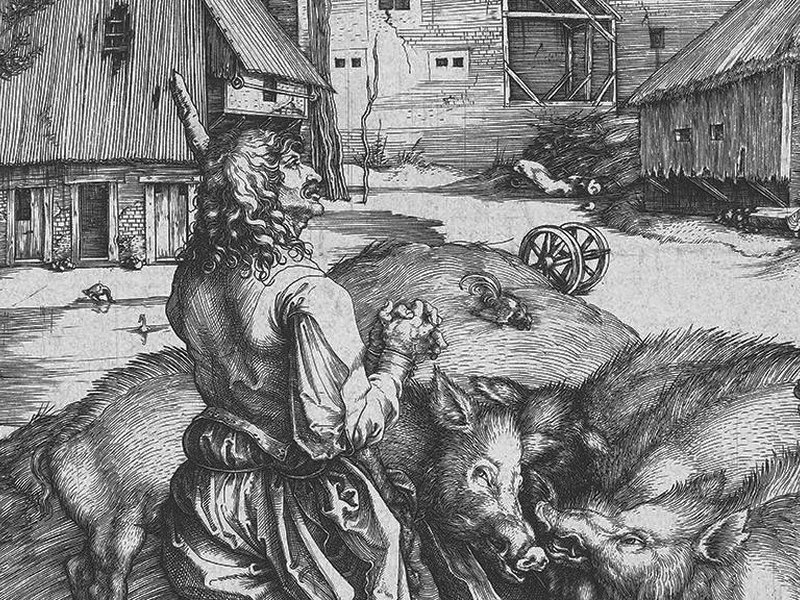
Perspectives on the Prodigal, (Part 2)

In the first essay on the parable of the Prodigal Son, I suggested that the problems commentators and others encounter in interpreting Jesus three-part parable are not accidental. These are not just problems in our ignorance of cultural background. They are intentional features of the stories —stories designed to poke…

by Ralph Allan SmithJuly 11, 2019
durer-prodigal-son-2
Luke

Perspectives on the Prodigal, (Part 1)

The story of the Prodigal Son is perhaps the most well-known story in the Bible. As others have observed, it may also be one of the most misunderstood. In two short essays, I will point out features of this story that are commonly neglected, aspects of Jesus’ parable that might…

by Ralph Allan SmithJuly 9, 2019
de-rijke-man-en-de-arme-lazarus-by-jacopo-da-ponte-16th-century
Luke

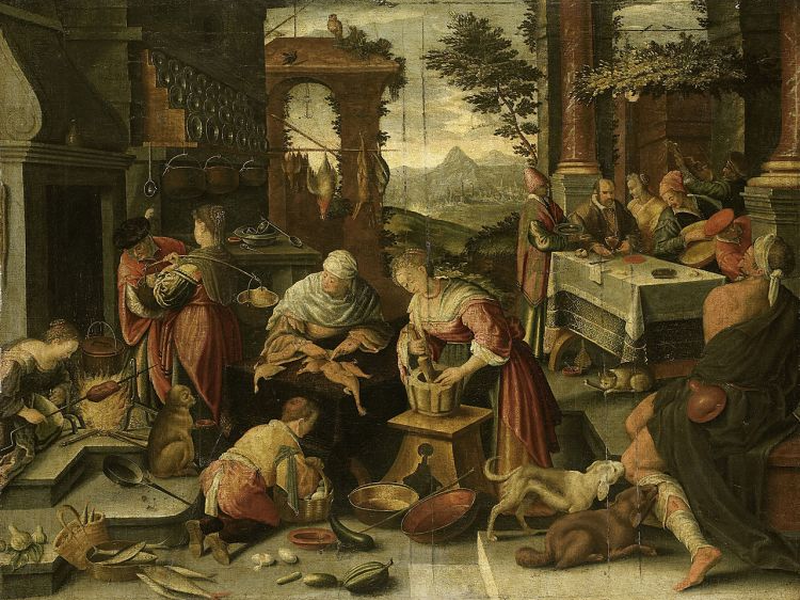
Lazarus and the Rich Man

The parable of Lazarus and the nameless rich man is not an independent story. It is part of a long context that begins in Luke 15:1, where Jesus is eating with tax collectors and sinners and the scribes and Pharisees grumble. In response to their hardheartedness, Jesus tells a three-part…

by Ralph Allan SmithJuly 4, 2019
aaron-burden-uynrnfdkjwg-unsplash
Luke

Everybody has Dropsy - Luke 14:1-24

The Bible is written so that even when a reader cannot pick up on what might be deeper or more detailed aspects of a text, there is virtually always a message to be heard. In the ancient world, where the “reader” of Scripture would likely be a church official facing…

by Ralph Allan SmithJuly 2, 2019
communion
Biblical Theology

Fruit Trees and Grain Plants

The distinction between garden (or vineyard) and field begins in Genesis 2. This relates to the ordering of the formless world. Plants of the field are contrasted with the garden planted by God in Genesis 2:5&8. Later on, under the Old Covenant the Israelites will be required to keep their…

by James B. JordanJune 27, 2019

Showing page 77 of 309

See all
See all
Music

Music and Spirit

A couple of interesting lectures on Music and Theology in the Christian Systematic Theology group of AAR. Nick Adams offered a very detailed and technical discussion of Messiaen’s Messe de la Pentecote in order to explore some issues in doctrinal change and continuity. He noted that Messiaen employed plainchant and…

November 21, 2005
Biblical Studies

Nuggets from James Jordan

A few notes from the ever-stimulating James Jordan, who spoke at a conference in Lancaster, PA this weekend: 1) He connected the opened eyes of Adam and Eve after the fall with the Lord’s seeing in Gen 1, where sight is associated with evaluation and judgment. To say that their…

November 21, 2005

Hart on creation

Reviewing David Hart’s recent book on the tsunami in The Christian Century, Willis Jenkins writes, “Curiously underplaying the resources of his own Eastern Orthodox tradition, Hart only vaguely affirms that creation must be an ‘ecstasy of spiritual intelligence and desire.’ Because he spends himself impugning nature’s vicious ways, he leaves…

November 19, 2005

Sophia

John Milbank gave a very long, very dense lecture (amusingly interrupted by microphone problems and a fire-alarm evacuation of the hotel) on Sophiology and theurgy, drawing mainly on Bulgakov. I can’t say that I understood all that was going on, but I resonated to one respondent who asked why Sophia…

November 19, 2005
Philosophy

Postfoundationalism

John Franke’s lecture at ETS argued that postfoundational theology must be joined to a postcolonial attention to the “margins” of the Christian church. Though the postcolonial point was the thrust of the lecture, I was interested, given some current controversies in which Franke is embroiled, in his clarifications of postfoundationalism.…

November 19, 2005

Luther and Imputation

Scott Clark presented a paper arguing that imputation was inherent in Luther’s mature understanding of justification, challenging various alternative readings of Luther, particularly those arising from the Finnish Lutherans. He offered a number of helpful points: He gave a quick but helpful overview of the development of Luther studies since…

November 18, 2005

Showing page 1923 of 2212

Browse by Category

In Medias Res

Your weekly digest for all things Theopolis.

Donate

Theopolis is nearly 100% donor-supported. Consider joining us on our mission.