Theopolis Logo

Writing

Explore our collection of theological essays, biblical studies, and reflections on faith and culture.

See all
sixteen-miles-out-al48tflf4e8-unsplash
Food

Gluttony In The Bible (As Opposed To Gluttony In The American Church)

In the Bible, fatness is such a blessing, that it is especially hard to understand why wicked men are permitted to enjoy such a state. It requires a theodicy and faith in God. Thus: “For they have no pangs until death; their bodies are fat and sleek . They are…

by Mark HorneAugust 12, 2013

jeremy-yap-j39x2xx_8cq-unsplash
How to Worship

Biblical Worship (Video with James B. Jordan)

[fve]http://vimeo.com/71901553[/fve]

by Peter LeithartAugust 8, 2013
chris-bair-ndczc5739ck-unsplash
Deuteronomy

Holy Things for Holy People

The allusion to the Exodus story is contained in the first words of Deuteronomy 14:1 — “ye are the sons of Yahweh your God” — as well as in 14:2 in the use of the technical term translated “treasured possession,” “His own possession,” “peculiar people,” “precious people,” and so forth.…

by Ralph Allan SmithAugust 5, 2013
adam-and-eve-in-the-garden-of-eden-wenzel-peter
Deuteronomy

Forbidden Foods

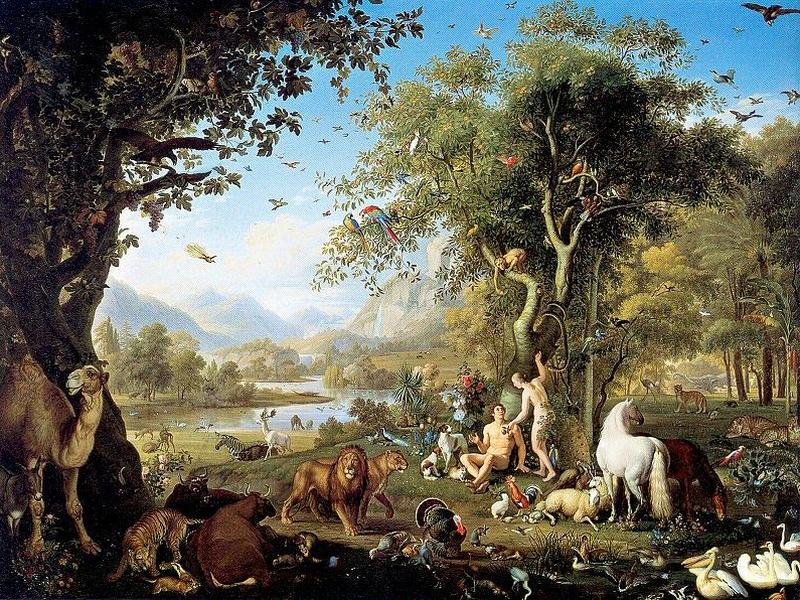
I have argued that Deuteronomy 14:1-21 is an independent literary unit that applies the Third Word to the lives of Israelites from the time of Moses and Joshua. In this short pericope, Moses suggests broad and deep meaning by means of literary allusion to the stories of the creation and…

by Ralph Allan SmithJuly 31, 2013
david-weber-fwuo_zluhnw-unsplash
How to Worship

Pro-Sacramental Reformation

In his recently republished The New Creation , the late, delightful Herbert McCabe defends the priesthood of the plebs as roundly as anyone could want. Citing Hebrews, he claims that "there is an essential difference between the Christian community and the community of the Old Law, or any other religious…

by Peter LeithartJuly 29, 2013
eric-ward-7kqe_8meex8-unsplash
Augustine

Sexual Idolatry

Augustine famously prayed, “Our hearts our restless until they rest in You.” True indeed. Being creatures, we inherently sense our ontological poverty—our innate condition of dependence—and are compelled to find a sense of security. And it is also true—as Augustine’s own narrative painfully illustrates—that one of the things we most…

by Gerald HiestandJuly 24, 2013

Showing page 190 of 309

See all
See all

Turn of civilization

At the end of his wonderful essay on “Art and Sacrament,” the Welsh poet and painter David Jones included a fragment that he wrote and rewrote over several decades. Here is wisdom: I said, ah! what shall I write? I inquired up and down (he’s tricked before with his manifold…

September 14, 2005

The Pianist and the Nazis

In a 2003 TNR review of Roman Polanski’s Oscar-winning film, The Pianist , Michael Oren gives information about Wilm Hosenfeld, the German officer who assists Szpilman: “while scrounging in an abandoned house for food, Szpilman comes face-to-face with a German officer. Instead of drawing his revolver, the officer asks Szpilman…

September 14, 2005
Literature

Marilynne Robinson

Here are a couple of selections from a September 2004 New Yorker interview with Marilynne Robinson: Q. “In your nonfiction collection, ‘The Death of Adam: Essays on Modern Thought,’ you wrote about the sixteenth-century theologian John Calvin, and about his strong sense of humanism and tolerance and his importance to…

September 14, 2005

Odysseus’ return to himself

Charles Segal argues in his Singers, Heroes, and Gods in the Odyssey that Odysseus’ return to Ithaca is a return to himself. This works in several dimensions. Through the second half of the epic, various characters reconstruct the story of Odysseus’ life - the story of his naming and the…

September 14, 2005

Odysseus’ return to himself

Charles Segal argues in his Singers, Heroes, and Gods in the Odyssey that Odysseus’ return to Ithaca is a return to himself. This works in several dimensions. Through the second half of the epic, various characters reconstruct the story of Odysseus’ life - the story of his naming and the…

September 14, 2005
Theology

Matter and spirit

Discussing the question of the corporeality of angels, Herman Bavinck argues that angels cannot have bodies because that would imply they are material and “matter and spirit are mutually exclusive.” He charges that “it is a form of pantheistic identity philosophy to mix the two and to erase the distinction…

September 13, 2005

Showing page 1946 of 2212

Browse by Category

In Medias Res

Your weekly digest for all things Theopolis.

Donate

Theopolis is nearly 100% donor-supported. Consider joining us on our mission.