Theopolis Logo

Writing

Explore our collection of theological essays, biblical studies, and reflections on faith and culture.

See all
cross-2
Church Calendar

The Good Friday Paradise Party

I grew up in the 1950s. This was before the "Sixties" and the democratization, informalization, and general cheapening of the church and her worship. Ministers were Father Donovan, Pastor Eckhart, Reverend MacPherson, Mister (Episcopal) Parker, and Brother Smith. Liturgical speech was high language, sounding kind of like the King James…

by James B. JordanMarch 25, 2016
music-violin
Hermeneutics

A Musical Case for Typological Realism, (Part 1)

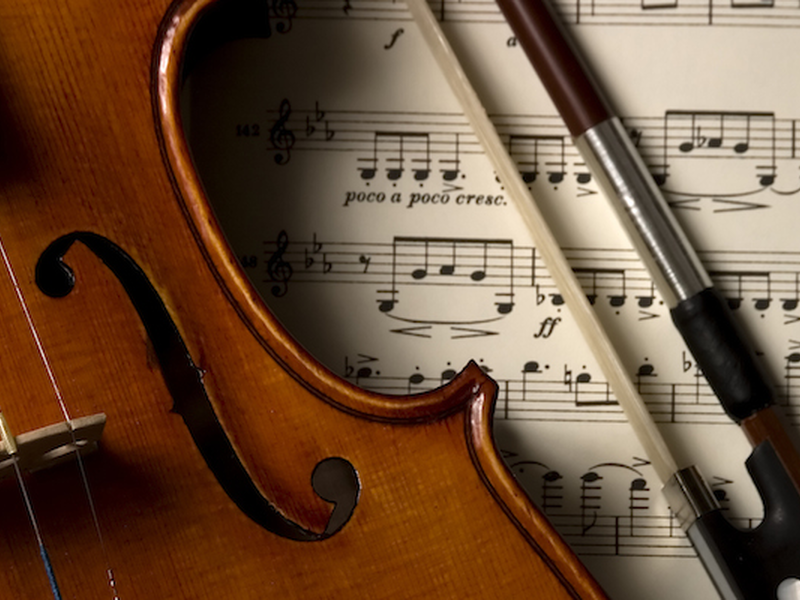
Metaphor exerts a surprisingly powerful influence within our thinking. Although it is easily dismissed as little more than a figure of speech, when we attend more closely to the ways in which we use it, metaphor’s importance swiftly becomes more apparent. Although many of our metaphors have become quite invisible…

by Alastair RobertsMarch 24, 2016
tree-2
Creation

True Science

What is a tree, scientifically speaking? A mere googling gives the following answer: “a woody perennial plant, typically having a single stem or trunk growing to a considerable height and bearing lateral branches at some distance from the ground.” We can increase detail by describing its family, genus, species and…

by Remy WilkinsMarch 22, 2016
fasting
Church Calendar

Food for Thought from Ethiopia

The majority of Western evangelical Christians rarely, if ever, fast as a form of spiritual discipline. In our culture, fasting is more connected with dieting than worship, the other side of our deeply ambiguous fascination with food. Food is everywhere. We eat more than ever before, at greater speed, and…

by Sam BusseyMarch 17, 2016
unnamed
Biblical Theology

What is Systematic Typology? – Part Two

A Grammar of Creation An understanding of the visual-musical language of the Bible must begin with Genesis 1. This is fortunate, because when explaining biblical types to academics, as opposed to children, one is repeatedly forced to start from scratch. From birth, a healthy child is attuned to rhythm and…

by Mike BullMarch 15, 2016
wall_e_by_mrcanavan-d3f92cn
Art

Wall-E and the New Creation

In an inverse Eden, a land laid waste, one works alone tending the trash. There are none like him in all the earth, inquisitive, playful and most drawn to those mysterious, dancing bipedal creatures who lost earth and left it to go wandering the vast wilderness of space. Humans have…

by Remy WilkinsMarch 10, 2016

Showing page 134 of 309

See all
See all

Age of Silver

D avid's plan for the temple is partly a floor plan. He gives Solomon the pattern for the “porch” and its associated buildings, treasuries, rooms, courts (1 Chronicles 28:11-12). The plan also includes instructions for organizing the priests and Levites (28:13a) and for the utensils of service for the temple…

March 14, 2017

Sources of Inequality

I n his recently-published The Great Leveller , Walter Scheidel summarizes evidence from archeology and anthropological studies to answer the question, Has inequality always been with us? The answer is: Sort of yes. Inequality is a constant in societies that farm and herd. But farming and land ownership weren't the…

March 14, 2017

Classicists and Romantics

D avid gives Solomon the “plan” (Heb. tabnit ) for the temple. Unlike Moses, David doesn't have to climb a mountain to get it (cf. Exodus 25:9, 40). It comes from “the spirit ( ruach ) with him” (1 Chronicles 28:12), and from a “writing” from the Lord that comes…

March 13, 2017

Nietzsche, Destroyer of Idols

I n an essay in the journal European Legacy , Norman Fiering summarizes the thought of Eugen Rosenstock-Huessy on biography. Fiering asks whether there are recurring patterns in the lives of significant individuals, and, relying on Rosenstock-Huessy, calls attention to moments of “conversion” (not necessarily religious) and “grace” (unexpected encounters…

March 10, 2017

Modernist Puritanism

I n his 1971 study of Modernist architecture, The Golden City , Henry Hope Reed observed that Modernists transferred moral categories to architecture. Buildings could be “honest” (if they revealed their structure on the surface) or “false” (if they hid structure under ornamentation). Purity was invoked regularly as a positive…

March 10, 2017

Happy Gothic

W hat is “the Gothic”? Answers vary, and that is, Catherine Spooner argues (in Post-Millennial Gothic ), because Gothic bears “multivalent meanings” and “has adapted and changed with the times” (9–10). This isn't a recent development: “After Gothic's initial phase of popularity fizzled out around 1820, it quickly renewed itself…

March 10, 2017

Showing page 197 of 2212

Browse by Category

In Medias Res

Your weekly digest for all things Theopolis.

Donate

Theopolis is nearly 100% donor-supported. Consider joining us on our mission.