Theopolis Logo

Writing

Explore our collection of theological essays, biblical studies, and reflections on faith and culture.

See all
528977ldsdl
Theologia

Reflections on the Importance of Predestination in the Christian Mindset

But I say to you who hear, love your enemies, do good to those who hate you, bless those who curse you, pray for those who mistreat you. Whoever hits you on the cheek, offer him the other also; and whoever takes away your coat, do not withhold your shirt…

by Mark HorneJune 4, 1998

aaron-burden-1ebsmyrau-s-unsplash
Biblical Horizons

The Case Against Western Civilization, Part 5

Part 5: Laying New Foundations in a Dying World As I mentioned above, the history of Israel involved several centuries as a church-without-a-culture, and then several centuries as a culture-without-a-city. To be sure, there was an informal culture around the church of the Patriarchs, but the civilization of free farmers…

by James B. JordanJune 4, 1998
yucar-studios-cfr-v1quekw-unsplash-1
Baptism

Why Do We Baptize?

In the Reformation Tradition we baptize both professing believers and their children. In the case of infants it is now commonly insisted that this is done because the children are already in covenant with God. Baptism is a sign and seal of a previously existing reality. Despite the popularity of…

by Mark HorneJune 3, 1998
aaron-burden-qjdzyt_k8xg-unsplash
Eucharist

This Is What We Are:

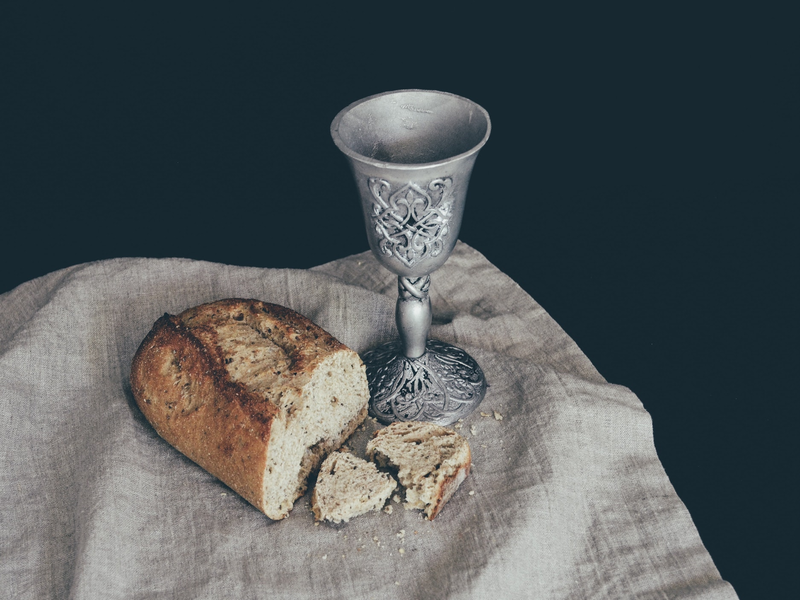
Concerning Sex & the Sacrament of the Lord’s Supper Is not the cup of blessing which we bless a sharing in the blood of Christ? Is not the loaf of bread which we break a sharing in the body of Christ? Since there is one loaf, we who are many…

by Mark HorneJune 3, 1998
debby-hudson-qa74yh6-xlc-unsplash
Baptism

Sacramental Efficacy

Protestant-Catholic debates about the sacraments have usually taken the form of debates about sacramental efficacy. Protestants claim that Catholics believe that sacraments work ex opere operato, virtually a magical view of the sacraments. A priest goes through the motions and says the mumbo-jumbo and — presto! — the sacraments confer…

by Peter LeithartJune 3, 1998
aaron-burden-qjdzyt_k8xg-unsplash
Baptism

Baptism and the Church

In 27.2, the Westminster Confession says that because of the “spiritual relation” between sacraments and the things they represent, “the names and effects of the one are attributed to the other.” Applied to baptism, this means that when the Bible says that we are baptized into Christ (Rom. 6), it…

by Peter LeithartMay 29, 1998

Showing page 249 of 309

See all
See all

New Face for the World

R owan Williams ( Sign and Sacrifice ) summarizes the Anselmian understanding of the atonement using the categories of sacrifice, obedience, and gift, all set within a Trinitarian frame. It's quite lovely. Citing Hebrews citing Psalm 40, Williams argues that the Old Testament sacrificial system existed to symbolize the true…

February 28, 2017

At the Parbar

D escribing the assignments of Levite gatekeepers, the Chronicler records that there were four at the “highway” at the western end of the temple, and two “at the Parbar,” which was also on the west (1 Chronicles 26:18). Scholars have proposed a variety of foreign etymologies for the term. From…

February 27, 2017
Architecture

How To Read Churches

D enis McNamara's How To Read Churches is an extraordinary book. Subtitled “a crash course in ecclesiastical architecture,” it covers building types, floor plans, sections of churches (nave, apse, choir), materials, windows, altars, ornaments in 256, 6 x 6-inch pages, each of which is stuffed with pictures and diagrams and…

February 24, 2017

Undemocratic Education

J ohn Milbank cites what he calls “Socrates's subversive realization” that “education can never be democratic” ( Being Reconciled , 182). This is in part because “the sheer singular uniqueness and contingency of wisdom is unable to subordinate itself to any majority,” partly because “if one is to learn, one…

February 24, 2017

Irrationality and Intellectual Flaws

T hrough a series of thought experiments, Richard Foley ( Intellectual Trust in Oneself and Others ) develops a concept of rationality as “a matter of making oneself invulnerable to intellectual self-criticism to the extent possible, of living up to one’s own deepest intellectual convictions and standards.” Rationality thus “requires…

February 24, 2017

Lockean Individualism

F ollowing Alvin Platinga, Richard Foley summarizes the principles of Locke's epistemology in three principles ( Intellectual Trust in Oneself and Others ): Evidence (the “obligation to base one's opinion on one's evidence,” the latter defined as “what one knows with certainty”); appraisal (the obligation “to appraise the probability of…

February 24, 2017

Showing page 202 of 2212

Browse by Category

In Medias Res

Your weekly digest for all things Theopolis.

Donate

Theopolis is nearly 100% donor-supported. Consider joining us on our mission.