Theopolis Logo

Writing

Explore our collection of theological essays, biblical studies, and reflections on faith and culture.

See all
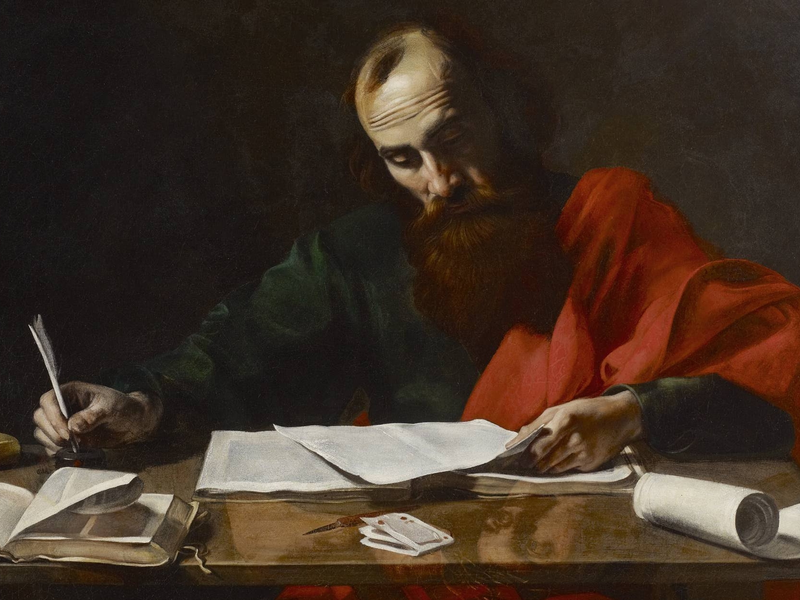
13071-probablyvalentindeboulogne-saintpaulwritinghi-1
Apologetics

Why Did Saul of Tarsus Identify Jesus of Nazareth with the God of Israel?

The god of Israel was not just any god. Two thousand years of Christian history, with it’s besetting philosophical temptations, and full-blown deist and transcendentalist and universalist problems, have obscured the fact that, in itself, the identity of the true god (or gods) cannot be predetermined, any more than the…

by Mark HorneNovember 15, 1998

ivan-aleksic-16yxcjsoaek-unsplash
Biblical Horizons

Crisis Time: Patriarchal Prologue, Part 3

Jacob and Solomon God gave wealth and possessions to Jacob, and then threatened to take them all away at Peniel. Jacob wrestled with God, and through prayer Jacob saw through the crisis by faith and was made victor (Hosea 12:4). The Kingdom period in Israel concerns the same themes. We…

by James B. JordanNovember 4, 1998
Exodus

The Third Word

In our study of the historical impact and unfolding of the Ten Words of God, we now arrive at the Third Word. The Third Word prohibits hypocrisy, and when we realize this, we can see right away that disobeying the Third Word is closely tied to the situation of Israel…

by James B. JordanNovember 4, 1998
kiwihug-l4gw27xzn1i-unsplash
Biblical Horizons

Crisis Time: Patriarchal Prologue, Part 2

Abraham and Joshua In our previous two essays, we considered aspects of the lives of Abraham and Jacob, as these display how God works with men in history. These two men carry in themselves all the future of Israel, so to speak, and their lives at the individual level correspond…

by James B. JordanOctober 4, 1998
maxime-gilbert-x-4nyxvz4r0-unsplash
Biblical Horizons

The Case Against Western Civilization, Part 7

Part 5: Laying New Foundations in a Dying World (continued) Physical Training Though it is seldom recognized any more, the fact is that no liberal arts and no science is possible apart from peace, and peace is only possible if there is a strong military presence that protects a nation.…

by James B. JordanOctober 4, 1998
screenshot-2023-09-11-at-11-34-45-am
Biblical Horizons

Crisis Time: Patriarchal Prologue, Part 1

Last month, in our essay " Patriarchal Dominion ," we observed the flow from Abraham to Jacob to Joseph. Our concern here is to advance our understanding of that narrative flow. I should mention that I am assuming much that is found in my book Primeval Saints: Studies in the…

by James B. JordanSeptember 4, 1998

Showing page 247 of 309

See all
See all

Structure in 1 Chronicles 26

1 Chronicles 26:1-19 lists the names and positions of gatekeepers at Solomon's temple. The passage is framed by references to the “allotment” or “apportionment” of assignments to Korahites (v. 1) and sons of Korah and Merari (v. 19). Within this frame, the text moves in a complex parallel fashion through…

February 21, 2017

All Great Art Is Praise

“T he art of man is the expression of his rational and disciplined delight in the forms and laws of the creation of which he forms a part.” This is the first thesis of John Ruskin's “All Great Art Is Praise,” in The Laws of Fesole . Rationality is essential…

February 21, 2017

Demonstrative Complications

I n their 1662 treatise on Logic, or the Art of Thinking , Antoine Arnauld and Pierre Nicole question the straightforwardness of the Calvinist logical analysis concerning the Eucharistic “This is my body.” They summarise the argument this way: “Their claim is that in Jesus Christ’s assertion, ‘This is my…

February 20, 2017

Passivity and Freedom

I ngolf Dalferth thinks we are Creatures of Possibility . By that, he means that “we are creatures in the making whose actual becoming depends on possibilities beyond our control that occur in our lives as opportunities and chances that we can neglect and miss or take up and use”…

February 17, 2017

The State after ‘68

A ccording to Pierre Manent ( Beyond Radical Secularism ), May 1968 marked a critical turning point in the political history ofFrance. Despite the persistence of the “Gaullist” party in political power, ‘68 undermined “collective rules, both political and merely social. The citizen of action was followed by the individual…

February 17, 2017

On Separating Church and State

S eparation of church and state, religion and politics, is not “sufficient unto itself,” argues Pierre Manent ( Beyond Radical Secularism ). After all, he points out, citizens are believers, believers citizens, and they don’t cease to be one when they take up the role of the other. Separation “suggests…

February 17, 2017

Showing page 204 of 2212

Browse by Category

In Medias Res

Your weekly digest for all things Theopolis.

Donate

Theopolis is nearly 100% donor-supported. Consider joining us on our mission.