Theopolis Logo

Writing

Explore our collection of theological essays, biblical studies, and reflections on faith and culture.

See all
aaron-burden-1ebsmyrau-s-unsplash
Biblical Horizons

The Sin of Ham and the Curse of Canaan, Part 1

The history of the sin of Ham and the curse of Canaan comes in the middle of the Generations of Noah, a section of Genesis that begins at Genesis 6:9 and extends to the closing notice, Genesis 11:9. To understand the story better, it is necessary to get in mind…

by James B. JordanJune 3, 1997

david-weber-f_nj26i9wyo-unsplash-1
Eucharist

You and Your Son and Daughter: Christ’s Communion with Young Children

This paper was written to persuade people who were members of the Presbyterian Church in America. It should be accessible to anyone who believes in baptizing infants–especially to those who consider themselves a part of the Reformation Tradition. References to “our Confession” or “our standards” invoke the Westmeinster Confession of…

by Mark HorneJune 3, 1997
screenshot-2023-07-27-at-10-25-35-am
Baptism

The Westminster Standards & Sacramental Efficacy

Version 1.2 I write this brief essay in order to address a problem I have encountered. I keep reading explanations of doctrine of the sacraments fundamentally empty of the content which was once held by virtually all Reformed confessions and formulations. Furthermore, I read explanations and commentaries on the Westminster…

by Mark HorneJune 3, 1997
aaron-burden-h8s0pf2rcqs-unsplash
Biblical Chronology

John Sailhamer Weighs In, Part 2

We continue our analysis of John Sailhamer’s book *Genesis Unbound: A Provocative New Look at the Creation Account* (Multnomah Books, 1996), which argues that Genesis 1:2ff. is not about the creation of the whole world, but about the preparation of the Land of Eden, which is also the Promised Land.…

by James B. JordanMay 31, 1997
screenshot-2023-08-30-at-11-50-23-am
Matthew

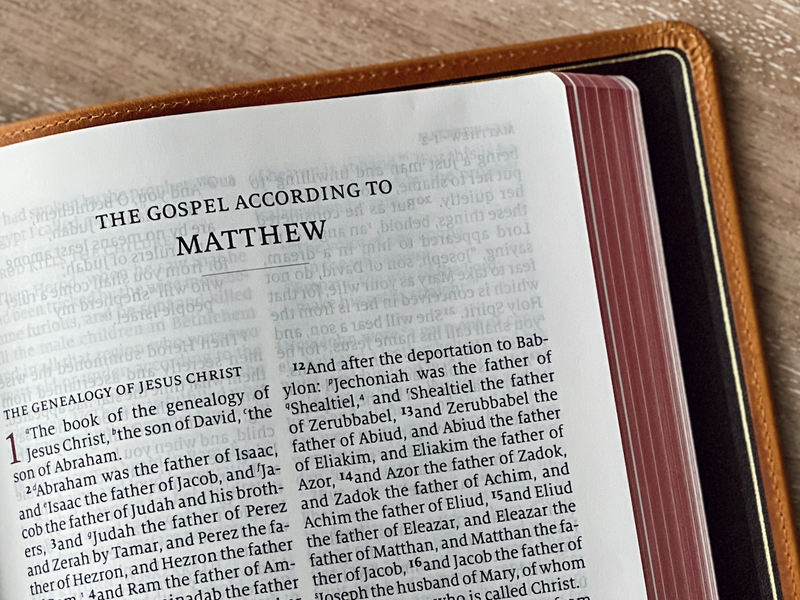
Toward a Chiastic Understanding of the Gospel According to Matthew, Part 2

III. Death of God’s Firstborn in the real Egypt: This huge chiasm has as its center the betrayal of Peter, as the leader of the disciples himself rejects Jesus. Peter holds an oficial position as high priest among the disciples of the incarnate Lord. His rejection of Jesus is the…

by James B. JordanMay 31, 1997
aaron-burden-qjdzyt_k8xg-unsplash
Eucharist

A Response to Rev. Bacon’s Argument that Manna was not a Sacrament

I wrote a response to Rev. Richard Bacon’s tract, What Mean Ye by This Service , a copy of which I borrowed from the library at Covenant Theological Seminary. However, I recently discovered that a new appendix was added to the version available on the Blue Banner’s web page. This…

by Mark HorneMay 29, 1997

Showing page 257 of 309

See all
See all

Architecture of Fancy

T he title essay of John Summerson's Heavenly Mansions sets Gothic architecture in a story of the architecture of fancy. He begins with doll houses, and moves to aedicules, originally small buildings holding the image of a god that eventually became purely decorative alcoves. In Gothic, the ornament is turned…

February 17, 2017

Slow Grow

I n his Rise and Fall of American Growth , Robert J. Gordon argues that the growth rates for the American economy have leveled because the rate of innovation has leveled. And the rate of innovation has leveled, in part, because some innovations happen only once: The flood of inventions…

February 17, 2017

Anthropology of Deficiency

A ccording to Ingolf Dalferth ( Creatures of Possibility ), Christianity “contradicts a view that understands human beings in their fundamental dependence, finitude, and passivity, not merely biologically, but anthropologically, as deficient beings , interpreting their absolute dependence as absolute neediness, their finitude as a metaphysical evil, and their experience…

February 17, 2017

Passive Creativity

C hristian theology has long taught that we are “finite copies of the infinite Creator: created creators” (Dalferth, Creatures of Possibility , 198). Christian anthropology is eschatologically oriented: “Who we are is not determined by our origin; it will become evident in our future” (198). This comes to expression in…

February 17, 2017

Slackers

I t’s a challenge to get a clear idea of what slackers are really all about. Tom Lutz isolates the dilemma in his Doing Nothing (18-19): The famous or almost-famous idlers, loafers, loungers, and slackers throughout history had to produce work about not working in order for us to know…

February 17, 2017

Living Sacrifices

J oseph Ratzinger reflects on Romans 12:1-2 in his Theology of the Liturgy (349-51), which is evident in the Roman Canon's prayer that “our sacrifice may be rationabilis .” He writes: It is not enough—indeed, it is quite wrong—to translate this as saying that it should become rational. We are…

February 17, 2017

Showing page 205 of 2212

Browse by Category

In Medias Res

Your weekly digest for all things Theopolis.

Donate

Theopolis is nearly 100% donor-supported. Consider joining us on our mission.