Theopolis Logo

Writing

Explore our collection of theological essays, biblical studies, and reflections on faith and culture.

See all
screen-shot-2023-02-24-at-1-48-41-pm
Biblical Chronology

Chronologies and Kings: Part 3

The chronology of the Kings of Judah and Israel can be divided into three periods with clearly defined boundaries. The first period begins with the death of Solomon and the accessions of Rehoboam in the south (Judah) and Jeroboam in the north (Israel). It ends with the deaths of Ahaziah…

by James B. JordanSeptember 22, 1991

johann-walter-bantz-clv9dfjlwac-unsplash-1-5
Art

Arts & Play, Part 1

Most modern people regard the arts as essentially decorative. They are hardly very important, as compared to business, politics, or religion. Yet, from a Biblical point of view, the arts lie close to the heart of human life. The universe that God created is itself an artistic masterpiece by the…

by James B. JordanSeptember 22, 1991
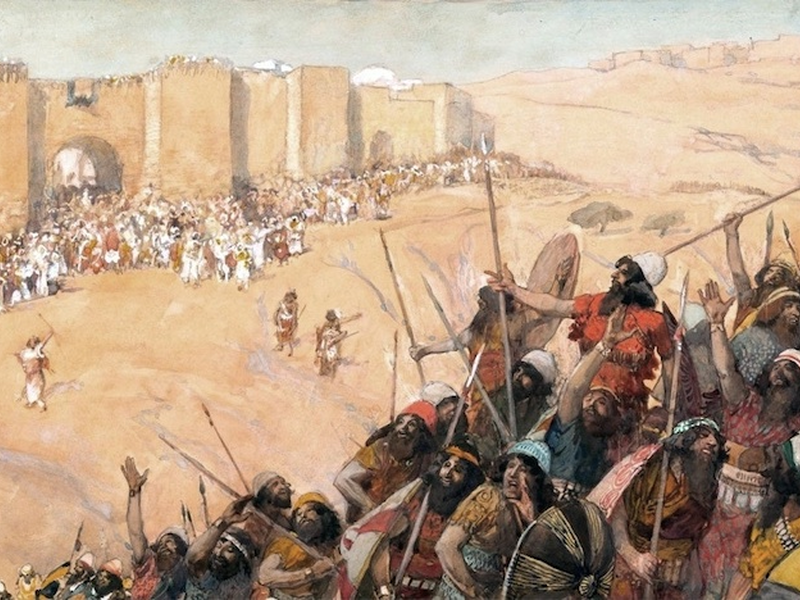
6273e95e0f5ac766258d8cf3_joshuasconquestoftheland-2
Exodus

Chronologies and Kings, Part 2

Before we move into a detailed survey of the history and chronology of the kings of Israel and Judah, let us review the chronological information that leads from creation to the kingdom. This will be helpful both to new readers of these essays, and a reminder for those who have…

by James B. JordanAugust 22, 1991
screen-shot-2023-02-24-at-1-48-41-pm
Biblical Chronology

Chronologies and Kings, Part 1

We have completed our overall survey of Biblical chronology, and now turn to a detailed examination of the Biblical information regarding the chronology of Israel’s kings. The first piece of chronological information we have regarding Israel’s kings is very cryptic, and it serves as an guide to the interpretation of…

by James B. JordanJuly 22, 1991
screenshot-2023-08-09-at-2-13-32-pm
Biblical Horizons

Book Review - To Take Place: Toward Theory in Ritual

Jonathan Z. Smith, To Take Place: Toward Theory in Ritual (Chicago: University of Chicago Press, 1987). Reviewed by Peter J. Leithart. The philosophes of the 18th century often attacked Christendom using the tools of anthropology and comparative religion. Rousseau contrasted the idyllic equality of primitive, natural peoples with the bondage…

by Peter LeithartJuly 6, 1991
screenshot-2023-08-09-at-1-47-41-pm
Biblical Horizons

Book Review: The Rise of Magic in Early Medieval Europe

Valerie I. J. Flint, The Rise of Magic in Early Medieval Europe (Princeton University Press, 1991). Reviewed by Peter J. Leithart. Valerie I. J. Flint, Professor of History at the University of Auckland, New Zealand, is refreshingly candid about her reasons for undertaking a study of The Rise of Magic…

by Peter LeithartJuly 6, 1991

Showing page 295 of 309

See all
See all
Literature

Midsummer Night’s Dream

INTRODUCTION Though MSND is set in Athens, there is little in the play that is specifically Greek or Athenian. Theseus is ruling Athens, but he bears little similarity to the Theseus of Plutarch, and he is even anachronistically described as the ?Duke of Athens.?E Bottom and company have nothing Greek…

July 27, 2004
Literature

Midsummer Night’s Dream

INTRODUCTION Though MSND is set in Athens, there is little in the play that is specifically Greek or Athenian. Theseus is ruling Athens, but he bears little similarity to the Theseus of Plutarch, and he is even anachronistically described as the ?Duke of Athens.?E Bottom and company have nothing Greek…

July 27, 2004
Literature

Shakespeare and the Greeks: Troilus and Cressida

ELIZABETHANS AND GREECE Today, many view ancient Greece, and especially ancient Athens, as the fountainhead of Western civilization. This was not the case for medievals, who knew Greek literature in Latin translations. Though Chaucer set some of his works in ancient Greece (?The Knight?s Tale?E Troilus and Criseyde ), he…

July 26, 2004
History

Pentecostal Civilization

Gilbert Highet has a wonderful chapter on translation in the Renaissance in his book, The Classical Tradition . He says that the first translation that we know of was made about 250 BC by the Greek-Roman poet Livius Andronicus, who translated the Odyssey into Latin. This was about the same…

July 26, 2004

Liturgical Posture

I suggested in Against Christianity that worship can be understood as a sequence of postures: We kneel for confession, stand for absolution and service and to hear the word, sit enthroned to eat and drink in God’s presence, then stand to walk out for ministry. It occurs to me that…

July 25, 2004

Eucharistic Meditation, July 25

Lk 9:10-17 The Lord?s Supper has been celebrated in many different ways through the centuries. In many churches, the people come forward and kneel to receive the elements. In the Roman Catholic church, the elevation of the Host has been nearly as important as the communion meal. Some Reformed churches…

July 25, 2004

Showing page 2070 of 2212

Browse by Category

In Medias Res

Your weekly digest for all things Theopolis.

Donate

Theopolis is nearly 100% donor-supported. Consider joining us on our mission.