
Theopolis Logo

Writing

Explore our collection of theological essays, biblical studies, and reflections on faith and culture.

See all
cloister

Gatekeepers

1 Chronicles 9:1 seems to bring the genealogies of 1 Chronicles to an end. The Chronicler has recorded the genealogy of the human race from Adam, focusing on the descendants of Abraham through Jacob. Summing it all up, he says, “So all Israel was enrolled by genealogies; and behold, they…

by Peter LeithartJune 21, 2016
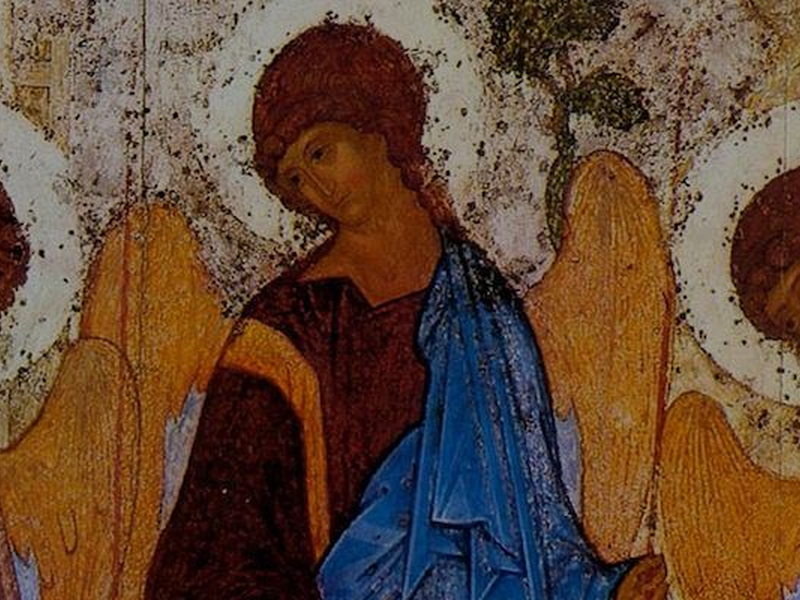
trinity-1-2
Trinity

Are the Divine Persons Persons?

The “personalist” understanding of the Trinity, articulated most influentially in the work of John Zizioulas, has fallen on hard times. Recent scholars have attacked Zizioulas’s idea that Cappadocian Trinitarianism represented an ontological revolution, hammering on the distinction between divine and human personhood. Michel Barnes’s conclusion is the most drastic of…

by Peter LeithartJune 16, 2016
img_4660-2
Architecture

On Biblical Theology

Biblical Theology is often defined as the historical unfolding of God’s revelation, or of God’s revelation and of the history of his covenantal redemption and transformation of humanity and the world. In practice, Biblical Theology is usually broader than this, and also includes the study of literary structure and of…

by James B. JordanJune 14, 2016
laughing_statue_by_xxbobbiie-d5f0meh-2
Humor

Wise Laughter

We are made to be happy. Created to enter into the eternal joy of God, our whole being inclines to that end, but the fallen world has put forth barriers and by our own sin we bar ourselves from that endless delight, and death blinds us to that reality. Yet…

by Remy WilkinsJune 7, 2016
img_7664
Liturgy

Why Theopolis? Take Two

At the end of Revelation, John sees the heavenly city descending to earth. The city shines with the brilliance of God's glory, which lightens the nations, so that kings bring their glory to the city. This is not a vision of the final new heaven and new earth. It's a…

by Peter LeithartJune 2, 2016
trinity-1-2
Attributes of God

How Can We Talk About God?

“No one has ever seen God,” writes John (John 1:18). If this is the case, then how can we speak about God? Some people say we actually cannot. Or at least we cannot speak about God positively, i.e. who He is. We can only say who or what God is…

by Bogumil JarmulakMay 31, 2016

Showing page 130 of 309

See all
See all
History

Money, Magic, and Signs

David Hawkes reviews a book on Literature and Economics in the Age of Milton in the April 2 TLS , and has this to say about the early modern suspicion of attempting to “do things with words”: “The influx into Renaissance Europe of precious metals from America, and the consequent…

April 19, 2004
History

On Books

David McKitterick ‘s Print, Manuscript and the Search for Order, 1450-1830 describes the move from manuscript to book as a gradual process rather than a sudden revolution. According to the reviewer in the TLS , McKitterick points out that books and manuscripts were not separated in library catalogues or apparently…

April 19, 2004
History

Goddesses in the Middle Ages

Robert Lerner reviews Barbara Newman ‘s God and the Goddesses: Vision, Poetry, and Belief in the Middle Ages in the March 19 issue if the TLS . Newman’s book analyzes the female deities and allegorical figures of medieval literature and belief, including Nature, Lady Love, Holy Wisdom, and Mary. As…

April 19, 2004

Luther on Justification

Robert Jenson has a brief but very challenging comment on Luther’s views on justification in the Fall 2003 issue of the Westminster Theological Journal (which, incidentally, under the editorship of Peter Enns is promising to be a lively forum of debate). Responding to Carl Trueman ‘s critique of the new…

April 19, 2004
Economics

Hayek

Francis Fukuyama reviews Bruce Caldwell ‘s new biography of Hayek in the Spring 2004 issue of The Wilson Quarterly . According to Caldwell, Hayek’s argument against a managed economy was basically an epistemological one: “There are limits to rationality, and what any individual knows tends to be local in nature.…

April 19, 2004
Media

McLuhan and Teilhard

Tom Wolfe has a fascinating sketch of the life and work of Marshall McLuhan in the Spring 2004 issue of The Wilson Quarterly . McLuhan converted to Catholicism during his studies, and Wolfe suggests that McLuhan’s greatest inspiration was a hidden one, Teilhard de Chardin . Wolfe writes, “Regardless of…

April 19, 2004

Showing page 2098 of 2212

Browse by Category

In Medias Res

Your weekly digest for all things Theopolis.

Donate

Theopolis is nearly 100% donor-supported. Consider joining us on our mission.